

Hernia Symptoms: Why Early Recognition Matters
Hernia is a condition that often develops silently. In many patients, the symptoms begin very mildly and do not interfere with daily activities in the early stages. Because of this, hernia symptoms are frequently ignored or mistaken for common muscle strain or digestive discomfort.
However, hernia is a progressive condition. What starts as a small bulge or mild discomfort can gradually worsen and lead to serious complications if left untreated. Understanding the symptoms early helps patients seek timely medical care and avoid emergency situations.
For a complete overview of treatment options, you may refer to
👉 Hernia Treatment in Hyderabad – Complete Patient Guide
Why Many Patients Ignore Hernia Symptoms in the Beginning
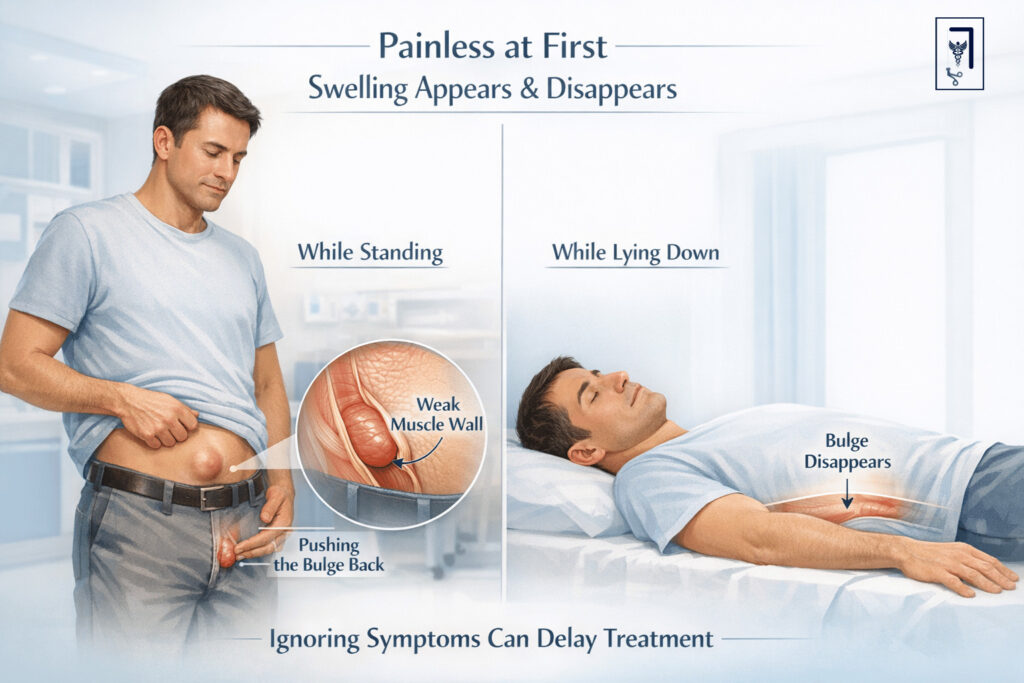
One of the main reasons hernia goes unnoticed is that it may not cause pain initially. Many patients notice a small swelling that appears only while standing or coughing and disappears when they lie down. Since the swelling reduces on its own, it creates a false sense of relief.
Some people manually push the bulge back and assume the problem is solved. In reality, this only hides the symptom temporarily. The weakness in the muscle wall remains, and the hernia continues to grow slowly inside the body.
Early Symptoms of Hernia You Should Pay Attention To
The earliest sign of hernia is usually a visible bulge or swelling in the abdomen or groin. This bulge becomes more noticeable during activities that increase abdominal pressure such as standing, coughing, lifting heavy objects, or bending forward. When lying down, the swelling may reduce or disappear.
Along with the bulge, patients may experience mild discomfort or dull pain, especially after physical activity. This pain is often ignored because it is not severe. Some people describe it as an uncomfortable pulling or stretching sensation rather than sharp pain.
Another common early symptom is a feeling of heaviness or pressure in the affected area. This sensation may worsen toward the end of the day or after prolonged standing, indicating that the abdominal muscles are under stress.
How Hernia Symptoms Progress Over Time
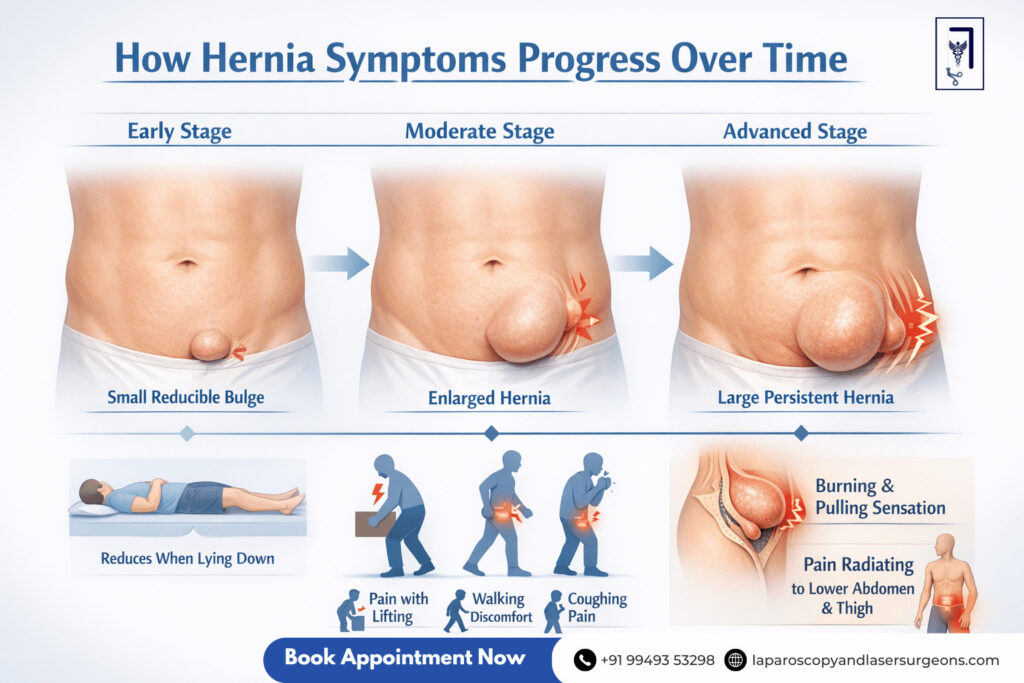
As the hernia increases in size, symptoms become more noticeable and persistent. The bulge may no longer reduce completely when lying down and can become more prominent throughout the day.
Pain during activities such as lifting, walking, or coughing may increase. Patients often report that routine tasks become uncomfortable. The discomfort may also spread to nearby areas such as the thigh or lower abdomen, depending on the type of hernia.
Some patients experience a burning, dragging, or pulling sensation around the hernia site. This occurs due to stretching of surrounding tissues and nerves. These symptoms indicate that the hernia is progressing and requires medical evaluation.
Symptoms Based on Different Types of Hernia
Hernia symptoms can vary depending on the location of the weakness in the muscle wall.
In inguinal hernia, patients typically notice a swelling in the groin area. The bulge may increase during walking, lifting, or standing for long periods. Discomfort may radiate toward the inner thigh or lower abdomen.
In umbilical hernia, swelling appears near the belly button. This type is commonly seen in women after pregnancy and in overweight individuals. Pain or tenderness may occur while coughing or straining.
In hiatal hernia, symptoms are more digestive in nature. Patients may experience heartburn, acidity, chest discomfort, or difficulty swallowing. These symptoms are often mistaken for acid reflux or gastritis.
Warning Signs That Require Immediate Medical Attention
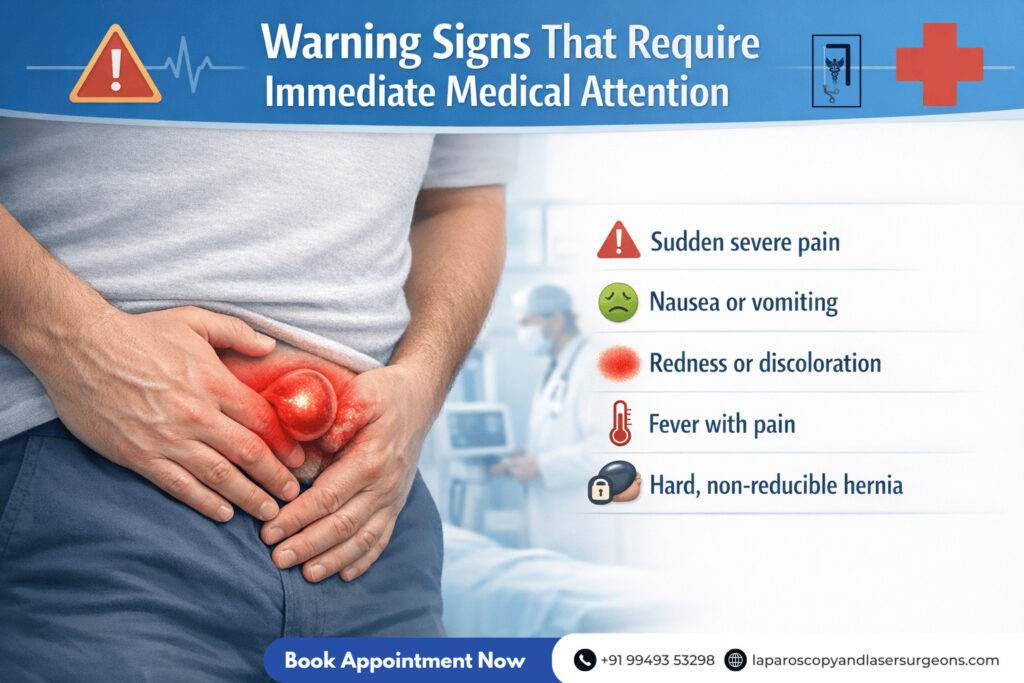
Certain hernia symptoms indicate a medical emergency and should never be ignored. Sudden severe pain at the hernia site, especially when associated with nausea or vomiting, can indicate strangulation. This occurs when the blood supply to the trapped organ is cut off.
Other emergency warning signs include redness or discoloration over the bulge, fever along with pain, or a hernia that becomes hard and cannot be pushed back. These symptoms require immediate surgical evaluation to prevent serious complications.
When Should You Consult a Hernia Specialist in Hyderabad?
You should consult a surgeon as soon as you notice a persistent bulge, increasing discomfort, or pain that interferes with daily activities. Even if symptoms are mild, early consultation allows for planned treatment and safer outcomes.
Delaying medical advice can lead to complications that may require emergency surgery and longer recovery.

For treatment planning, you may also read
👉 Do All Hernias Need Surgery? Treatment Options Explained
Why Early Diagnosis Improves Treatment Outcomes
When hernia is diagnosed early, doctors can recommend minimally invasive treatment options such as laparoscopic or laser surgery. These methods cause less pain, smaller scars, and faster recovery.
Late-stage hernias may require more complex surgery and longer hospital stays. Early diagnosis helps patients return to normal life faster and with fewer risks.
Frequently Asked Questions (FAQs)
Yes, many hernias do not cause pain in the early stages. Patients may only notice a small bulge or swelling that appears during standing or coughing and disappears while lying down. Even painless hernias should be medically evaluated.
A hernia may be becoming serious if the bulge increases in size, becomes painful, hard, or does not go back inside. Sudden pain, vomiting, or redness over the bulge are warning signs that require immediate medical attention.
Hernia symptoms may temporarily reduce when you lie down or rest, but the condition itself does not heal. The muscle weakness remains and the hernia usually progresses over time without treatment.
No, delaying consultation is not recommended. Early evaluation allows safer and planned treatment, while delay can lead to complications that may require emergency surgery.
You should consult a hernia specialist as soon as you notice a bulge, discomfort, or heaviness in the abdomen or groin. Early consultation helps in choosing the best treatment option and ensures faster recovery.
Get Relief from Hernia Today
Consult Dr. Suresh Babu for expert diagnosis and personalized treatment.
Book Consultation