
Understanding Appendicitis Treatment – Is Surgery Always Required?
One of the most common questions patients ask after being diagnosed with appendicitis is whether surgery is always necessary. Since abdominal pain may initially feel mild or manageable, some patients hope that medicines or rest alone will be enough to resolve the condition.
However, appendicitis is primarily a structural and infectious condition involving inflammation of the appendix. Once the appendix becomes infected, the condition usually worsens rapidly. Understanding when surgery is required and what treatment options are available helps patients take timely and safe decisions.
For a complete overview of appendicitis care, you may also read
👉 Appendicitis Treatment in Hyderabad – Complete Patient Guide
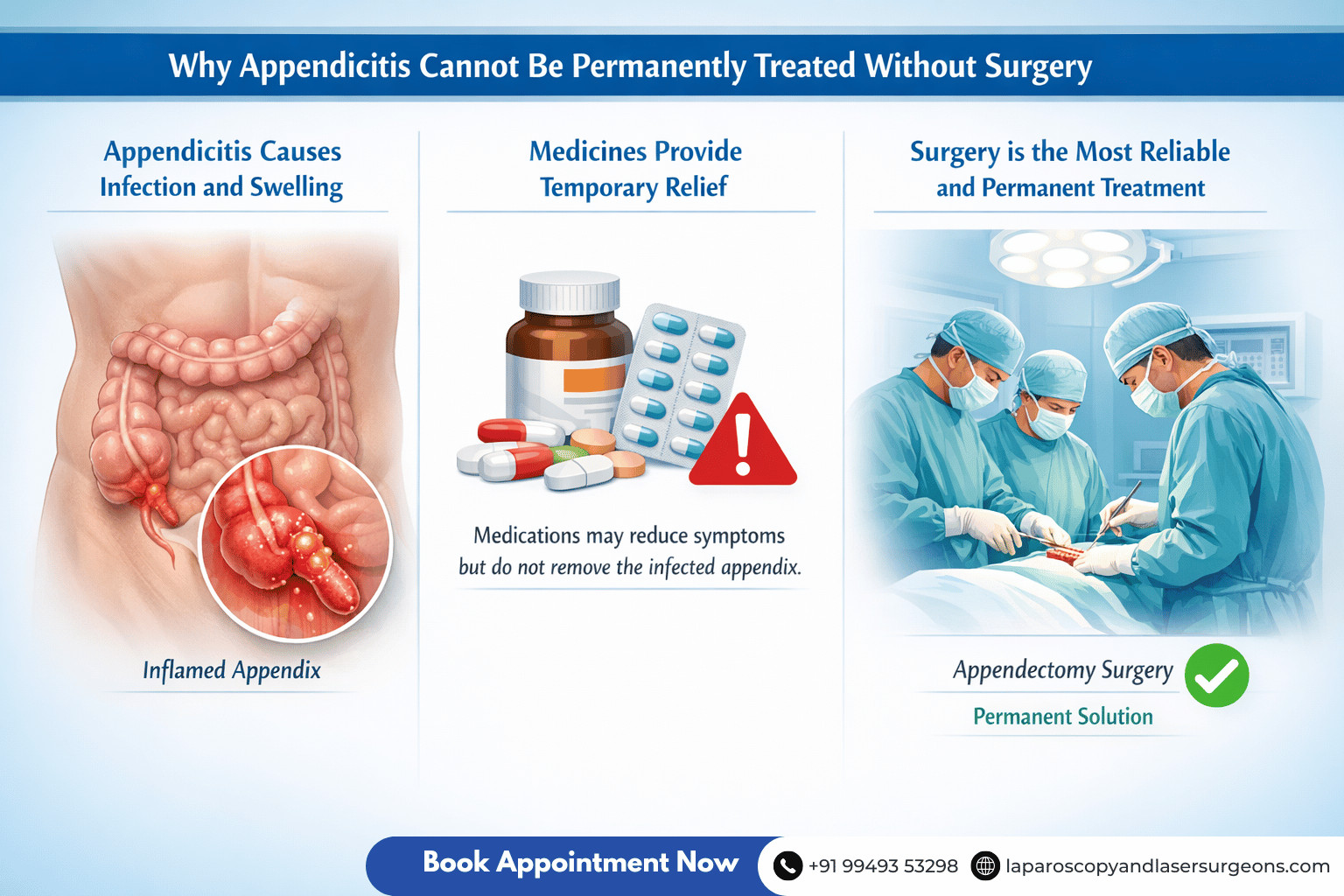
Why Appendicitis Cannot Be Permanently Treated Without Surgery
Appendicitis occurs when the appendix becomes blocked and infected, leading to swelling and pus formation. While pain medicines or antibiotics may temporarily reduce symptoms, they do not remove the infected appendix.
As infection progresses, pressure inside the appendix increases, reducing blood supply and increasing the risk of rupture. Because the appendix does not heal once severely inflamed, surgical removal is considered the most reliable and permanent treatment.
Are There Non-Surgical Treatment Options for Appendicitis?
In very early or selected cases, appendicitis may be managed temporarily with antibiotics under close medical supervision. This approach is considered only when symptoms are mild and imaging confirms uncomplicated appendicitis.
However, non-surgical treatment carries a higher risk of recurrence. Many patients treated initially with antibiotics eventually require surgery. Therefore, antibiotics are usually used as supportive or short-term management rather than definitive treatment.
When Is Appendicitis Surgery Strongly Recommended?
Appendectomy is strongly recommended when appendicitis causes persistent pain, fever, vomiting, or signs of infection. Surgery becomes urgent if there is suspicion of appendix rupture.
Emergency surgery is required in cases of worsening pain, abdominal swelling, or signs of infection spreading inside the abdomen. Early surgery prevents life-threatening complications.

For symptom awareness, you may read
👉 Appendicitis Symptoms You Should Not Ignore
Types of Appendicitis Treatment Available Today
Modern surgical techniques have made appendicitis treatment safer and recovery faster. The choice of treatment depends on the stage of appendicitis and the patient’s overall health.
Open Appendectomy – When Is It Used?
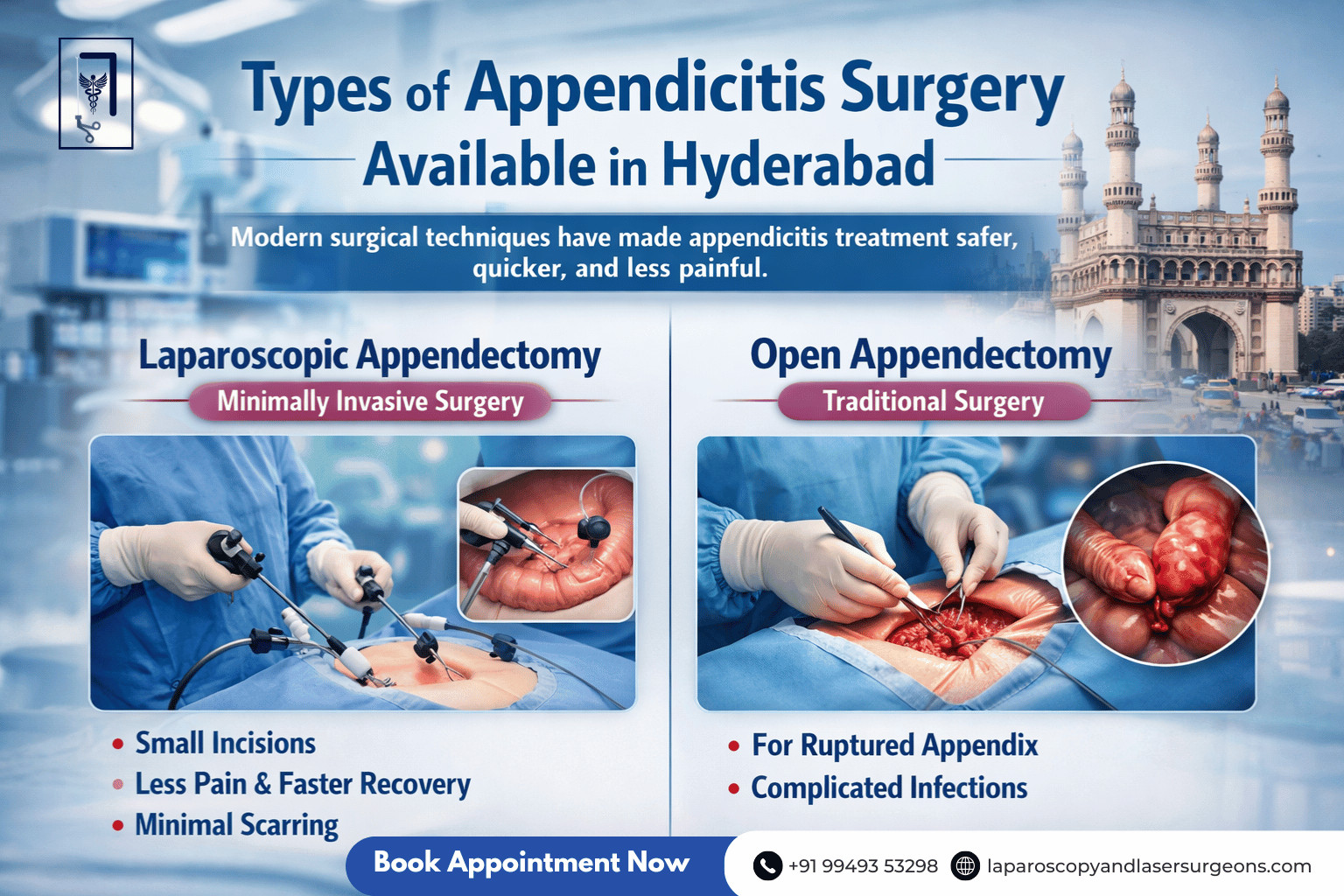
Open appendectomy is a traditional surgical method where the appendix is removed through a single incision in the lower abdomen. This approach is usually used in complicated cases such as ruptured appendix or widespread abdominal infection.
Although effective, open surgery may involve more post-operative discomfort and longer recovery compared to minimally invasive techniques.
Laparoscopic Appendectomy – Modern & Minimally Invasive
Laparoscopic appendectomy is a minimally invasive procedure performed using small incisions and a camera. The infected appendix is removed safely with minimal tissue damage.
This approach results in less pain, smaller scars, reduced infection risk, and faster return to daily activities. It is the preferred method for most uncomplicated appendicitis cases.
👉 Learn more:
Laparoscopic Appendectomy in Hyderabad
How Does the Doctor Decide the Best Treatment Method?
The choice between laparoscopic and open surgery depends on the severity of infection, presence of complications, patient’s medical condition, and imaging findings.
Dr. D. Suresh Babu follows a personalized treatment approach, selecting the safest and most effective surgical method for each patient rather than using a single technique for all cases.
What Happens If Appendicitis Treatment Is Delayed?
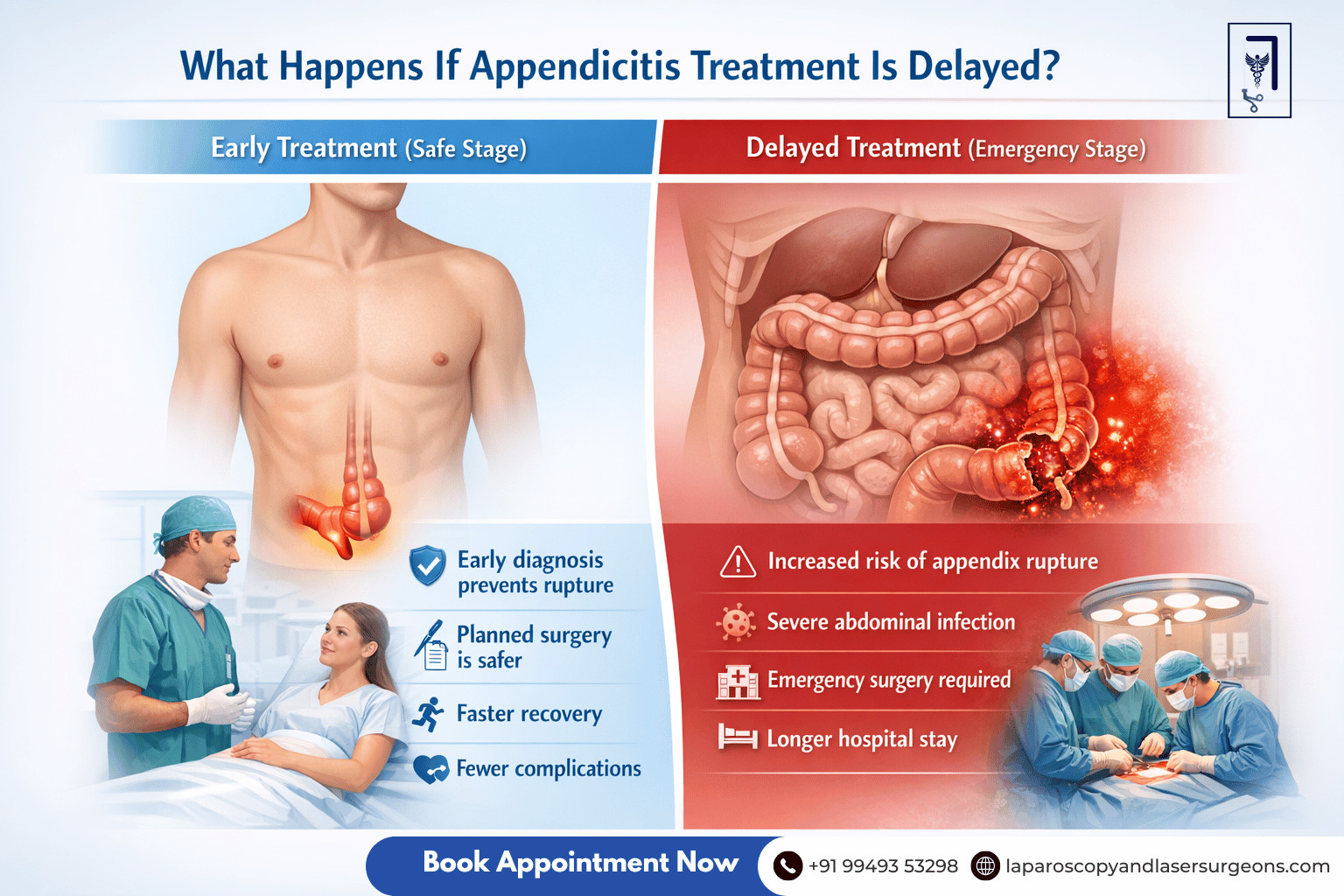
Delaying appendicitis treatment significantly increases the risk of appendix rupture. A ruptured appendix can cause severe infection inside the abdomen, requiring emergency surgery and prolonged hospital stay.
Planned surgery in early appendicitis is safer and associated with faster recovery and fewer complications.
Recovery After Appendicitis Treatment
Recovery depends on the type of surgery and stage of infection. Most patients undergoing laparoscopic surgery can resume light activities within a few days. Following post-operative instructions, maintaining a light diet, and attending follow-up visits help ensure smooth recovery.
Frequently Asked Questions (FAQs)
Most appendicitis cases require surgery for permanent and safe treatment.
Antibiotics may give temporary relief, but recurrence is common without surgery.
Yes. Appendectomy is a commonly performed and safe surgical procedure.
Yes. Laparoscopic surgery is preferred for most uncomplicated appendicitis cases.
Yes. Delaying surgery increases the risk of appendix rupture and infection.
Get Timely Treatment for Appendicitis
Early surgical care helps prevent complications and ensures faster recovery.
Book Consultation