
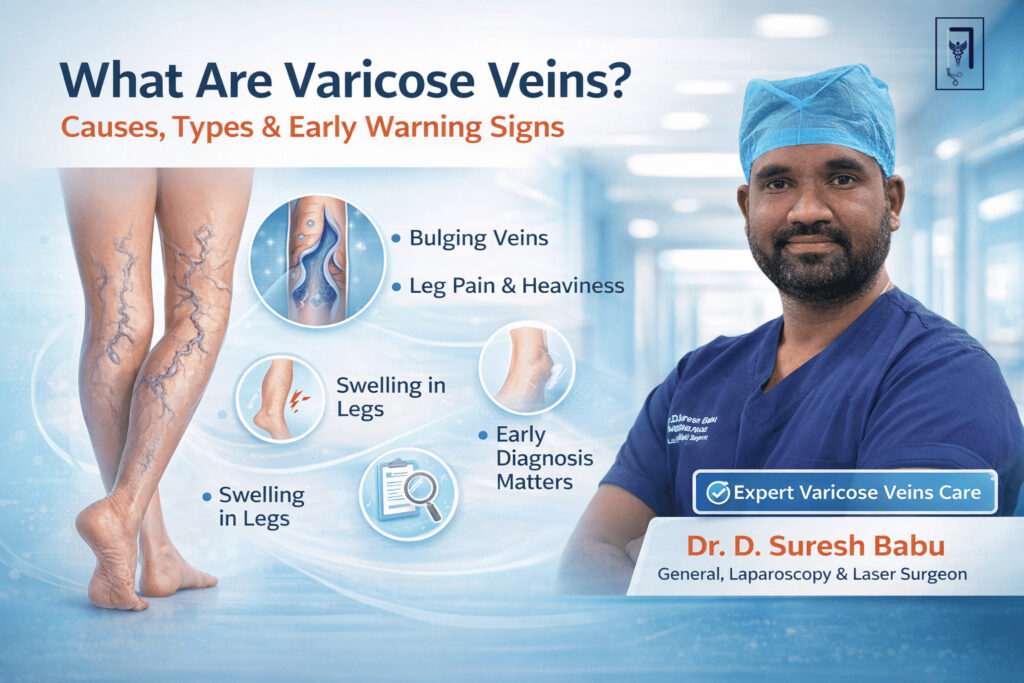
Understanding What Varicose Veins Are
Varicose veins are enlarged, twisted veins that commonly appear on the legs and feet. They develop when the valves inside the veins become weak or damaged, allowing blood to flow backward and pool within the veins instead of moving efficiently toward the heart.
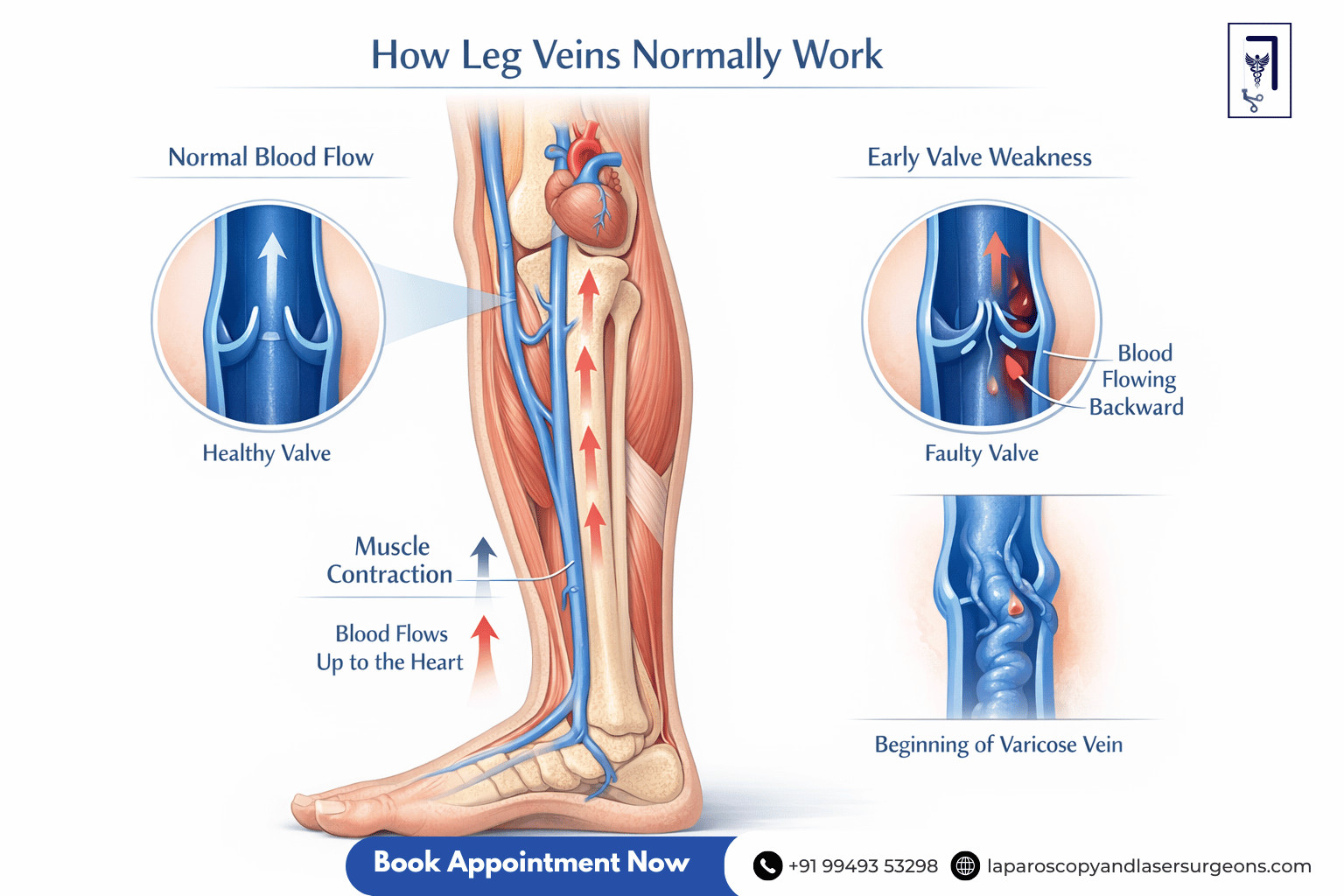
Under normal conditions, veins contain one-way valves that help push blood upward against gravity. When these valves fail, blood accumulates, causing the veins to stretch, enlarge, and become visible. Over time, this leads to the characteristic bulging and discoloration seen in varicose veins.
👉 For a complete treatment overview, read:
Varicose Veins Treatment in Hyderabad – Complete Patient Guide
How the Leg Veins Normally Work
Veins in the legs play a vital role in returning blood to the heart. Muscle contractions during walking help push blood upward, while valves prevent it from flowing backward.
When these valves function properly, blood flows smoothly. Problems begin when valve weakness allows blood to leak backward, increasing pressure within the veins and leading to varicose vein formation.
How Varicose Veins Develop Over Time
Varicose veins usually develop gradually. Initially, valve weakness causes mild blood pooling without visible changes. At this stage, patients may experience leg heaviness or fatigue.
As pressure builds up over time, veins stretch and enlarge. The walls become weaker, and veins begin to bulge and twist. Without treatment, symptoms worsen and complications may develop.
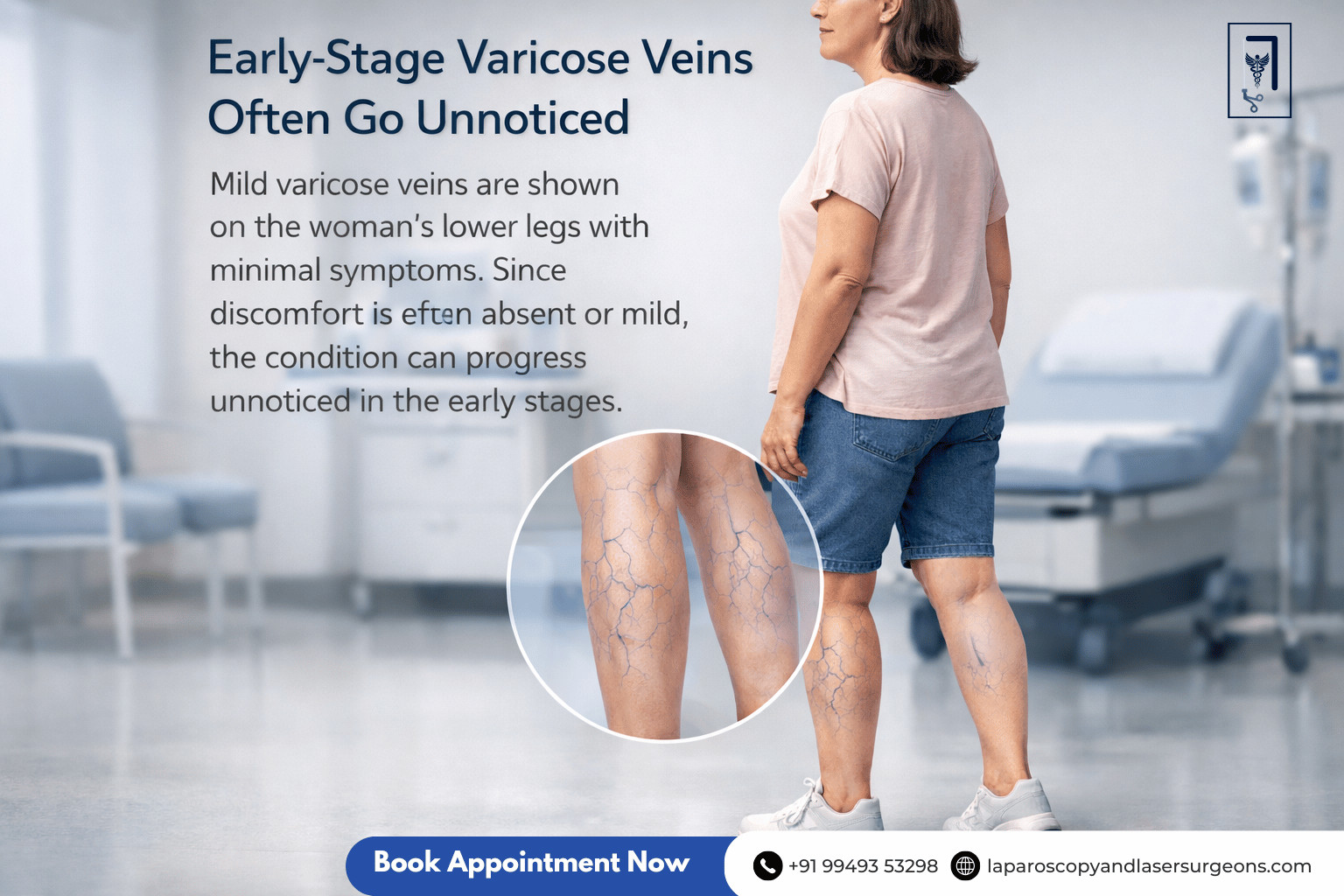
Why Varicose Veins Often Go Unnoticed in the Early Stages
In the early stages, varicose veins may cause minimal discomfort. Many people notice only mild leg heaviness or occasional swelling and ignore these symptoms.
Since pain is not always severe initially, patients often delay medical consultation. Unfortunately, varicose veins continue to progress even when symptoms appear mild.
Early Warning Signs of Varicose Veins
Early symptoms include aching, heaviness, or tiredness in the legs, especially after prolonged standing or sitting. Swelling around the ankles is another common early sign.
Visible blue or purple veins may start appearing on the legs. Some patients also experience itching or burning sensations around affected veins.
👉 Related reading:
Varicose Veins Symptoms You Should Not Ignore
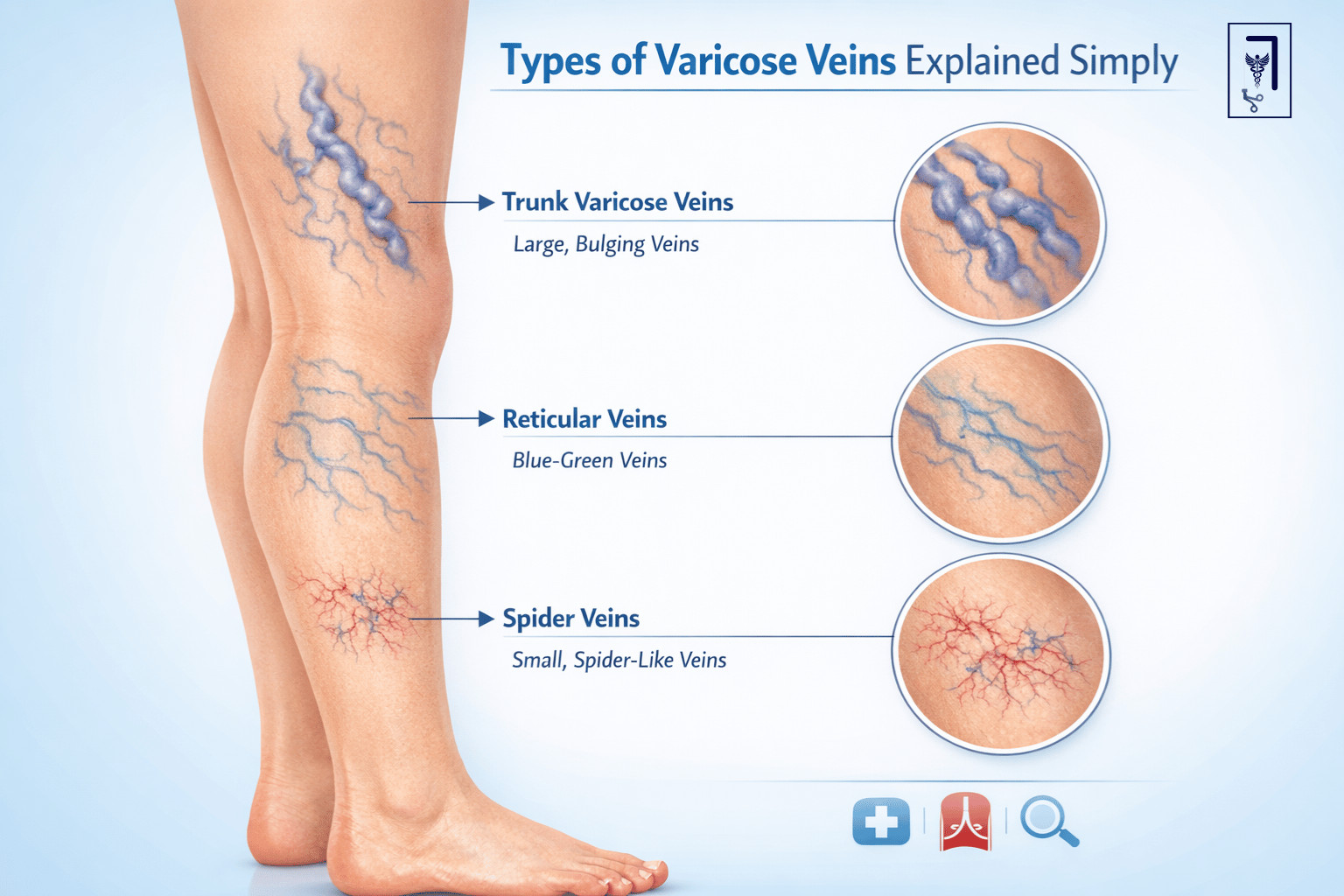
Types of Varicose Veins Explained Simply
Varicose veins are classified based on the type of veins affected.
Trunk varicose veins are large, bulging veins visible under the skin.
Spider veins are smaller, web-like veins that appear on the surface.
Reticular veins are medium-sized veins that often feed spider veins.
Understanding the type helps determine the best treatment approach.
Common Causes of Varicose Veins
Several factors contribute to varicose veins. Prolonged standing, obesity, pregnancy, and aging increase pressure on leg veins.
Genetic predisposition plays a significant role. Hormonal changes and lack of physical activity also contribute to valve weakness.
Who Is at Higher Risk of Developing Varicose Veins
People who stand or sit for long hours, such as teachers, drivers, and office workers, are at higher risk.
Women, older adults, pregnant women, and individuals with a family history of varicose veins are more likely to develop the condition.
How Varicose Vein Pain Is Different from Other Leg Pain
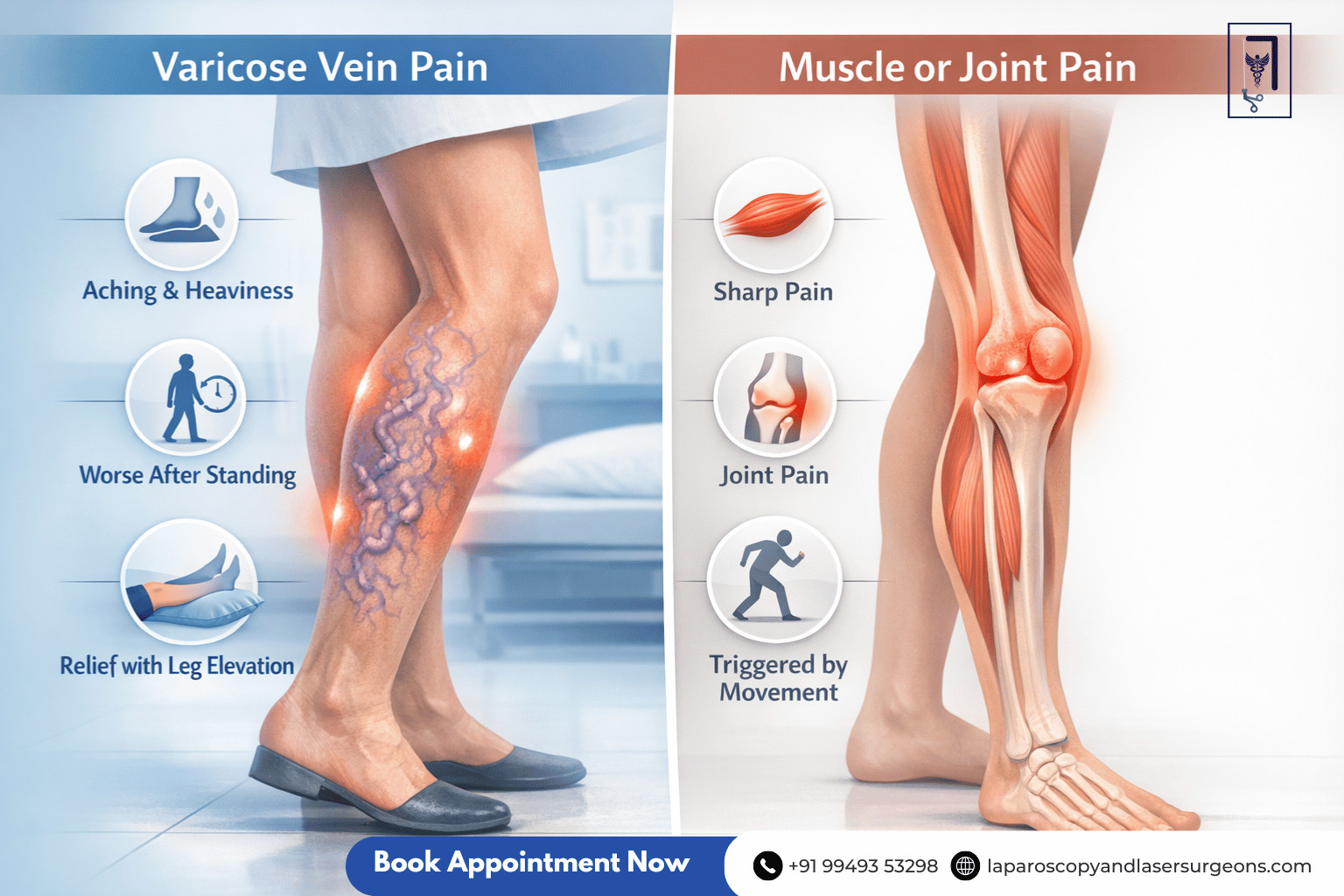
Varicose vein pain often feels like aching, throbbing, or heaviness rather than sharp pain. Symptoms usually worsen after standing for long periods and improve with leg elevation.
This pattern helps differentiate varicose vein pain from muscle or joint pain.
When Should You Seek Medical Advice for Varicose Veins?
You should consult a doctor if leg pain, swelling, or visible veins persist or worsen over time.
Early diagnosis allows simple, minimally invasive treatment and prevents complications.
👉 Next read:
Do Varicose Veins Need Surgery? Treatment Options Explained
Frequently Asked Questions (FAQs)
He has over 14 years of experience and specializes in advanced laparoscopic and laser hernia surgery.
Yes, he treats inguinal, umbilical, incisional, ventral, and hiatal hernias.
All surgeries are performed at Sunridge Multispecialty Hospital, Moti Nagar, Hyderabad.
Yes, laparoscopic and laser-assisted hernia surgeries are offered when suitable.
You should consult early if you notice hernia symptoms or have been advised surgery.
Get Relief from Hernia Today
Consult Dr. Suresh Babu for expert diagnosis and personalized treatment.
Book Consultation