
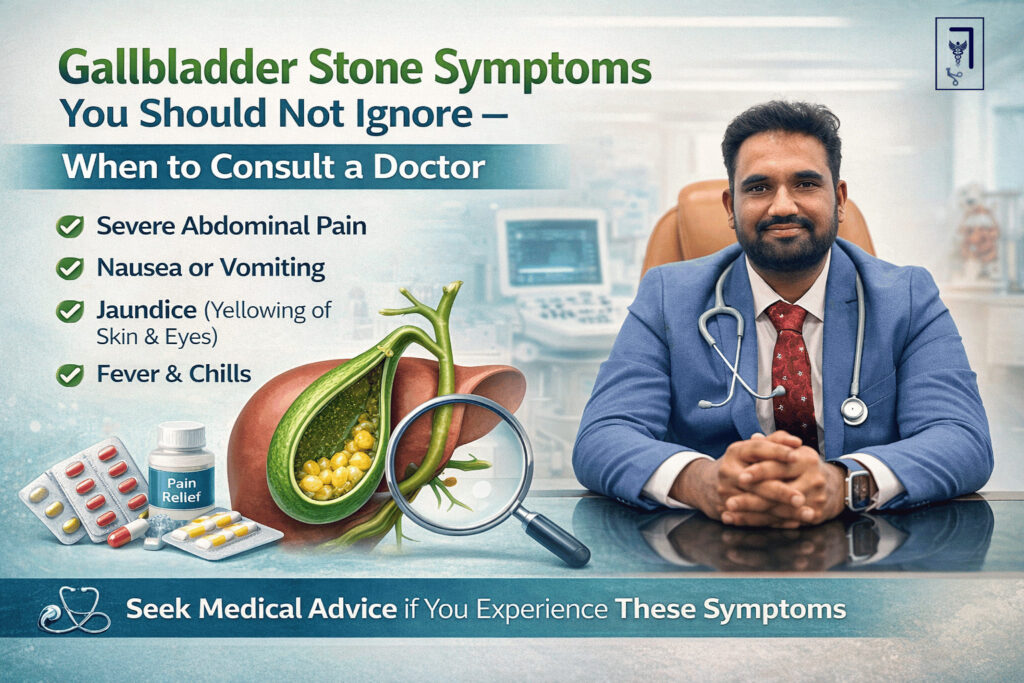
Gallbladder Stone Symptoms: Why Early Recognition Matters
Gallbladder stones often remain silent for a long period, which is why many patients do not realize they have the condition. In the early stages, gallstones may cause mild digestive discomfort that does not interfere significantly with daily life.
However, once gallstones start causing symptoms, they usually recur and increase in severity. What begins as mild abdominal discomfort can progress into severe pain and serious complications. Recognizing gallbladder stone symptoms early allows patients to seek timely medical care and avoid emergency situations.
For a complete overview of treatment options, you may refer to
👉 Gallbladder Stones Treatment in Hyderabad – Complete Patient Guide
Why Many Patients Ignore Gallbladder Stone Symptoms Initially
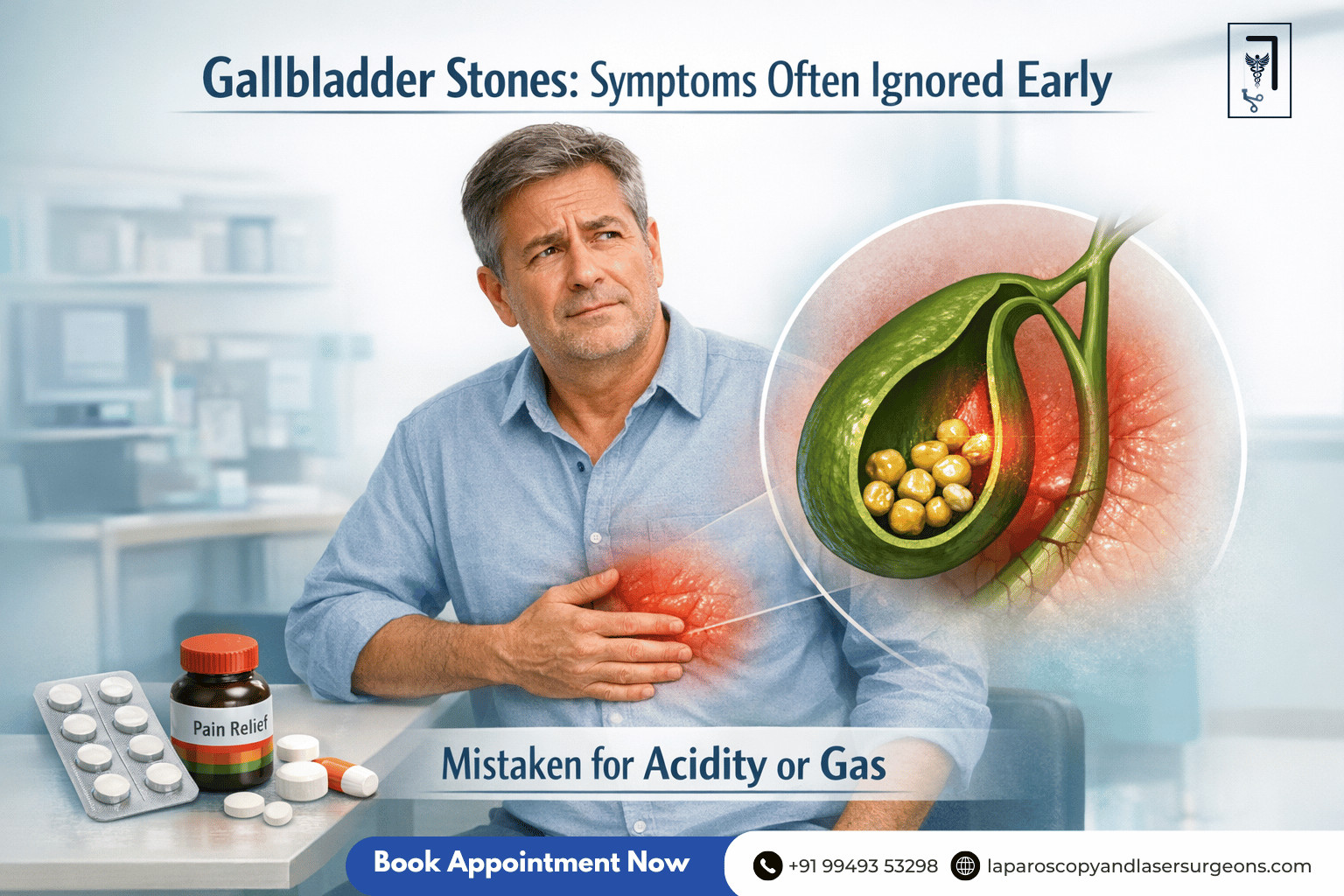
One of the main reasons gallbladder stone symptoms are ignored is that early discomfort is often mistaken for common digestive issues such as acidity or gas. Many patients experience pain after meals and assume it is due to food intolerance.
Some people take antacids or pain relievers, which may temporarily reduce symptoms. This creates a false sense of relief, while gallstones continue to irritate the gallbladder internally.
Early Symptoms of Gallbladder Stones You Should Pay Attention To
The earliest symptom of gallbladder stones is usually discomfort or pain in the upper right side of the abdomen, especially after eating fatty or heavy meals. This pain may feel dull at first and gradually intensify.
Patients may also experience bloating, nausea, indigestion, or a feeling of fullness after meals. These symptoms may come and go, leading many people to ignore them.
Another early sign is pain that radiates to the right shoulder or upper back. This pattern of pain is characteristic of gallbladder-related problems.
How Gallbladder Stone Symptoms Progress Over Time
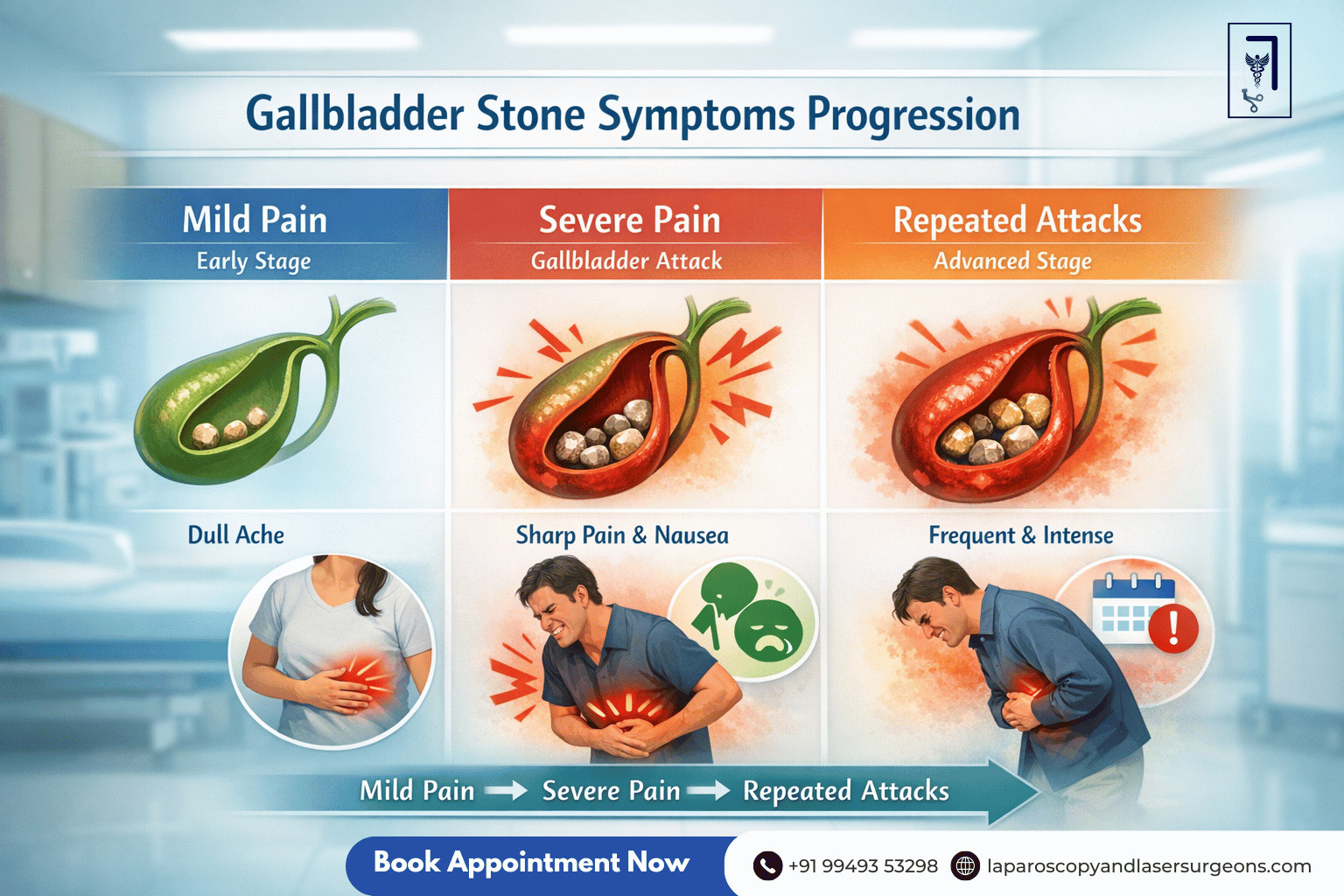
As gallstones increase in size or number, symptoms become more frequent and severe. Pain attacks, commonly called gallbladder attacks, may occur suddenly and last from minutes to several hours.
The pain can become sharp and intense, making it difficult to move or find a comfortable position. Nausea and vomiting may accompany the pain as the gallbladder becomes inflamed.
Repeated attacks indicate ongoing gallbladder irritation and require medical evaluation.
Symptoms Based on Different Gallbladder Stone Complications
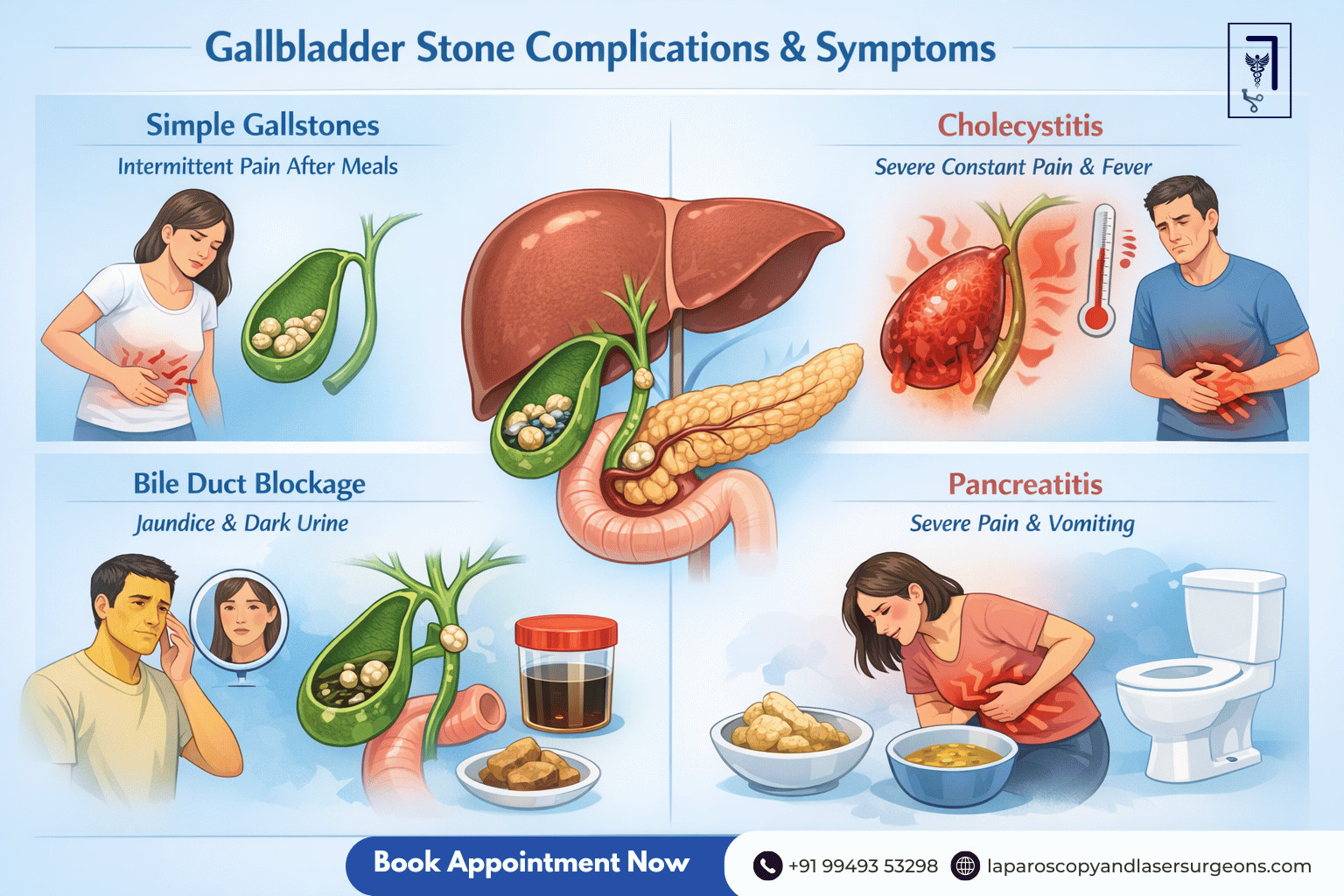
Gallbladder stone symptoms vary depending on whether complications have developed.
In simple gallstones, pain occurs intermittently, usually after meals.
In gallbladder inflammation (cholecystitis), pain becomes constant and severe, often associated with fever.
If stones block the bile duct, patients may develop jaundice, dark urine, and pale stools.
In severe cases, gallstones can lead to pancreatitis, causing intense abdominal pain and vomiting.
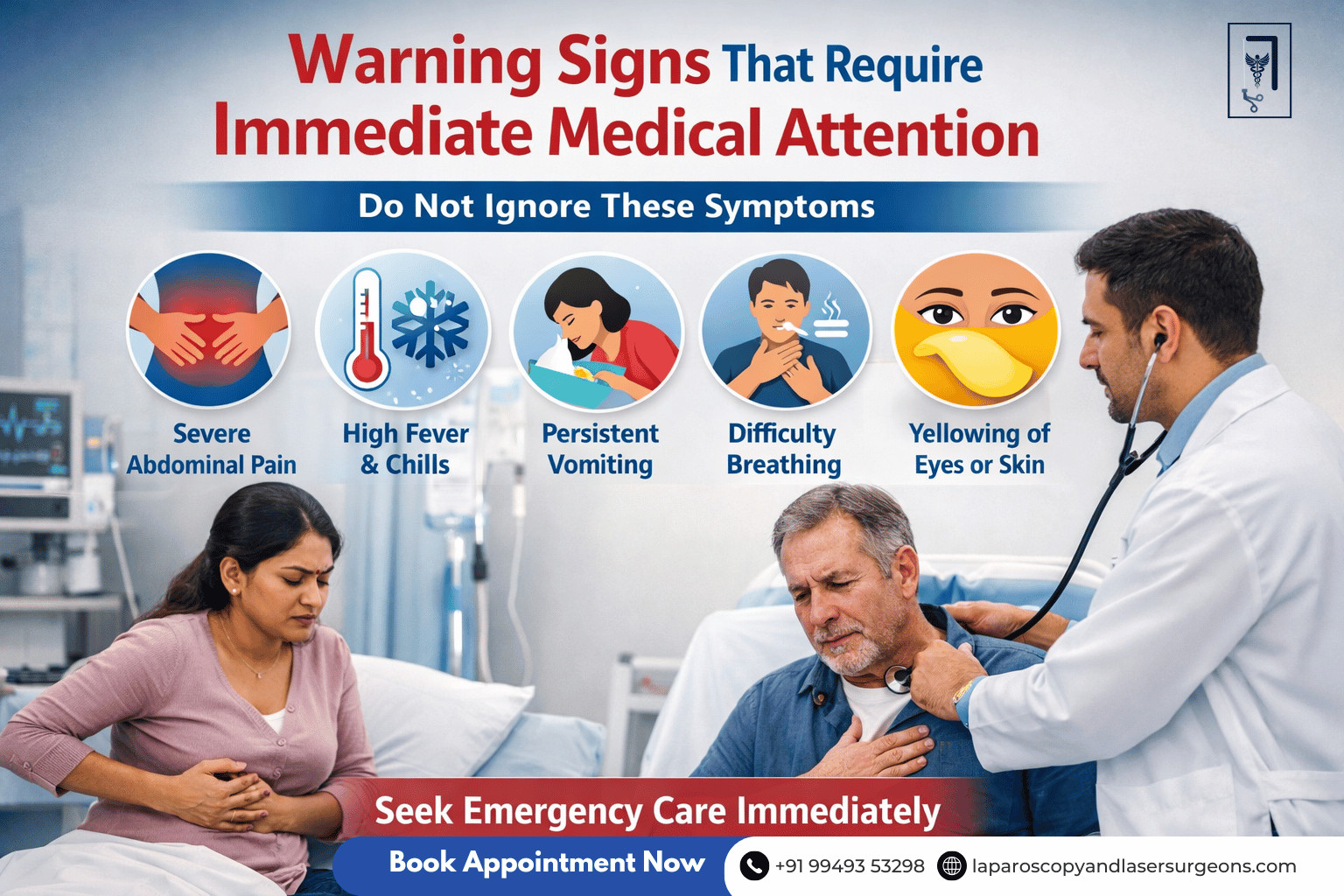
Warning Signs That Require Immediate Medical Attention
Certain symptoms indicate a medical emergency and should never be ignored. These include severe abdominal pain lasting several hours, high fever, chills, persistent vomiting, or yellowing of the eyes and skin.
Sudden worsening of pain or pain associated with breathing difficulty also requires urgent evaluation. These signs may indicate serious complications that need immediate treatment.
When Should You Consult a Gallbladder Specialist in Hyderabad?
You should consult a surgeon if you experience repeated abdominal pain after meals, especially if it is localized to the upper right abdomen or radiates to the back.
Early consultation allows planned treatment and helps avoid emergency surgery.
For treatment planning, you may also read
👉 Do Gallbladder Stones Need Surgery? Treatment Options Explained
Why Early Diagnosis Improves Treatment Outcomes
When gallbladder stones are diagnosed early, treatment can be planned safely using minimally invasive surgery. Early treatment reduces pain episodes, prevents infection, and ensures faster recovery.
Delayed diagnosis often leads to complications that require emergency surgery and longer hospital stays.
Frequently Asked Questions (FAQs)
Yes, early gallbladder stones often cause mild digestive discomfort such as bloating or indigestion.
Gallbladder pain most commonly occurs after meals, especially after eating fatty or oily foods.
Yes, gallbladder stone pain often occurs in episodes and may subside temporarily before returning.
Repeated or severe gallbladder pain may indicate inflammation, infection, or blockage and should not be ignored.
You should consult a doctor as soon as gallbladder pain or digestive symptoms recur or worsen.
Expert Care for Gallbladder Stone Symptoms
Consult Dr. D. Suresh Babu for timely diagnosis and safe treatment of gallbladder stones.
Book Consultation