
Why Diet and Lifestyle Matter After Anal Fistula Treatment
Successful anal fistula treatment does not end with surgery or laser therapy. Proper post-treatment care plays a crucial role in healing, preventing infection, and reducing the risk of recurrence. Diet and daily habits directly affect bowel movements and wound healing.
Smooth bowel movements reduce strain on the treated area and promote faster recovery. Following correct dietary and lifestyle advice ensures long-term relief and comfort.
For treatment overview, read
👉 Fistula Treatment in Hyderabad – Complete Patient Guide
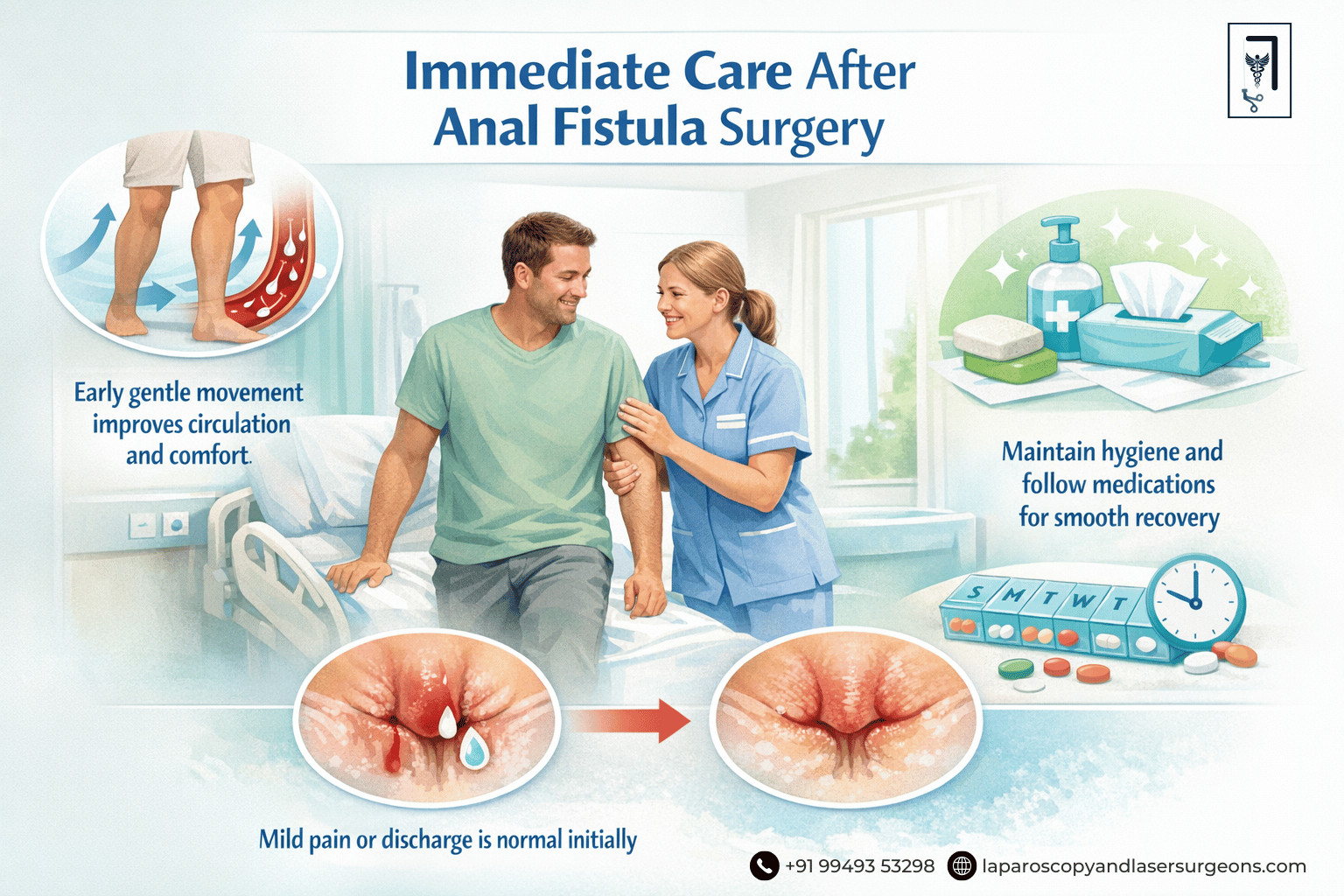
Immediate Care After Anal Fistula Surgery
After fistula surgery or laser treatment, patients are usually encouraged to start gentle movement within a few hours. Early mobility improves blood circulation and reduces discomfort.
Mild pain or discharge is normal initially and gradually decreases. Maintaining local hygiene and following medication instructions are essential during the early recovery period.
Diet After Anal Fistula Treatment – What to Eat
A soft, fiber-rich diet helps prevent constipation and reduces pressure during bowel movements. Foods such as fruits, vegetables, whole grains, and salads support smooth digestion.
Adequate fluid intake is equally important. Drinking sufficient water keeps stools soft and reduces irritation at the surgical site.
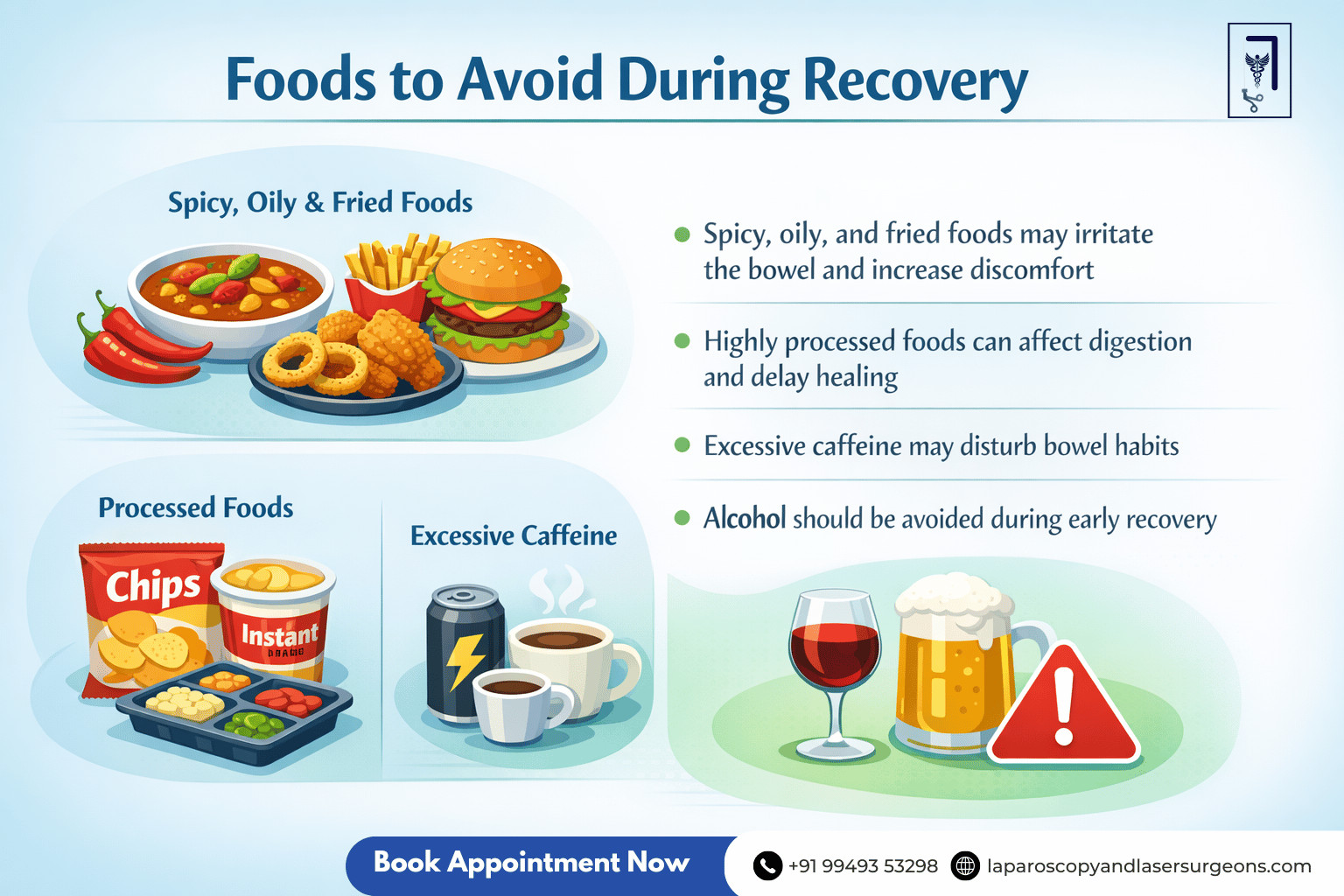
Foods to Avoid During Recovery
Spicy, oily, and fried foods should be avoided during the healing phase, as they may irritate the bowel and worsen discomfort.
Highly processed foods and excessive caffeine can affect bowel habits and delay healing. Avoiding alcohol during early recovery is also advised.
Importance of Preventing Constipation
Constipation is one of the main concerns after fistula surgery. Straining during bowel movements can cause pain and delay wound healing.
High-fiber diet, adequate hydration, and stool-softening medications when prescribed help prevent constipation and protect the surgical area.
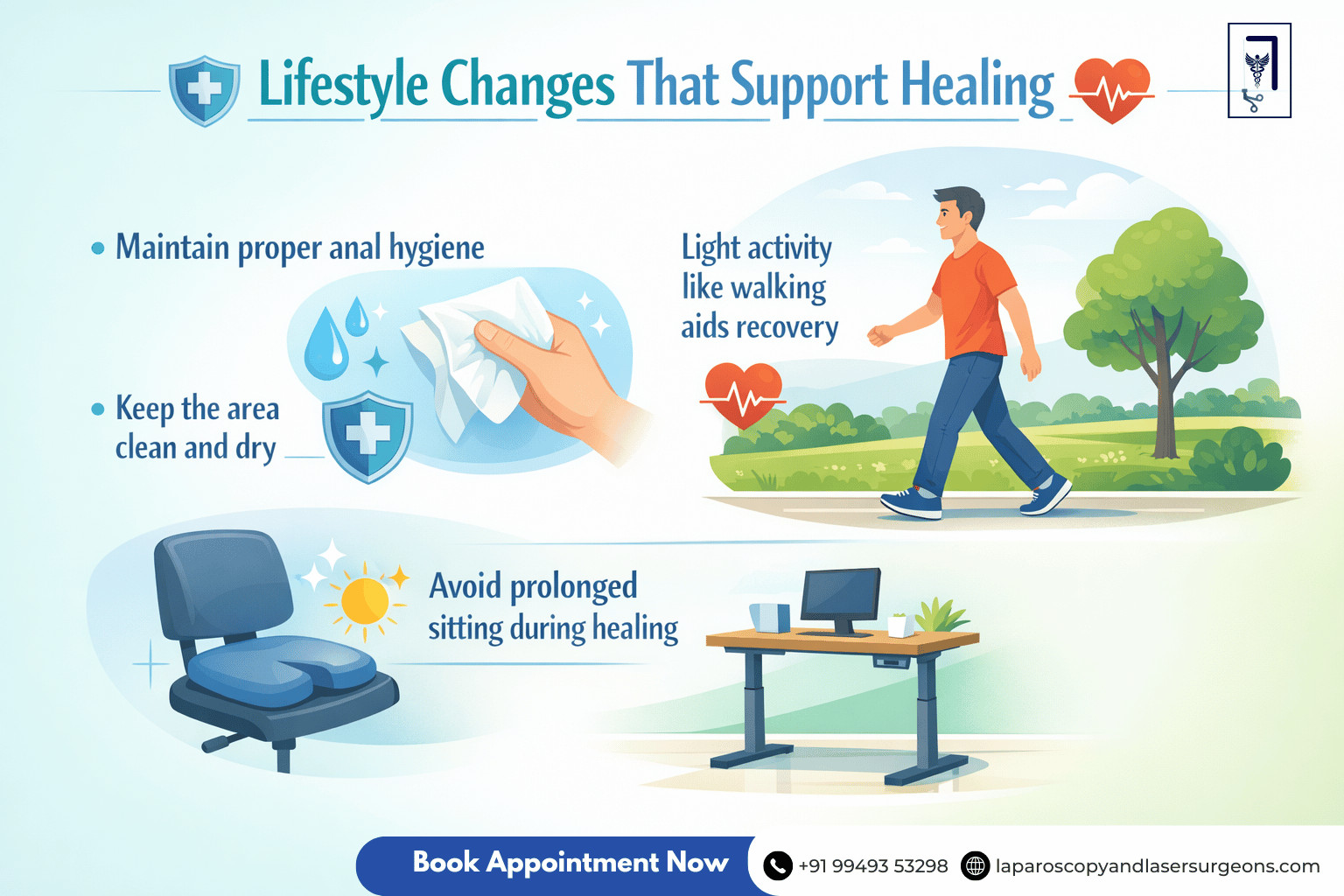
Lifestyle Changes That Support Healing
Maintaining proper anal hygiene is crucial. Gentle cleaning after bowel movements and keeping the area dry helps prevent infection.
Light physical activity such as walking promotes circulation and recovery. Prolonged sitting should be avoided during the initial healing period.
👉 Related reading:
Laser Treatment for Anal Fistula in Hyderabad
When Can You Return to Normal Activities?
Most patients can resume light daily activities within a few days after laser treatment. Return to work depends on individual comfort and job requirements.
Heavy lifting and strenuous exercise should be avoided until healing is complete and medical clearance is given.
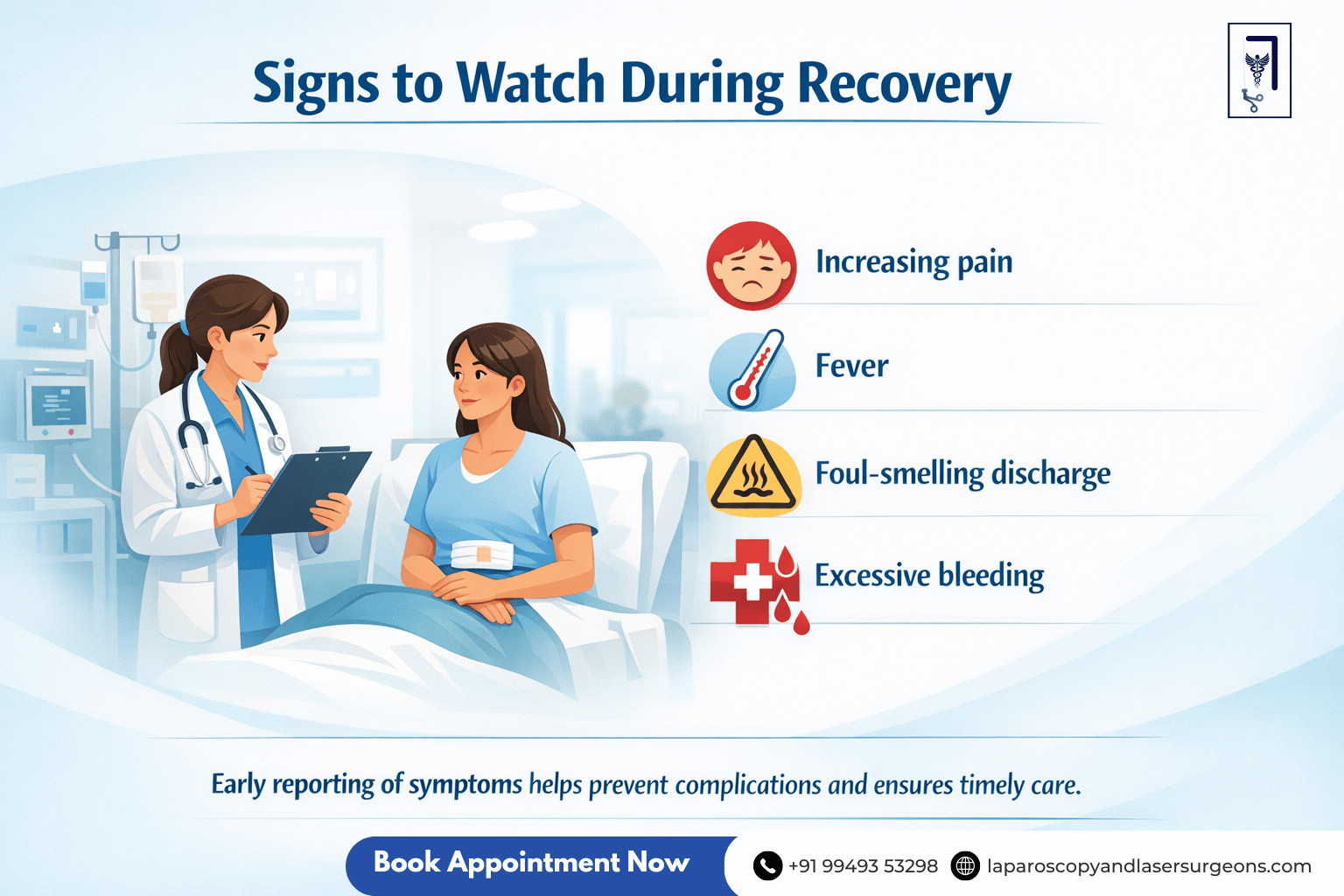
Signs to Watch During Recovery
Patients should monitor for increasing pain, fever, foul-smelling discharge, or excessive bleeding. While mild discharge is normal initially, worsening symptoms require medical attention.
Early reporting of symptoms helps prevent complications and ensures timely care.
Why Follow-Up Care Is Important
Follow-up visits allow the surgeon to assess healing and confirm fistula closure. Regular monitoring reduces recurrence risk and ensures complete recovery.
Proper follow-up also helps address dietary or bowel-related concerns during recovery.
Frequently Asked Questions (FAQs)
A high-fiber diet with plenty of fluids helps keep stools soft and supports smooth healing after fistula surgery.
Yes, you can sit normally, but prolonged sitting should be avoided during the initial recovery period.
Recovery usually takes a few weeks and depends on the type of fistula and treatment method used.
Mild discharge is normal during the early healing phase and gradually reduces as recovery progresses.
You should contact your doctor if pain, fever, swelling, or discharge increases or does not improve.
Supportive Care for Smooth Fistula Recovery
Consult Dr. D. Suresh Babu for expert post-surgery care and guidance after anal fistula treatment.
Book Consultation