
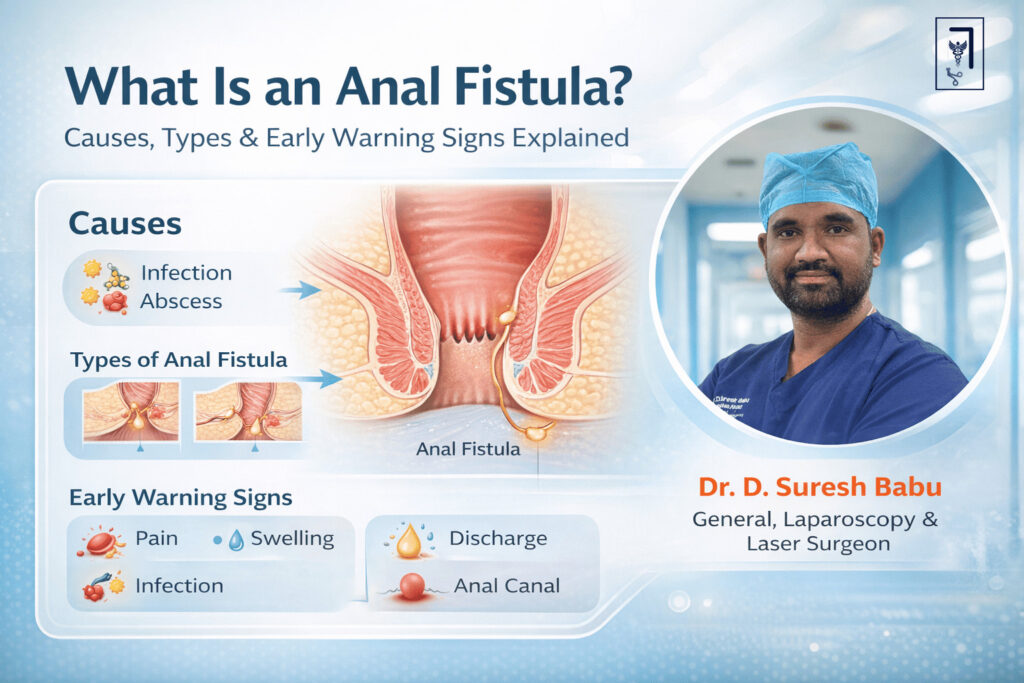
Understanding What an Anal Fistula Is
An anal fistula is an abnormal tunnel-like passage that forms between the inside of the anal canal and the skin surrounding the anus. This tract usually develops after an anal abscess fails to heal completely, leaving behind a persistent pathway for infection.
The fistula allows pus or fluid to drain continuously or intermittently, causing repeated infection and irritation. Anal fistula is considered a chronic anorectal condition and does not resolve permanently without medical or surgical intervention.
👉 For a complete treatment overview, read:
Fistula Treatment in Hyderabad – Complete Patient Guide
How the Anal Area Normally Functions
The anal canal contains glands that help lubricate the passage of stool. These glands normally drain without any problem.
When bacteria block these glands, infection develops and leads to abscess formation. If the abscess does not heal fully, a fistula tract may form between the infected gland and the skin.
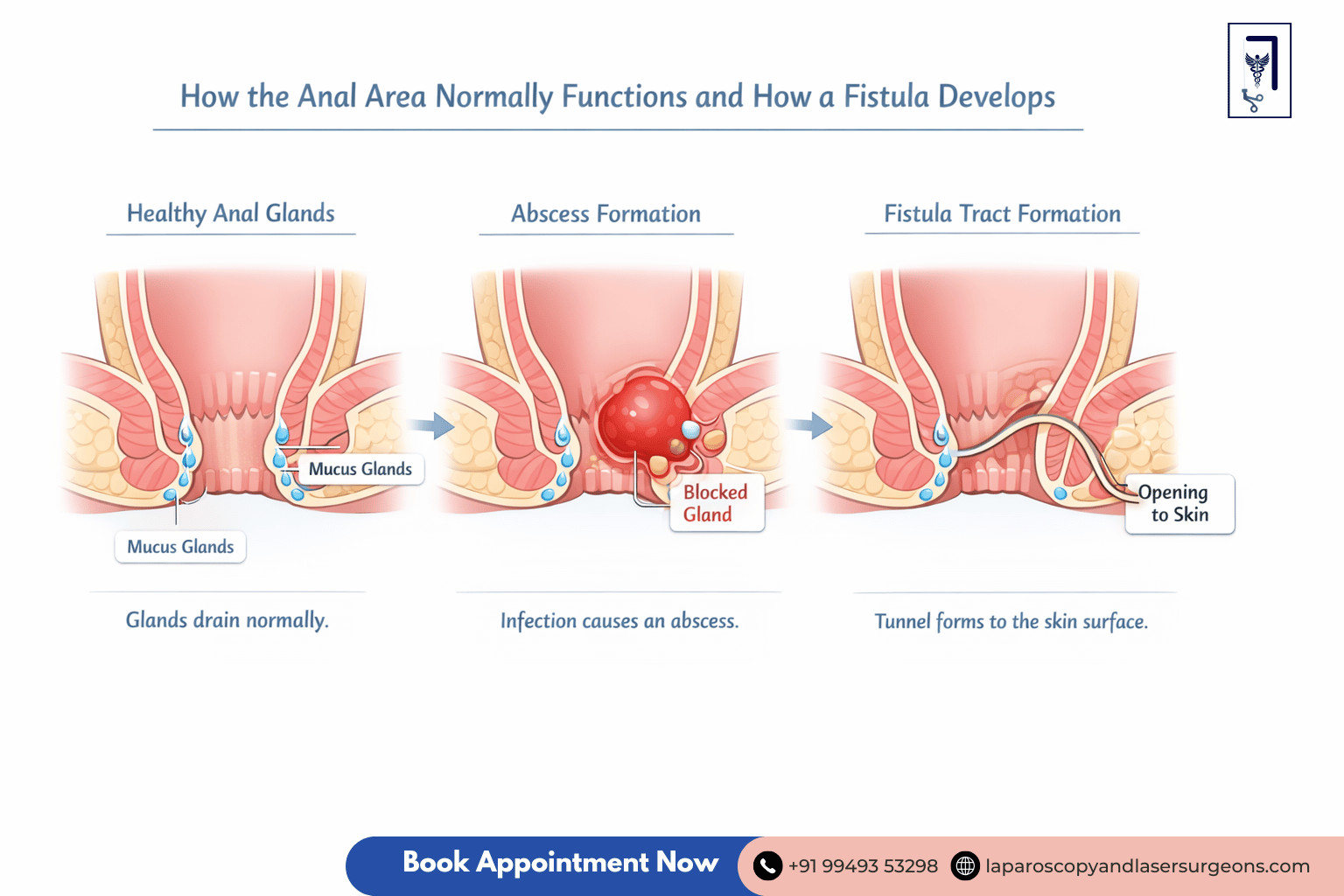
How Anal Fistula Develops Over Time
Anal fistula usually develops gradually. Initially, an abscess forms due to infection. Once the abscess drains or bursts, symptoms may temporarily reduce.
However, the infected tract remains beneath the skin. Over time, repeated infection causes persistent discharge, pain, and inflammation, eventually leading to a well-formed fistula.
Why Anal Fistula Often Goes Unnoticed in the Early Stages
In early stages, symptoms may be mild and intermittent. Patients may notice occasional discharge or slight discomfort that improves temporarily.
Because pain may not be severe initially, many patients delay medical consultation. Unfortunately, the fistula continues to develop internally even when symptoms appear mild.
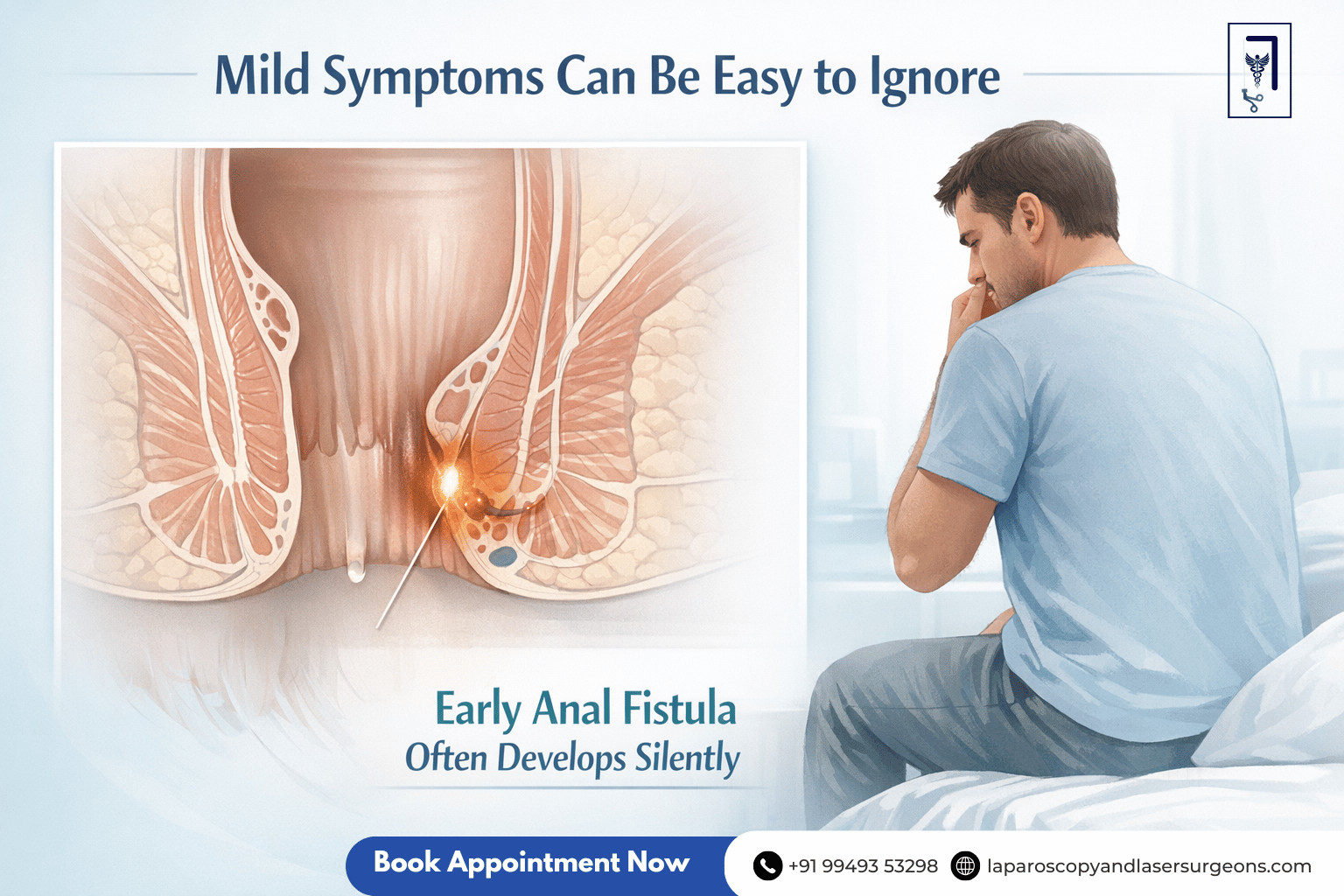
Early Warning Signs of Anal Fistula
Early signs include persistent or recurring discharge of pus or fluid from the skin near the anus. Patients may also notice itching, irritation, or redness around the area.
Mild pain during sitting or bowel movements, along with swelling near the anal opening, may indicate early fistula formation.
👉 Related reading:
Anal Fistula Symptoms You Should Not Ignore
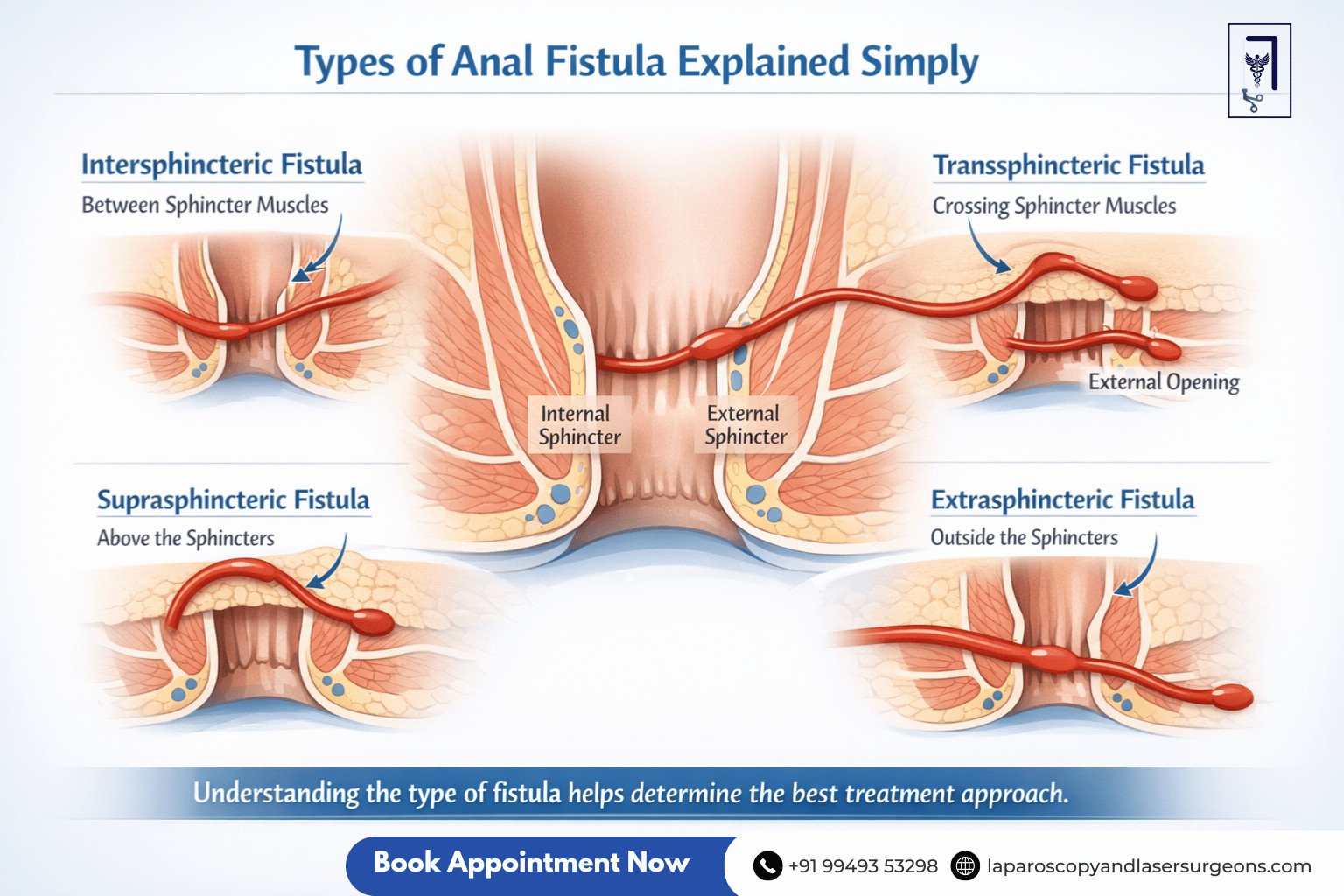
Types of Anal Fistula Explained Simply
Anal fistulas are classified based on their location and complexity.
Intersphincteric fistula is the most common type and passes between anal sphincter muscles.
Transsphincteric fistula crosses the sphincter muscles and opens externally.
Suprasphincteric and extrasphincteric fistulas are more complex and less common.
Understanding the type of fistula helps determine the safest treatment approach.
Common Causes of Anal Fistula
The most common cause of anal fistula is an untreated or recurrent anal abscess. Other causes include Crohn’s disease, tuberculosis, trauma, previous anal surgery, or radiation therapy.
In some cases, the exact cause may not be clearly identified, but infection remains the underlying factor.
Who Is at Higher Risk of Developing Anal Fistula
Individuals with a history of anal abscesses are at higher risk. Patients with chronic inflammatory bowel disease or weakened immunity are also more susceptible.
Men are more commonly affected than women, and recurrence risk increases if early treatment is delayed.
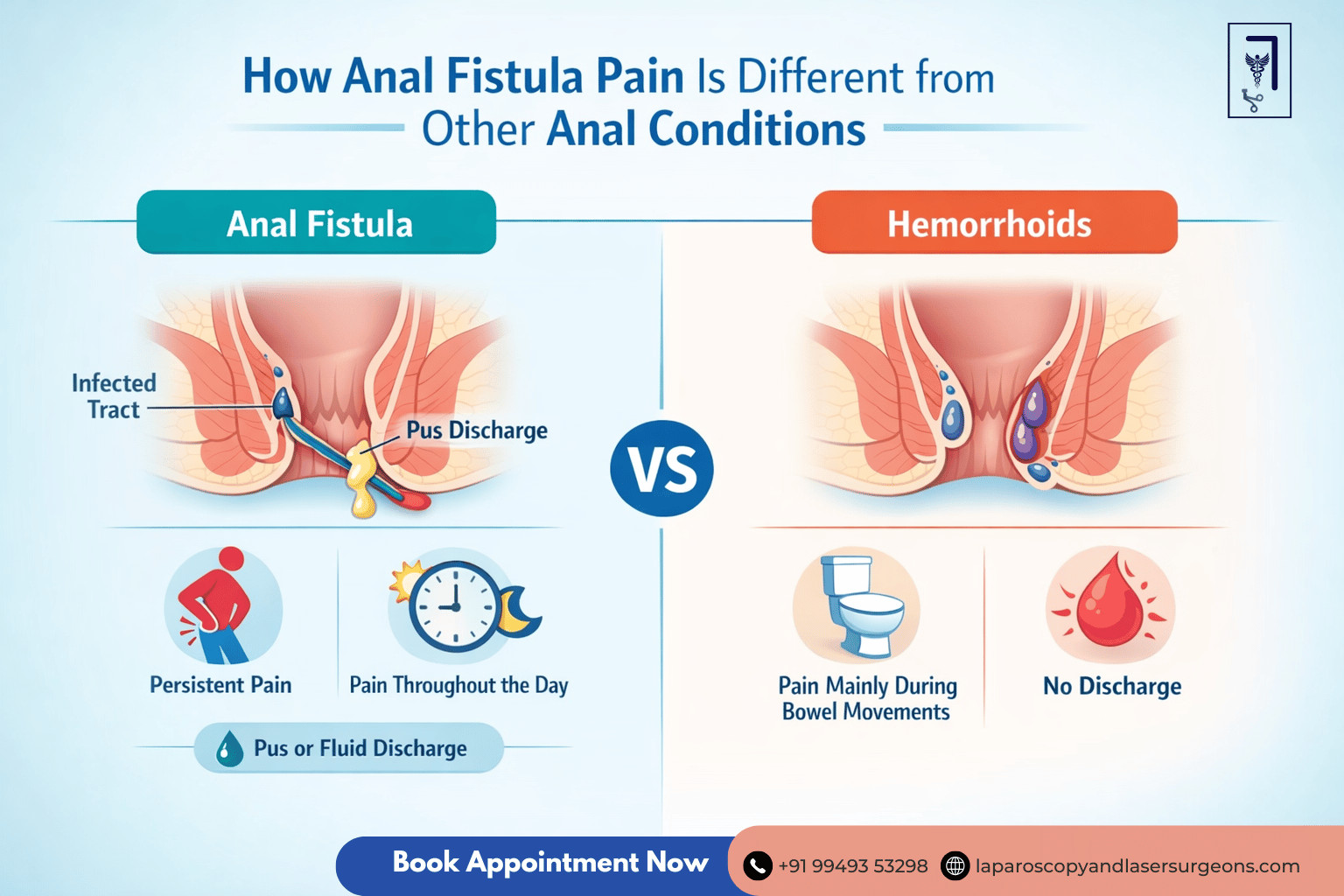
How Anal Fistula Pain Is Different from Other Anal Conditions
Anal fistula pain is often persistent and associated with discharge. Unlike hemorrhoids, which cause pain mainly during bowel movements, fistula pain may occur throughout the day.
The presence of pus or fluid discharge is a key distinguishing feature of anal fistula.
When Should You Seek Medical Advice for Anal Fistula?
You should consult a doctor if you notice repeated discharge, swelling, pain, or recurrent abscess near the anus.
Early diagnosis allows simpler treatment and prevents complex fistula formation.
👉 Next read:
Do Anal Fistulas Heal Without Surgery? Treatment Options Explained
Frequently Asked Questions (FAQs)
An anal fistula is an abnormal tunnel-like connection between the anal canal and the skin around the anus.
No, anal fistula does not heal permanently on its own and requires medical or surgical treatment.
No, anal fistula is usually caused by an infection from an anal abscess, not by piles.
Some fistulas may be painless initially, but symptoms usually worsen over time if left untreated.
You should consult a doctor as soon as you notice persistent discharge, pain, swelling, or infection.
Expert Care for Anal Fistula
Consult Dr. D. Suresh Babu for accurate diagnosis and advanced anal fistula treatment.
Book Consultation