
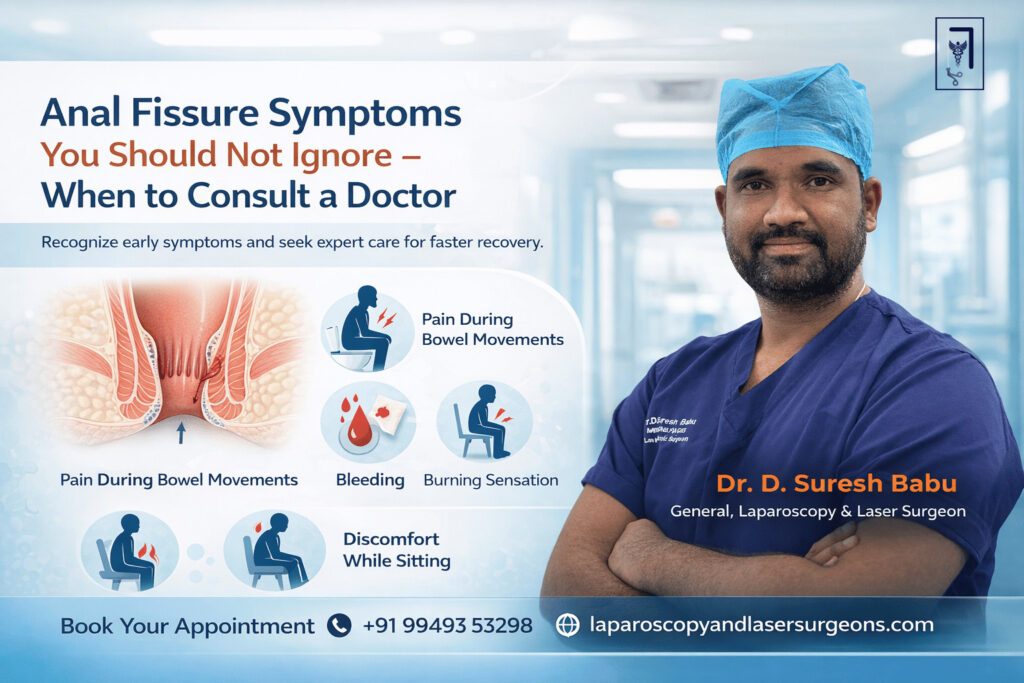
Anal Fissure Symptoms: Why Early Recognition Matters
Anal fissure usually begins with pain during bowel movements, which many patients initially ignore. In the early stage, pain may last only a few minutes and improve after passing stools, leading patients to believe the condition is minor.
However, anal fissure is a progressive condition. Without timely treatment, the fissure can deepen, muscle spasm can develop, and pain can become severe and long-lasting. Early recognition of symptoms allows faster healing and helps prevent the fissure from becoming chronic.
For a complete overview of treatment options, you may refer to
👉 Anal Fissure Treatment in Hyderabad – Complete Patient Guide
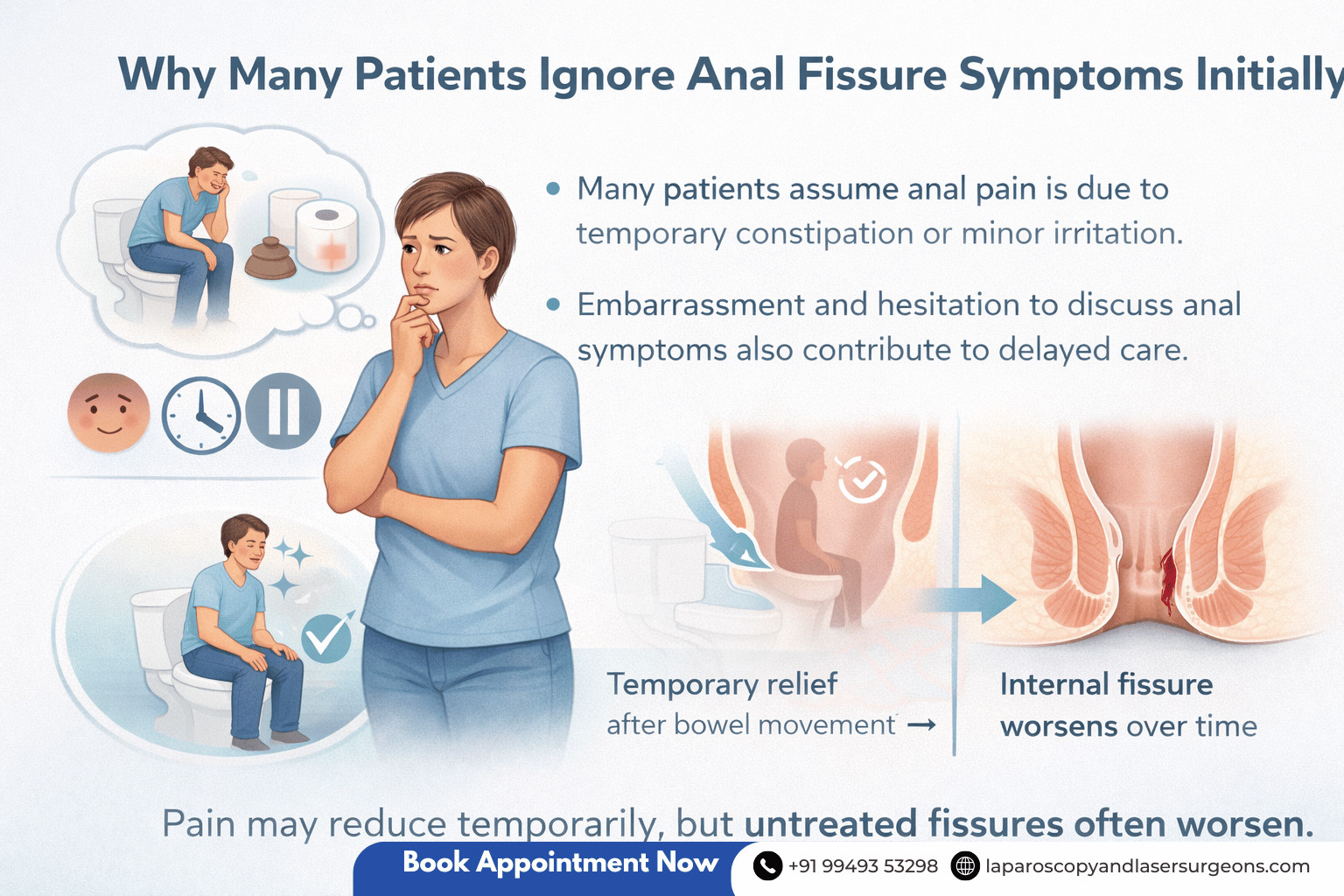
Why Many Patients Ignore Anal Fissure Symptoms Initially
Many patients assume anal pain is due to temporary constipation or minor irritation. Because pain may reduce after bowel movements, they delay consulting a doctor.
Embarrassment and hesitation to discuss anal symptoms also contribute to delayed care. Unfortunately, while pain may reduce temporarily, the fissure often continues to worsen internally.
Early Symptoms of Anal Fissure You Should Pay Attention To
The most common early symptom is sharp pain during bowel movements. This pain may feel like a cutting or tearing sensation and can last for several minutes afterward.
Patients may also notice bright red blood on toilet paper or stool. Mild burning, itching, or irritation around the anus may be present.
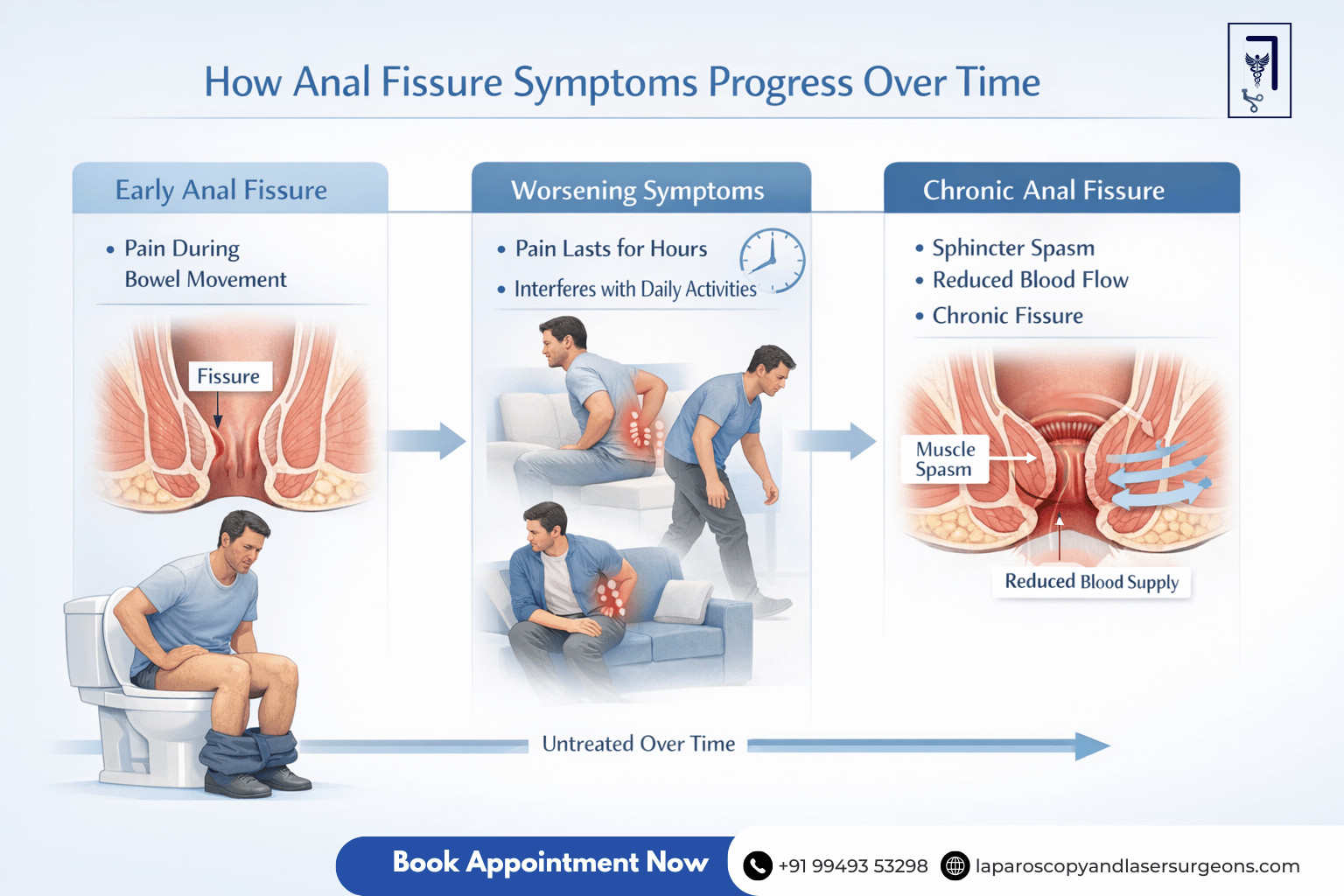
How Anal Fissure Symptoms Progress Over Time
If untreated, fissure pain becomes more intense and long-lasting. Pain may continue for hours after bowel movements and interfere with daily activities.
Muscle spasm of the internal anal sphincter develops, reducing blood supply and delaying healing. This leads to chronic fissure formation.
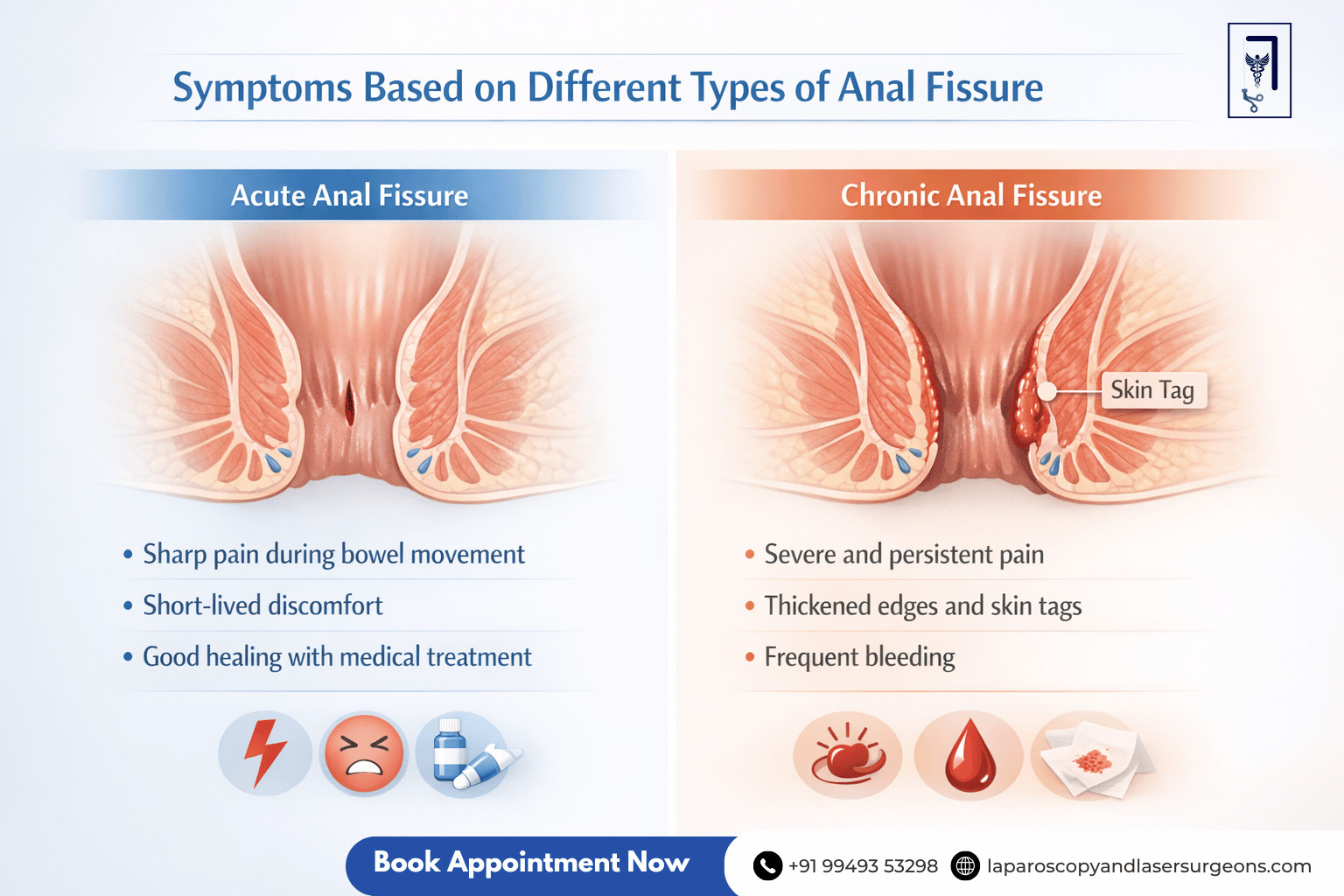
Symptoms Based on Different Types of Anal Fissure
In acute fissure, pain is sharp but short-lived and healing is possible with medical treatment.
In chronic fissure, pain is severe, persistent, and associated with thickened edges and skin tags. Bleeding may become more frequent.
Warning Signs That Require Immediate Medical Attention
Severe pain that does not improve, persistent bleeding, or worsening symptoms despite home remedies should not be ignored.
If pain leads to fear of passing stools or constipation due to avoidance, medical evaluation is essential to prevent complications.
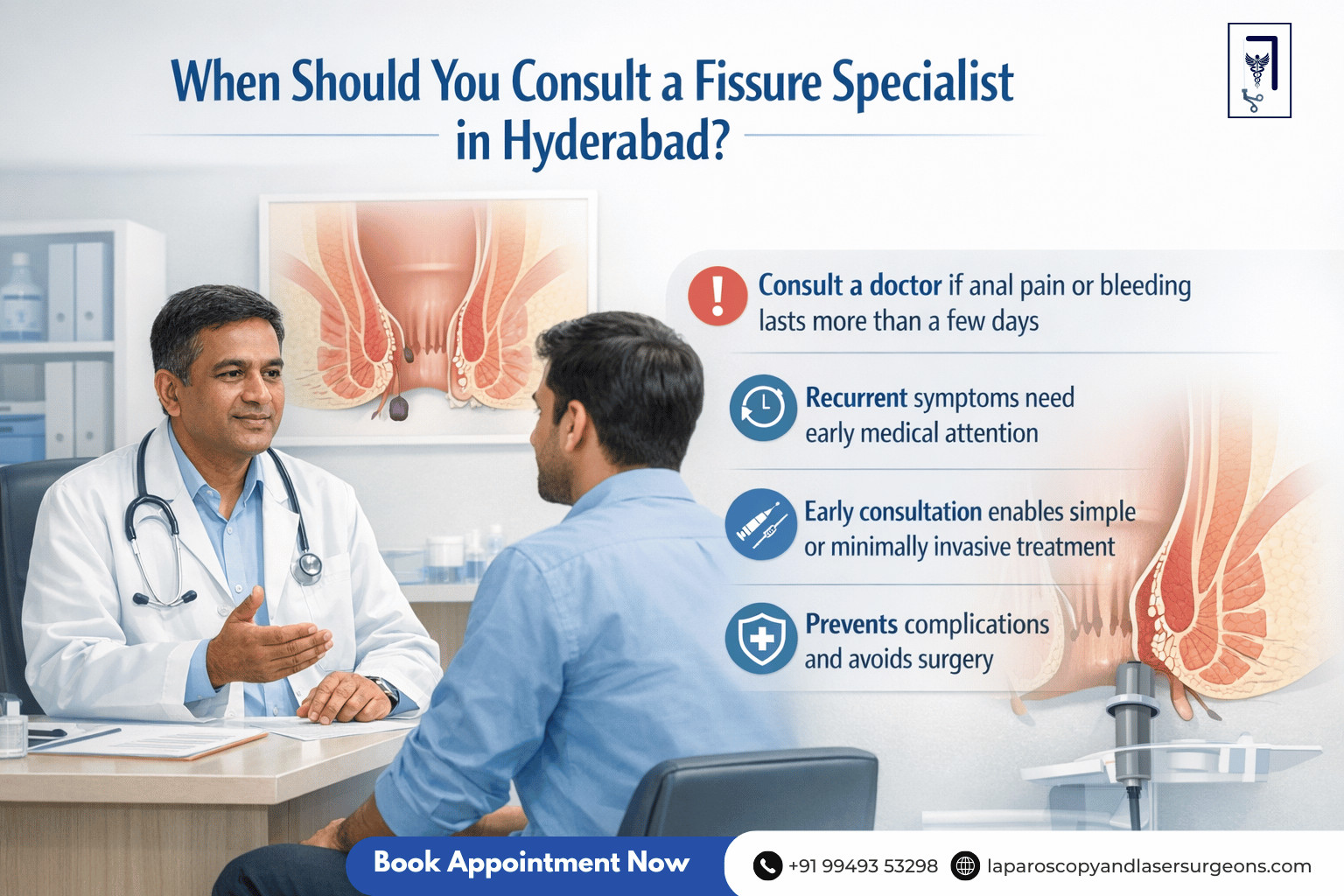
When Should You Consult a Fissure Specialist in Hyderabad?
You should consult a doctor if anal pain or bleeding lasts more than a few days or if symptoms recur frequently.
Early consultation allows simple medical or minimally invasive treatment and prevents the need for surgery.
For treatment planning, you may also read
👉 Can Anal Fissure Heal Without Surgery? Treatment Options Explained
Why Early Diagnosis Improves Treatment Outcomes
Early diagnosis allows fissures to heal with medications and lifestyle changes. Minimally invasive treatments are highly effective when performed early.
Delayed diagnosis often leads to chronic fissure, which requires laser or surgical treatment and longer recovery.
Frequently Asked Questions (FAQs)
Yes, anal fissure can cause significant pain even without visible bleeding, especially in the early stages.
In early fissure, pain may be mild, but if left untreated, it often becomes severe and long-lasting.
Yes, in chronic anal fissure, pain can persist for several hours after passing stools.
Yes, irritation, itching, and burning around the anal area can occur due to fissure.
You should seek medical care if fissure pain or bleeding worsens, lasts for many days, or interferes with daily life.
Get Relief from Anal Fissure Pain
Consult Dr. D. Suresh Babu for safe, effective, and advanced anal fissure treatment.
Book Consultation