
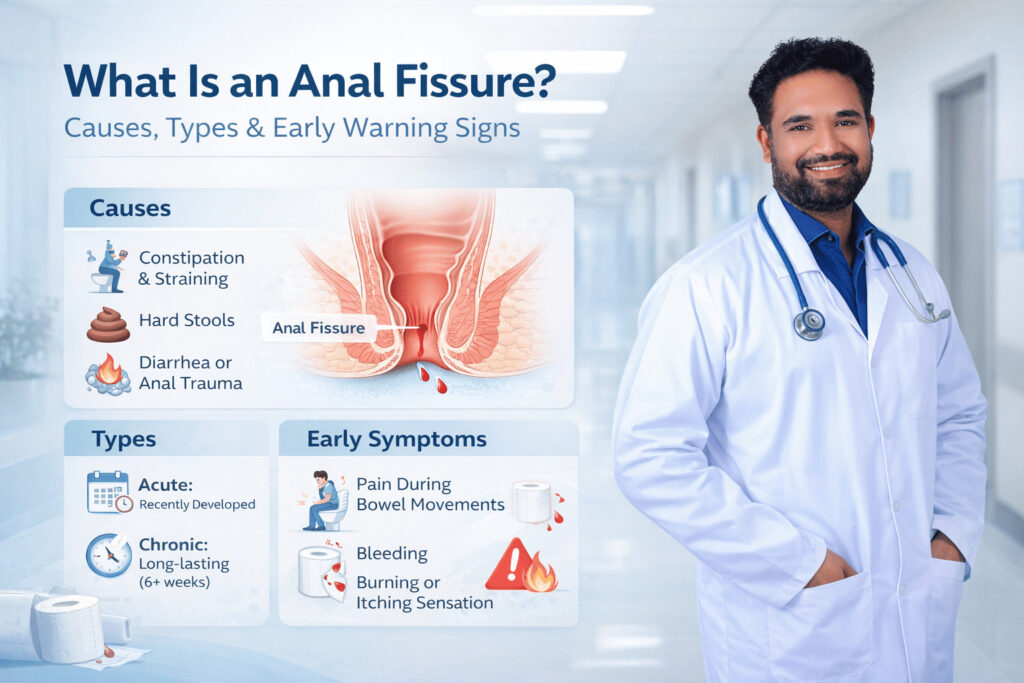
Understanding What an Anal Fissure Is
An anal fissure is a small tear or crack in the lining of the anal canal. This tear usually occurs due to excessive stretching of the anal opening during bowel movements, especially when passing hard or large stools.
The anal canal contains many sensitive nerve endings. When a fissure develops, these nerves become exposed, causing sharp pain during and after bowel movements. Anal fissure is a common anorectal condition and can affect both adults and children.
👉 For a complete treatment overview, read:
Anal Fissure Treatment in Hyderabad – Complete Patient Guide
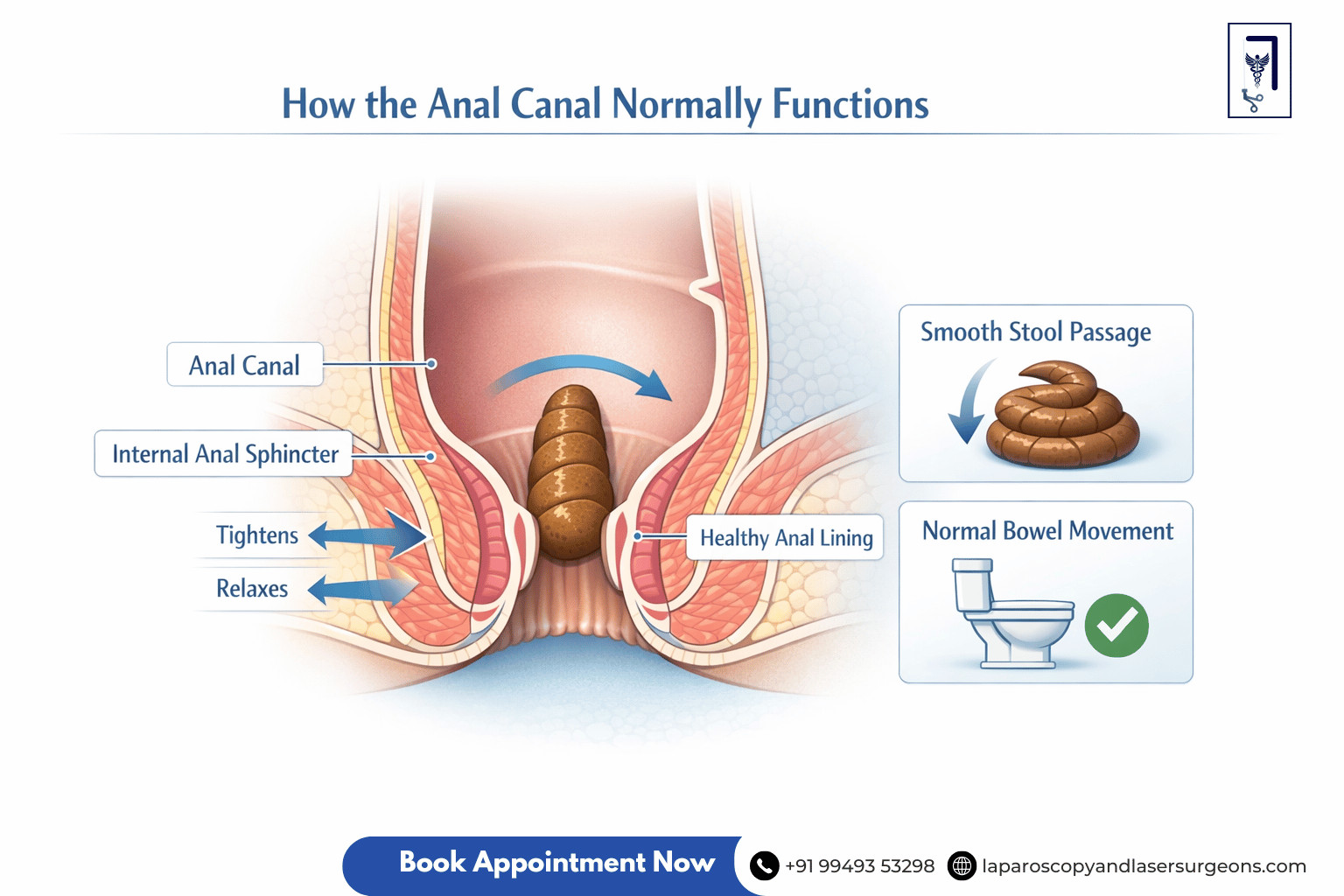
How the Anal Canal Normally Functions
The anal canal allows stool to pass smoothly during bowel movements. The internal anal sphincter muscle helps control bowel movements by tightening and relaxing appropriately.
When stools are soft and bowel habits are regular, the anal lining remains healthy. Problems arise when excessive pressure or trauma damages this delicate lining.
How Anal Fissure Develops Over Time
Anal fissure usually begins with constipation or forceful bowel movements. Hard stools cause small tears in the anal lining, leading to pain and bleeding.
If the fissure does not heal properly, muscle spasm occurs in the internal sphincter. This reduces blood flow to the area, delaying healing and turning an acute fissure into a chronic one.
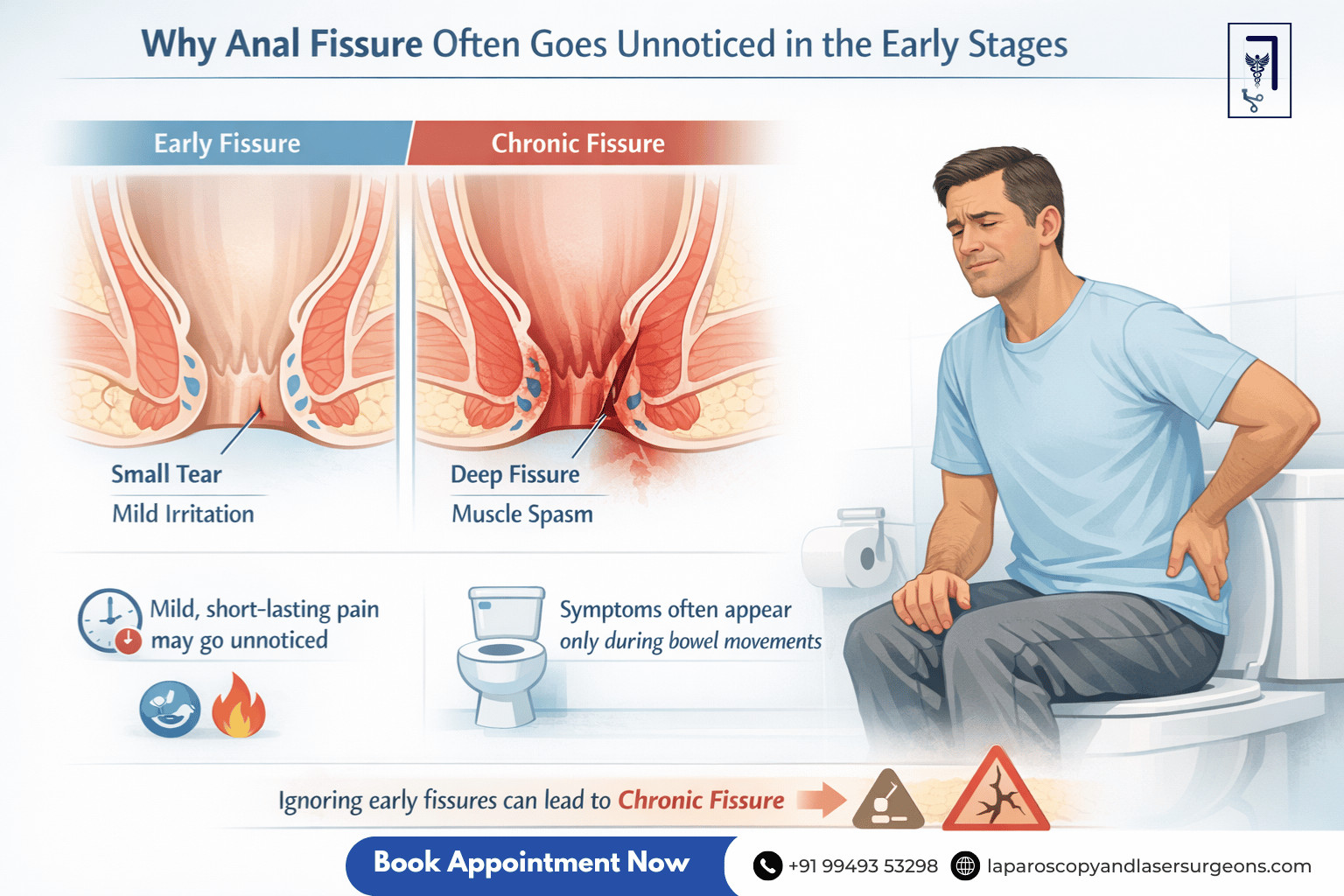
Why Anal Fissure Often Goes Unnoticed in the Early Stages
In the early stage, pain may be mild and short-lasting. Some patients notice slight discomfort or burning sensation that resolves quickly.
Because symptoms may appear only during bowel movements, many patients ignore early fissures. Without treatment, however, the fissure may deepen and become chronic.
Early Warning Signs of Anal Fissure
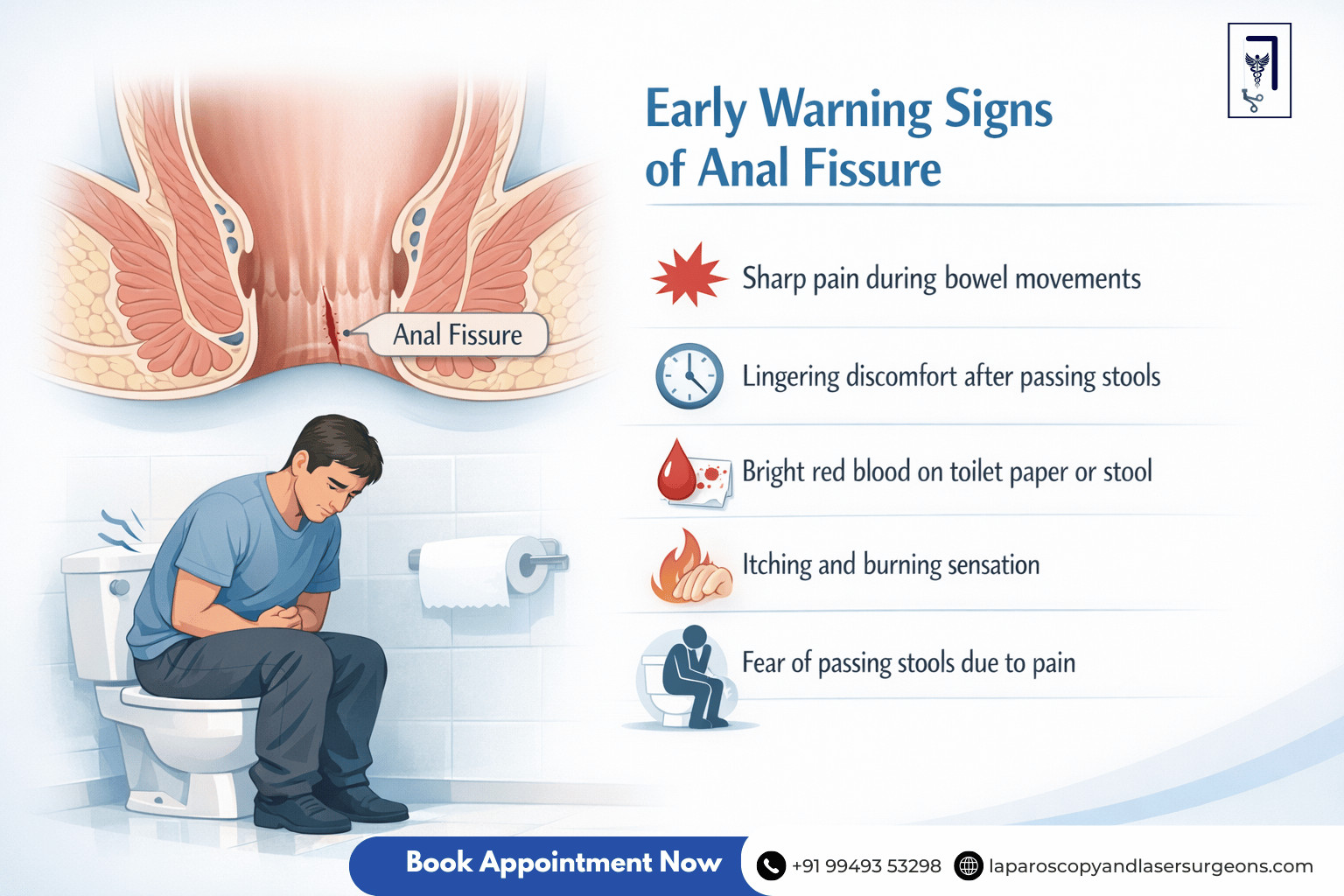
Early symptoms include sharp pain during bowel movements, followed by lingering discomfort. Patients may notice bright red blood on toilet paper or stool.
Other signs include itching, burning sensation, and fear of passing stools due to pain.
👉 Related reading:
Anal Fissure Symptoms You Should Not Ignore
Types of Anal Fissure Explained Simply
Anal fissures are broadly classified into two types.
Acute anal fissure is a recent tear that usually heals within a few weeks with medical treatment.
Chronic anal fissure lasts longer than six weeks and is often associated with muscle spasm and non-healing edges.
Understanding the type helps determine the most effective treatment.
Common Causes of Anal Fissure
The most common cause of anal fissure is constipation and passing hard stools. Other causes include chronic diarrhea, excessive straining, childbirth, and trauma.
Poor hydration, low-fiber diet, and irregular bowel habits increase the risk of fissure formation.
Who Is at Higher Risk of Developing Anal Fissure
People with chronic constipation, sedentary lifestyle, or poor dietary habits are at higher risk. Pregnant women and individuals who strain during bowel movements are also more susceptible.
Repeated episodes increase the risk of chronic fissure.
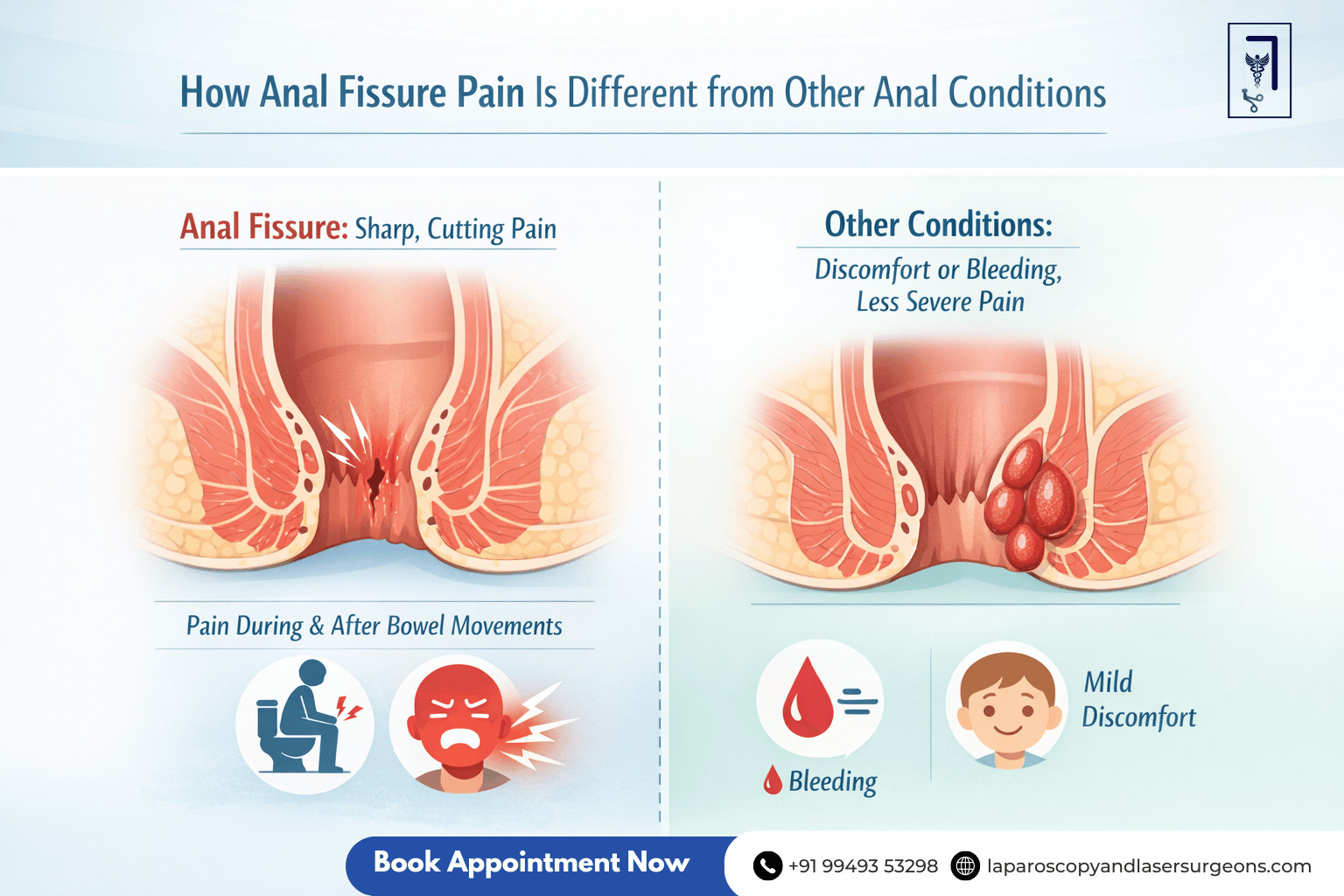
How Anal Fissure Pain Is Different from Other Anal Conditions
Anal fissure pain is typically sharp and cutting in nature. Unlike piles, which may cause discomfort or bleeding without severe pain, fissure pain is intense during and after bowel movements.
This pain pattern helps differentiate fissure from other anorectal conditions.
When Should You Seek Medical Advice for Anal Fissure?
You should consult a doctor if anal pain or bleeding persists beyond a few days, or if pain becomes severe.
Early diagnosis helps avoid chronic fissure and surgical intervention.
👉 Next read:
Can Anal Fissure Heal Without Surgery? Treatment Options Explained
Frequently Asked Questions (FAQs)
He has over 14 years of experience and specializes in advanced laparoscopic and laser hernia surgery.
Yes, he treats inguinal, umbilical, incisional, ventral, and hiatal hernias.
All surgeries are performed at Sunridge Multispecialty Hospital, Moti Nagar, Hyderabad.
Yes, laparoscopic and laser-assisted hernia surgeries are offered when suitable.
You should consult early if you notice hernia symptoms or have been advised surgery.
Get Relief from Hernia Today
Consult Dr. Suresh Babu for expert diagnosis and personalized treatment.
Book Consultation