

Why Diet and Foot Care Matter in Diabetic Foot Recovery
Successful diabetic foot treatment does not end with wound healing or surgery. Long-term recovery depends on strict blood sugar control, proper foot care, and healthy lifestyle habits. Without these measures, diabetic foot problems can recur and worsen.
Diet and daily care directly influence wound healing, immunity, and circulation. Following medical advice after treatment helps protect the foot, prevent infection, and avoid future complications.
For treatment overview, read
👉 Diabetic Foot Treatment in Hyderabad – Complete Patient Guide
Importance of Blood Sugar Control During Recovery
Maintaining stable blood sugar levels is the most important factor in diabetic foot recovery. High blood sugar delays wound healing and increases infection risk.
Regular monitoring, adherence to medications, and coordinated diabetes care support faster healing and long-term foot health.

Diet Recommendations for Diabetic Foot Patients
A balanced diabetic diet helps control blood sugar and supports tissue repair. Meals should include whole grains, lean proteins, vegetables, and healthy fats.
Adequate protein intake promotes wound healing, while vitamins and minerals support immune function. Regular meal timing helps maintain stable glucose levels.
Foods to Avoid During Diabetic Foot Recovery
Foods high in sugar, refined carbohydrates, and unhealthy fats should be avoided, as they cause blood sugar fluctuations and delay healing.
Excess salt intake can worsen swelling, while alcohol negatively affects circulation and immune response.

Daily Foot Care Routine for Diabetic Patients
Daily foot inspection is essential for early detection of problems. Patients should check for cuts, blisters, redness, swelling, or color changes.
Feet should be washed daily with lukewarm water, dried thoroughly, especially between toes, and moisturized to prevent cracks. Nail trimming should be done carefully to avoid injury.
Importance of Proper Footwear
Wearing well-fitting, protective footwear reduces pressure points and prevents injuries. Shoes should have adequate cushioning and room for toes.
Walking barefoot should be avoided, even indoors, to reduce injury risk. Custom footwear may be recommended for high-risk patients.
👉 Related reading:
Advanced Surgical & Wound Care for Diabetic Foot in Hyderabad
Activity and Mobility During Recovery
Light physical activity improves circulation and supports healing. Walking should be done with proper footwear and under medical guidance.
Prolonged standing or walking on injured feet should be avoided until healing is complete.

When Can Patients Resume Normal Activities?
Return to normal activities depends on wound severity and healing progress. Many patients resume routine activities gradually with protective measures.
Strenuous activity should be avoided until wounds are fully healed and medical clearance is given.
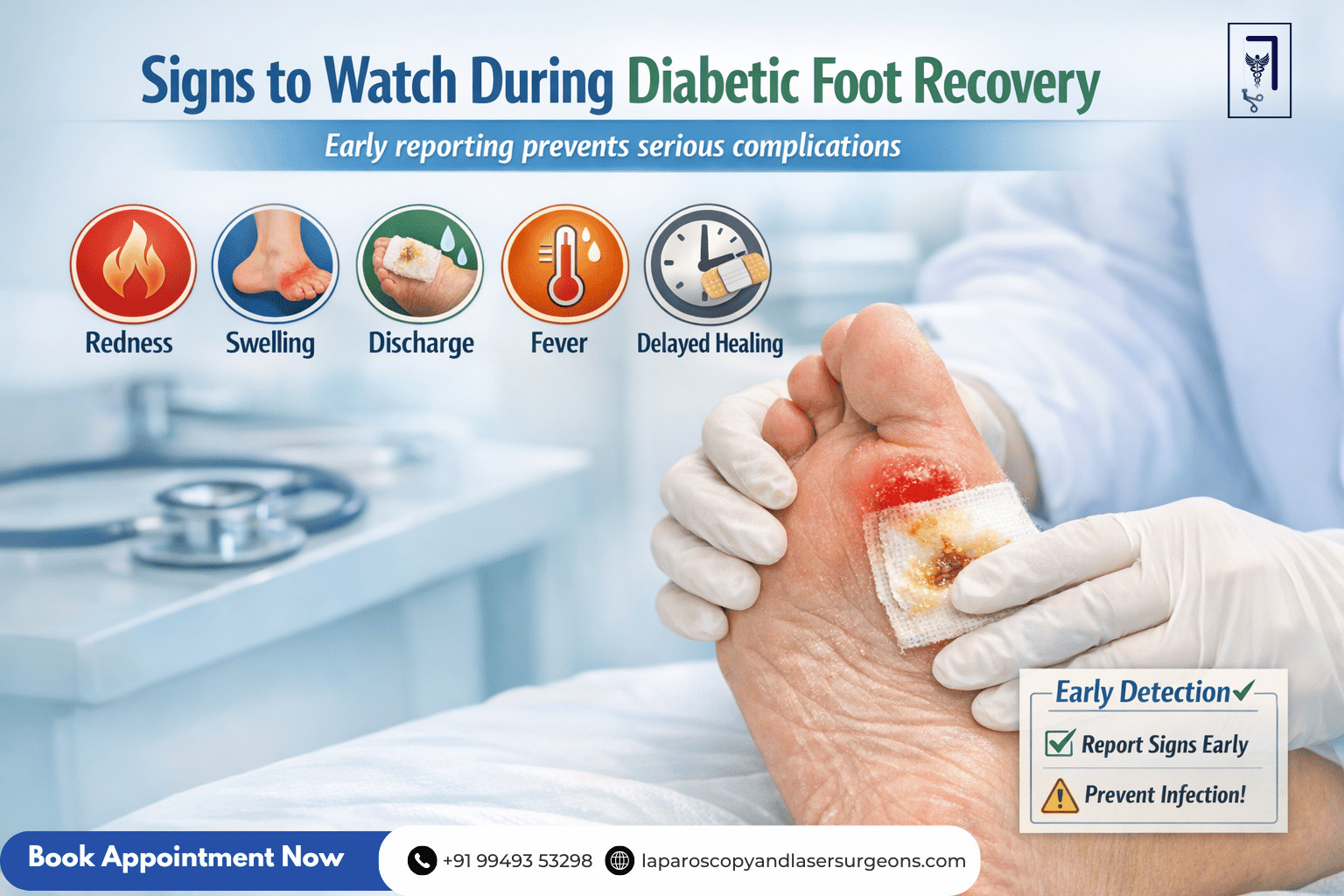
Signs to Watch During Diabetic Foot Recovery
Patients should watch for increased redness, swelling, discharge, foul smell, or delayed healing. Fever or increasing pain may indicate infection.
Early reporting of symptoms allows timely intervention and prevents complications.
Importance of Regular Follow-Up in Diabetic Foot Care
Follow-up visits allow monitoring of wound healing, blood sugar control, and footwear suitability. Regular check-ups reduce recurrence risk.
Long-term diabetic foot care requires ongoing medical supervision and patient awareness.
Frequently Asked Questions (FAQs)
A healthy diet helps control blood sugar levels and supports faster wound healing.
Diabetic patients should inspect their feet daily to detect early changes or injuries.
Yes, diabetic foot problems can recur without proper foot care and regular follow-up.
Yes, walking is allowed with protective footwear and medical guidance.
You should contact your doctor if redness, swelling, pain, or discharge increases.
Support Your Recovery with Expert Care
Consult Dr. D. Suresh Babu for guidance on diabetic foot recovery and long-term prevention.
Book Consultation