

Understanding Diabetic Foot Treatment – Is Surgery Always Required?
A common question among diabetic patients is whether every diabetic foot problem requires surgery. Because early wounds may look small and painless, many hope that medicines or dressings alone will lead to healing.
The answer depends on stage, depth, infection, and blood supply. Early diabetic foot problems can often heal with comprehensive medical and wound care. However, advanced ulcers, spreading infection, or dead tissue usually require surgical intervention. Understanding treatment options helps patients seek care at the right time.
For a complete overview, read
👉 Diabetic Foot Treatment in Hyderabad – Complete Patient Guide
When Diabetic Foot Can Heal Without Surgery
Early-stage diabetic foot ulcers that are shallow, clean, and non-infected may heal without surgery. Proper blood sugar control, antibiotics when needed, pressure offloading, and advanced dressings can promote healing.
Regular wound monitoring and strict foot care are essential. When these measures are started early, many patients avoid surgery and recover fully.
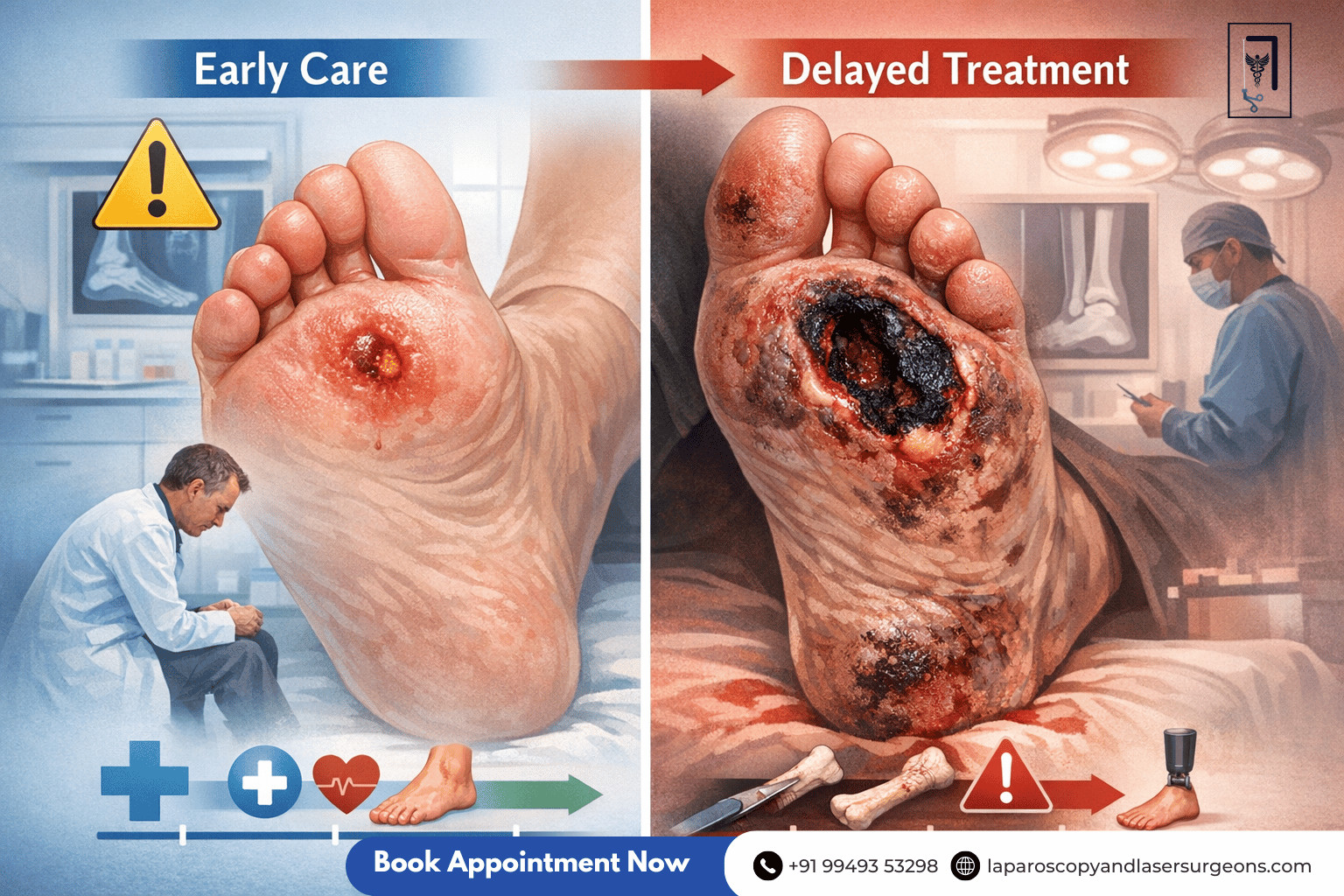
Why Some Diabetic Foot Problems Do Not Heal on Their Own
In many cases, diabetic foot wounds fail to heal because of poor circulation, ongoing pressure, or deep infection. High blood sugar levels weaken immunity and slow tissue repair.
If infection spreads to deeper tissues or bone, medicines alone are insufficient. Dead tissue prevents healing and acts as a source of ongoing infection, making surgical treatment necessary.
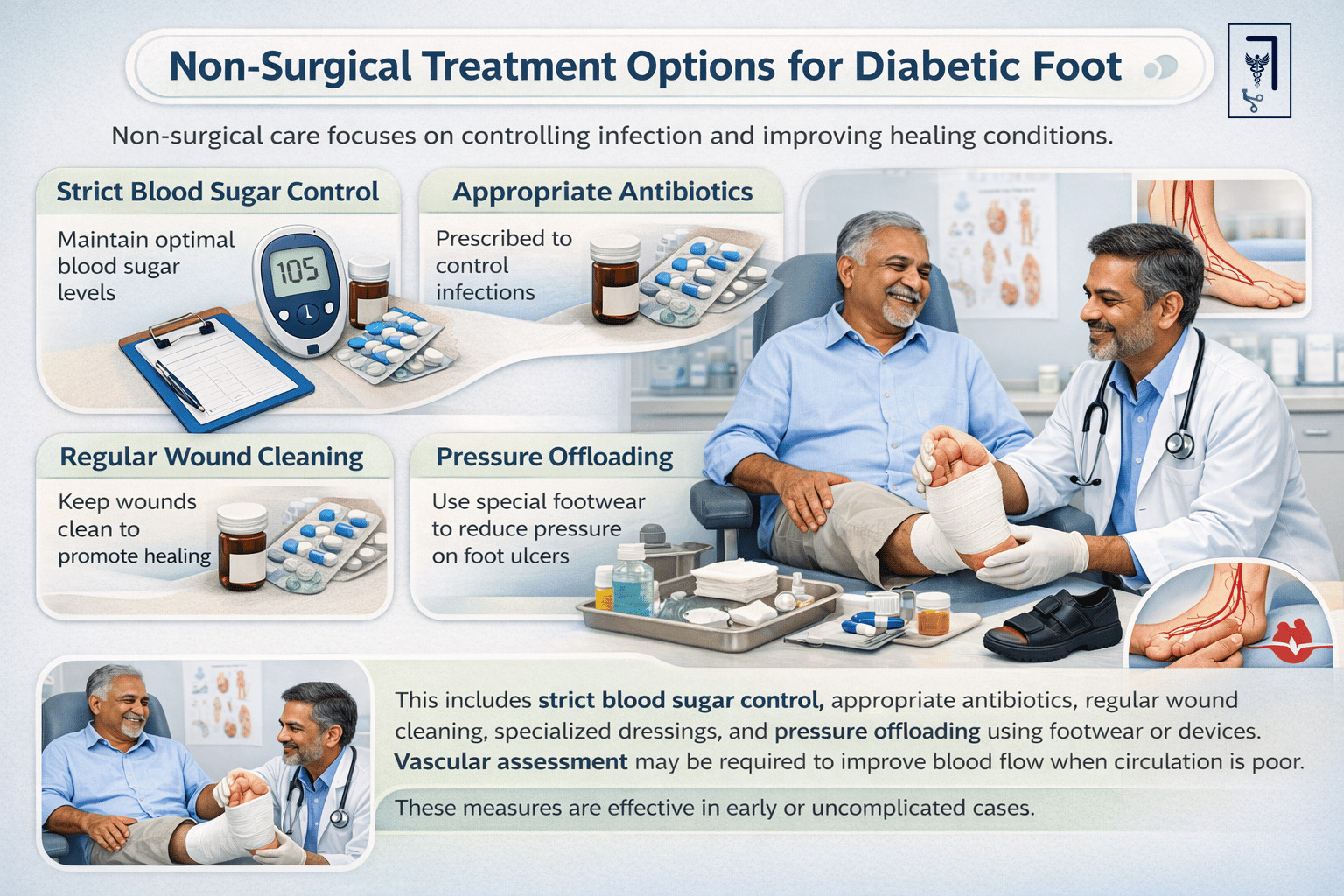
Non-Surgical Treatment Options for Diabetic Foot
Non-surgical care focuses on controlling infection and improving healing conditions.
This includes strict blood sugar control, appropriate antibiotics, regular wound cleaning, specialized dressings, and pressure offloading using footwear or devices. Vascular assessment may be required to improve blood flow when circulation is poor.
These measures are effective in early or uncomplicated cases.
When Is Surgical Treatment Strongly Recommended?
Surgery is strongly recommended when there is deep infection, abscess formation, spreading cellulitis, gangrene, or exposed bone. Delay in surgical treatment increases the risk of infection spread and limb loss.
Early surgical intervention aims to remove infected tissue, control infection, and preserve as much healthy tissue as possible.
For symptom awareness, read
👉 Diabetic Foot Symptoms You Should Not Ignore
Types of Diabetic Foot Treatment Available Today
Modern diabetic foot care uses a step-wise approach, combining medical, wound, and surgical treatments as needed.
Medical & Wound Care Management
Medical management includes antibiotics, blood sugar optimization, wound dressings, and pressure relief. Advanced wound care techniques accelerate healing and reduce infection risk.
This approach is suitable for early-stage ulcers without severe infection.
Surgical Treatment for Diabetic Foot – When Needed
Surgical treatment may involve debridement (removal of infected tissue), drainage of abscesses, or correction of deformities causing pressure points.
In advanced cases, limited surgical procedures help save the limb and prevent major amputation.

👉 Learn more:
Advanced Surgical & Wound Care for Diabetic Foot in Hyderabad
How Does the Doctor Decide the Best Treatment Method?
Treatment decisions are based on wound depth, infection severity, circulation status, and overall health. Imaging and vascular assessment guide planning.
Dr. D. Suresh Babu follows a limb-salvage-focused approach, selecting the least invasive yet effective treatment for each patient.
What Happens If Diabetic Foot Treatment Is Delayed?
Delaying treatment allows infection to spread, wounds to deepen, and tissue damage to increase. This significantly raises the risk of major surgery or amputation.
Early, planned treatment offers better outcomes, faster healing, and limb preservation.
Recovery Expectations in Diabetic Foot Treatment
Recovery depends on wound severity and treatment type. Early cases heal with regular care, while surgical cases require structured follow-up.
Blood sugar control, foot care, and regular monitoring are essential for long-term success.
Frequently Asked Questions (FAQs)
Yes, diabetic foot can heal without surgery if treated early with proper wound care and diabetes control.
Surgery is needed in cases of deep infection, abscess, dead tissue, or non-healing ulcers.
Antibiotics alone are effective only in early and mild infections without deep tissue involvement.
Yes, timely surgical treatment can remove infection and help save the limb.
Yes, delaying treatment increases the risk of severe infection and possible amputation.
Early Treatment Can Save Your Foot
Consult Dr. D. Suresh Babu for timely diabetic foot treatment and limb-saving care.
Book Consultation