

Understanding Piles Treatment – Is Surgery Always Required?
One of the most common questions patients ask after being diagnosed with piles is whether surgery is truly necessary. Because piles often cause mild or manageable symptoms in the early stages, many people hope that medicines, creams, or lifestyle changes alone will be sufficient.
In reality, piles is a structural problem involving swollen and damaged rectal veins. While early-stage piles may be controlled with conservative measures, advanced piles usually require procedural or surgical treatment. Understanding when surgery is required and what treatment options are available helps patients make informed and confident decisions.

For a complete overview of piles care, you may also read
👉 Piles Treatment in Hyderabad – Complete Patient Guide
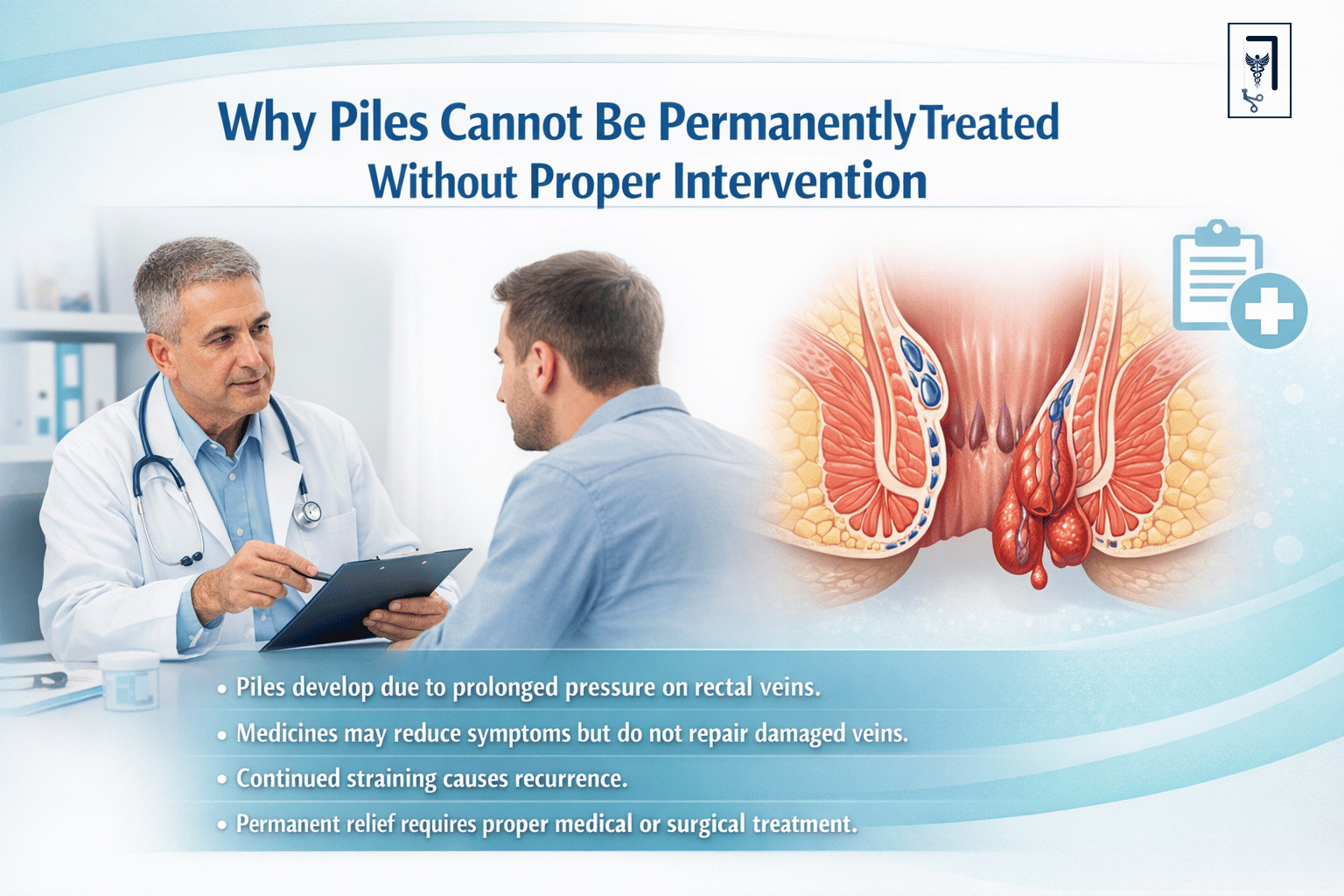
Why Piles Cannot Be Permanently Treated Without Proper Intervention
Piles develop due to prolonged pressure on rectal veins, causing them to swell and weaken. While medicines and dietary changes may reduce inflammation or discomfort, they do not repair the damaged veins.
Over time, continued straining and pressure cause the piles to enlarge further. This is why piles often recur when treated only with temporary measures. Permanent relief usually requires targeted medical or surgical treatment depending on the severity.
Are There Non-Surgical Treatment Options for Piles?
Yes, non-surgical treatment options are effective in early-stage piles. These methods aim to reduce symptoms and prevent progression.
Non-surgical treatment includes medications to reduce pain and swelling, stool softeners, fiber supplements, dietary changes, and lifestyle modification. These measures reduce strain during bowel movements and help control symptoms.
However, these options are usually symptom-controlling, not curative for advanced piles. They are also used when surgery needs to be delayed for medical reasons.
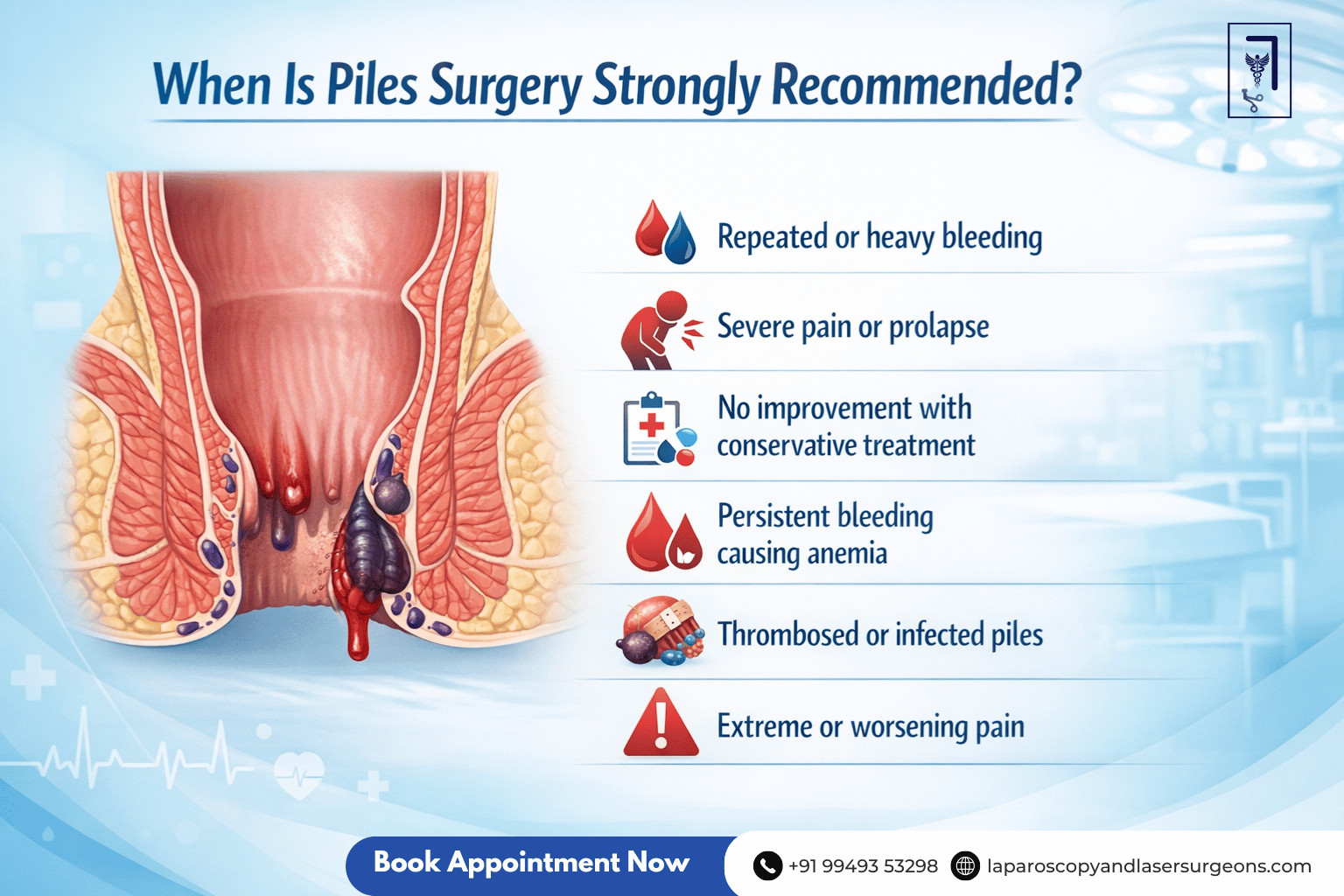
When Is Piles Surgery Strongly Recommended?
Surgery is recommended when piles cause repeated bleeding, severe pain, prolapse, or do not respond to conservative treatment.
Even painless piles may require surgery if bleeding is persistent or anemia develops. Surgery becomes urgent if piles become thrombosed, infected, or extremely painful.
For symptom awareness, you may read
👉 Piles Symptoms You Should Not Ignore
Types of Piles Treatment Available Today
Advancements in medical technology have made piles treatment safer, less painful, and faster to recover from. The choice of treatment depends on the grade of piles, symptoms, and patient health.
Conventional Piles Surgery – When Is It Used?
Conventional piles surgery involves removal of enlarged piles through a surgical procedure. This method is usually reserved for large, advanced, or complicated piles.
While effective, conventional surgery may involve more post-operative discomfort and longer recovery compared to modern techniques. It is used when minimally invasive methods are not suitable.
Laser Piles Treatment – Modern & Minimally Invasive
Laser piles treatment is a minimally invasive technique that uses focused laser energy to shrink or seal piles tissue.
This method causes less pain, minimal bleeding, and faster recovery. It is especially beneficial for patients who want quick return to normal activities.
👉 Learn more:
Laser Piles Treatment in Hyderabad
How Does the Doctor Decide the Best Treatment Method?
The choice of piles treatment depends on several factors including the type and grade of piles, severity of symptoms, recurrence history, and patient’s overall health.
Dr. D. Suresh Babu follows a personalized treatment approach, choosing the safest and most effective option rather than a one-size-fits-all method.
What Happens If Piles Treatment Is Delayed Too Long?
Delaying piles treatment can worsen symptoms and lead to complications such as severe bleeding, prolapse, infection, or thrombosis.
Emergency treatment is usually more painful and involves longer recovery. Planned treatment, on the other hand, offers better comfort and outcomes.
Recovery After Piles Treatment
Recovery depends on the type of treatment performed. Most patients undergoing minimally invasive procedures can resume light activities within a few days.
Dietary changes and proper bowel habits play a major role in recovery and prevention of recurrence.
Frequently Asked Questions (FAQs)
No. Early-stage piles can often be managed with medicines and lifestyle changes.
Medicines help control symptoms but do not cure advanced or severe piles.
Yes. Delaying treatment can lead to complications and worsening symptoms.
The best treatment depends on the grade, symptoms, and overall health of the patient.
Yes. Piles surgery is safe when performed by an experienced surgeon.
Get the Right Treatment for Piles
Early consultation helps choose the safest and most effective treatment option.
Book Consultation