

Appendicitis Symptoms: Why Early Recognition Matters
Appendicitis is a condition that often begins with mild and unclear symptoms. In many patients, the initial signs do not appear severe and may resemble common stomach problems such as gas, indigestion, or constipation. Because of this, early appendicitis symptoms are frequently ignored or misunderstood.
However, appendicitis is a rapidly progressive condition. What starts as mild abdominal discomfort can quickly turn into severe pain and serious infection. Recognizing the symptoms early and seeking timely medical care can prevent complications such as appendix rupture and life-threatening abdominal infection.
For a complete overview of treatment options, you may refer to
👉 Appendicitis Treatment in Hyderabad – Complete Patient Guide
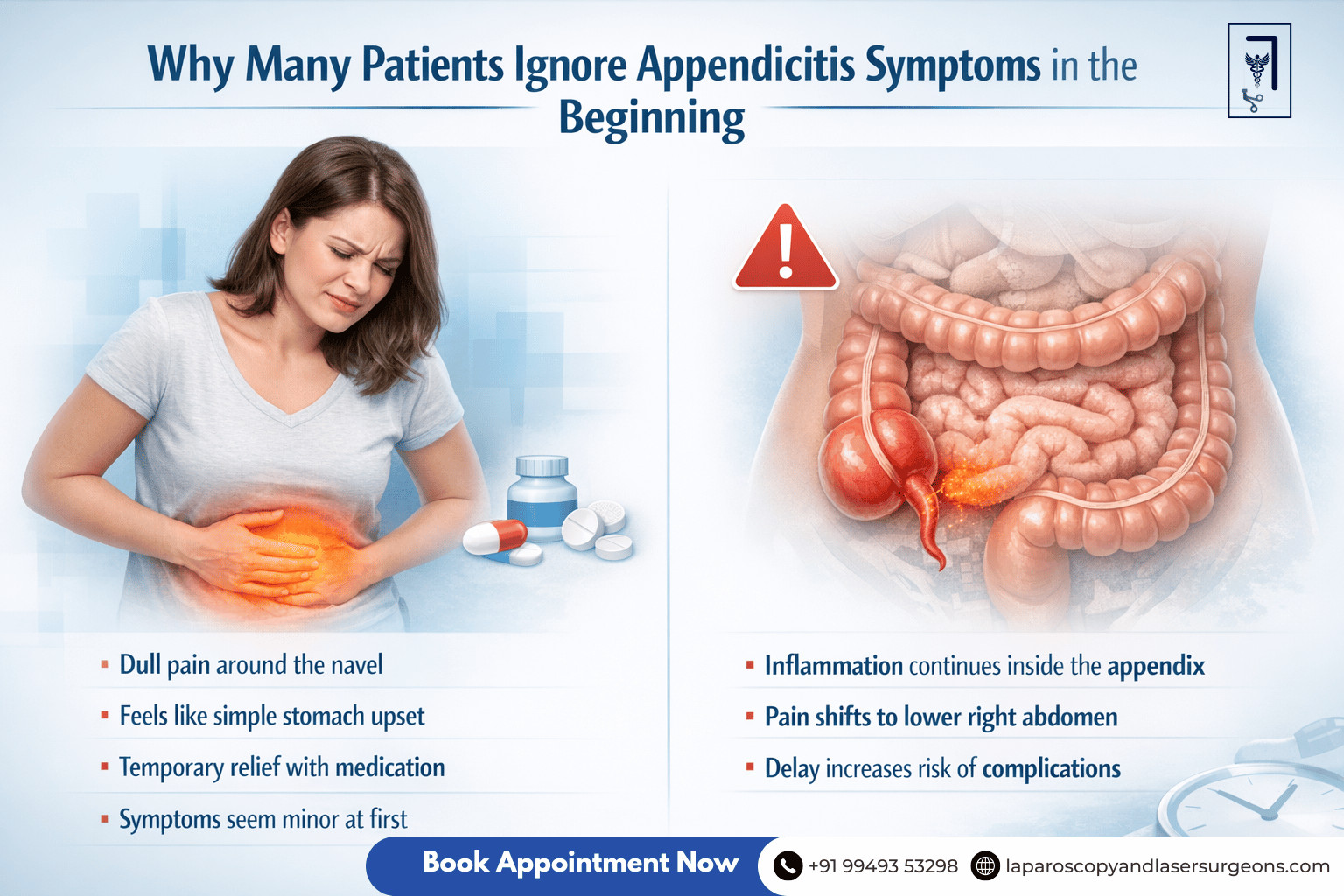
Why Many Patients Ignore Appendicitis Symptoms in the Beginning
One of the main reasons appendicitis is ignored is that the pain does not begin at a specific location initially. Many patients experience dull pain or discomfort around the belly button, which feels similar to stomach upset.
Some patients take painkillers or antacids, which temporarily reduce discomfort and create a false sense of relief. Unfortunately, this delay allows the inflammation to worsen inside the appendix.
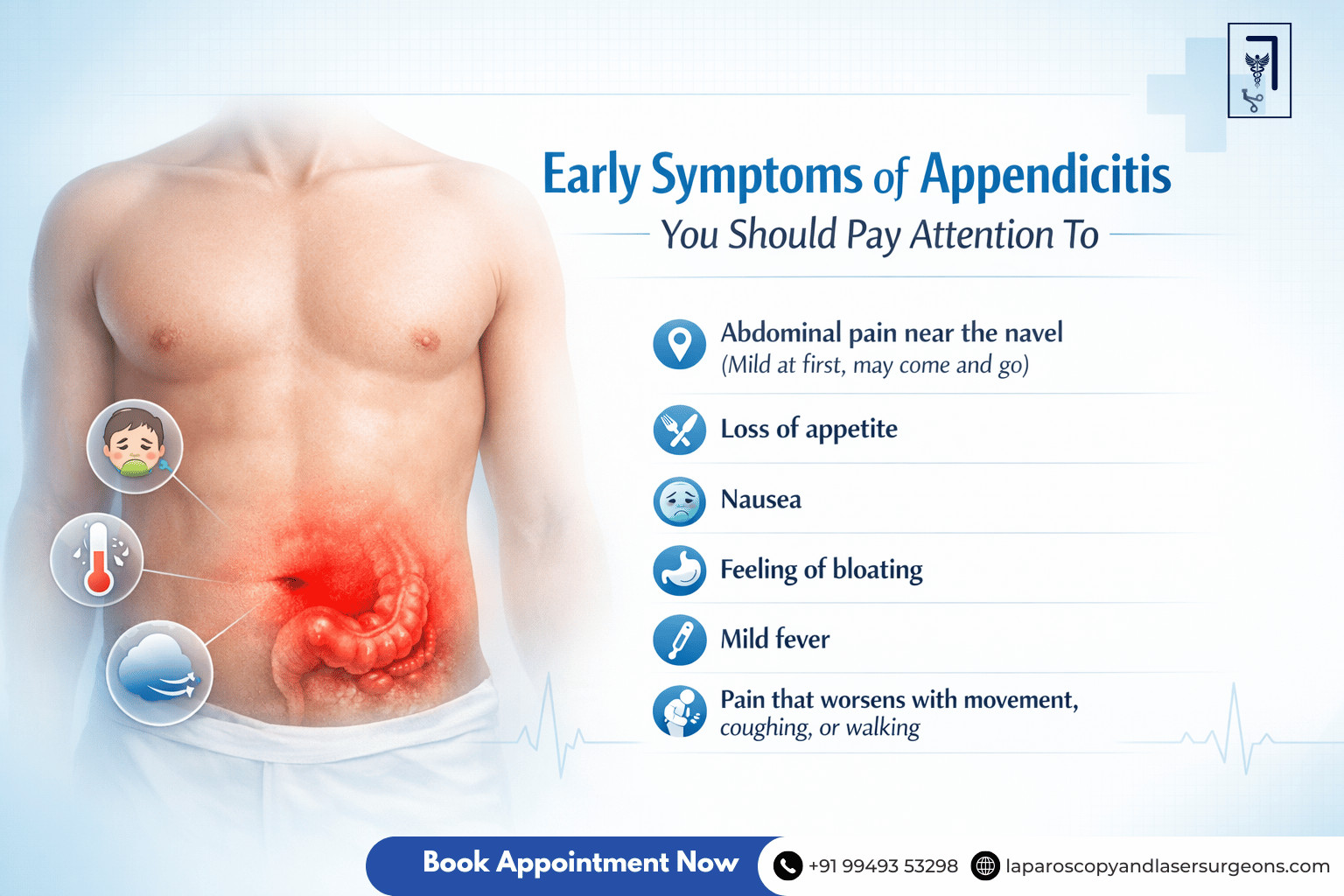
Early Symptoms of Appendicitis You Should Pay Attention To
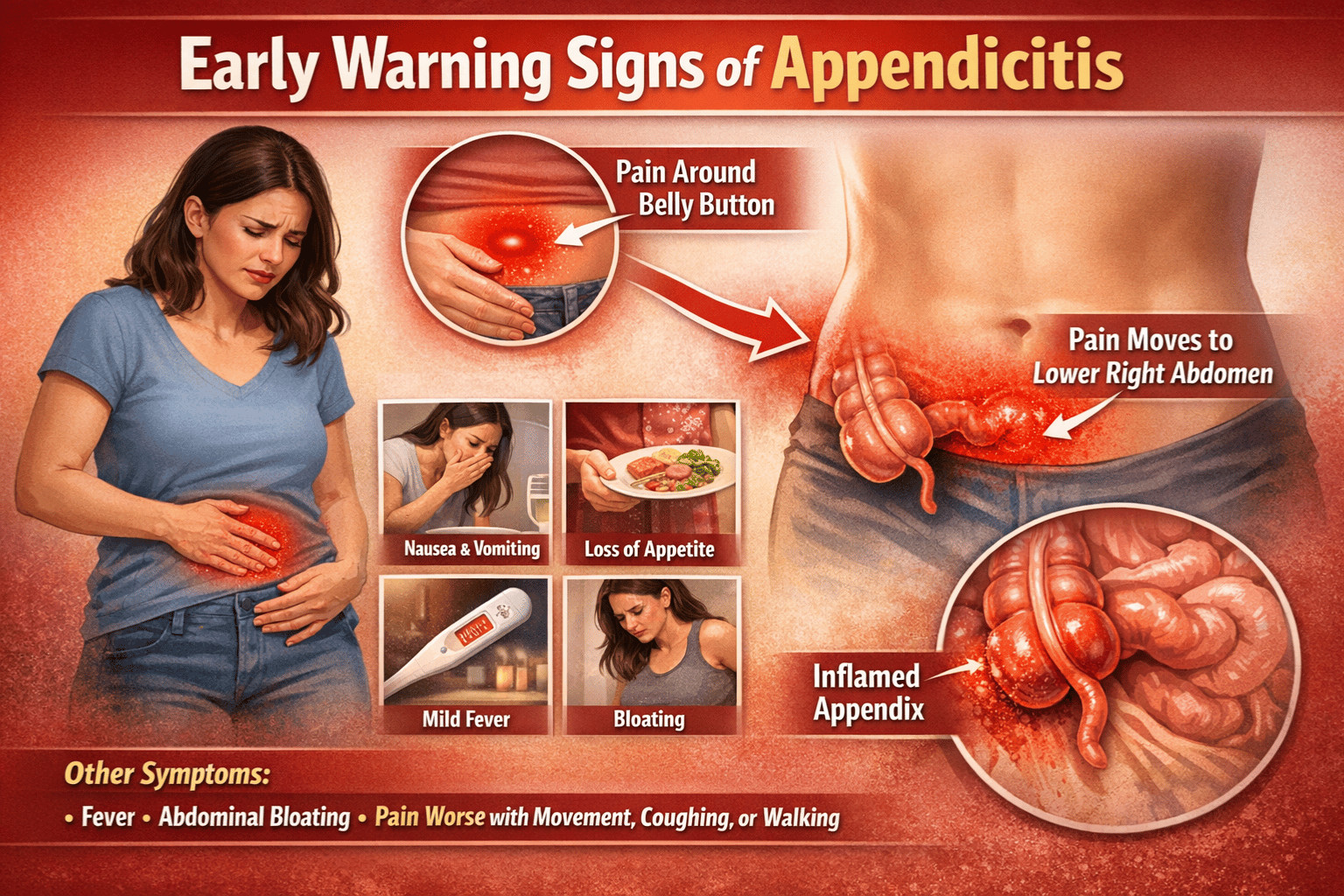
The earliest symptom of appendicitis is usually abdominal pain near the navel. This pain is often mild at first and may come and go.
Along with pain, patients may experience loss of appetite, nausea, or a feeling of bloating. Mild fever may also be present. These symptoms may appear ordinary but are important warning signs.
Another early symptom is discomfort that worsens with movement, coughing, or walking. This change indicates increasing inflammation inside the abdomen.
How Appendicitis Symptoms Progress Over Time
As appendicitis progresses, the pain becomes sharper and more severe. The pain typically shifts from the center of the abdomen to the lower right side, which is a key sign of appendicitis.
The pain becomes constant and intense, making it difficult to stand upright or walk comfortably. Fever may increase, and vomiting may occur as the infection worsens.
At this stage, immediate medical evaluation is necessary to prevent rupture of the appendix.
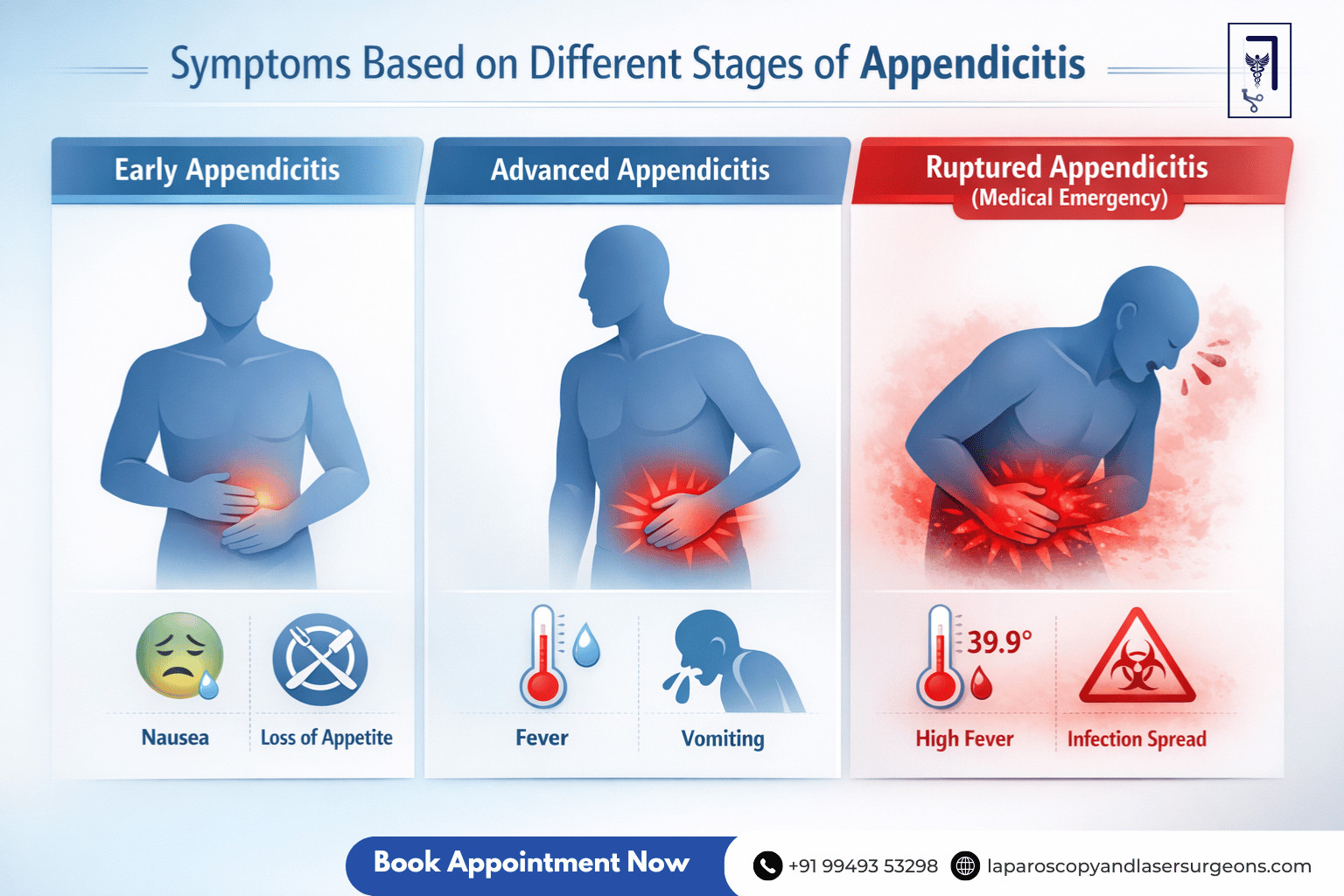
Symptoms Based on Different Stages of Appendicitis
In early appendicitis, symptoms include vague abdominal pain, nausea, and loss of appetite.
In advanced appendicitis, pain becomes severe and localized to the lower right abdomen. Patients may experience vomiting, fever, and abdominal swelling.
In ruptured appendicitis, symptoms suddenly worsen and may include severe abdominal pain, high fever, chills, and signs of infection spreading inside the abdomen. This is a medical emergency.
Warning Signs That Require Immediate Medical Attention
Certain appendicitis symptoms should never be ignored. Sudden severe abdominal pain, especially on the right side, is a major warning sign.
Other emergency symptoms include persistent vomiting, high fever, abdominal swelling, inability to pass gas, or worsening pain despite medication. These signs indicate possible rupture or severe infection and require urgent treatment.
When Should You Seek Emergency Care for Appendicitis in Hyderabad?
You should seek emergency medical care immediately if you experience worsening abdominal pain, especially if it moves to the lower right side and is associated with nausea or fever.
Early consultation allows doctors to perform timely surgery and avoid complications.
For treatment planning, you may also read
👉 Do All Appendicitis Cases Need Surgery? Treatment Options Explained
Why Early Diagnosis Improves Treatment Outcomes
When appendicitis is diagnosed early, surgery can be performed before rupture occurs. Early appendectomy usually results in shorter hospital stay, fewer complications, and faster recovery.
Delayed diagnosis often leads to ruptured appendix, which requires more complex treatment and longer recovery.
Frequently Asked Questions (FAQs)
Yes. Early appendicitis often begins with mild abdominal discomfort or vague pain.
Symptoms can worsen within a few hours to one day as inflammation increases.
Yes. Painkillers may temporarily mask symptoms and delay proper diagnosis.
Yes. Nausea and vomiting are common, especially as the condition progresses.
Immediately, if abdominal pain worsens or shifts to the lower right side.
Act Early on Appendicitis Symptoms
Timely medical care helps prevent complications and ensures safe treatment.
Book Consultation