

Understanding Hernia Treatment – Is Surgery Always Required?
One of the most common questions patients ask after being diagnosed with hernia is whether surgery is truly necessary. Because many hernias cause mild or no pain in the early stages, people often hope that medicines, exercises, or lifestyle changes might be enough.
In reality, hernia is a structural problem of the muscle wall. Once a hernia forms, the muscle defect does not repair itself. Understanding when surgery is required and what treatment options are available helps patients make confident and informed decisions.
For a complete overview of hernia care, you may also read
👉 Hernia Treatment in Hyderabad – Complete Patient Guide
Why Hernia Cannot Be Permanently Treated Without Surgery
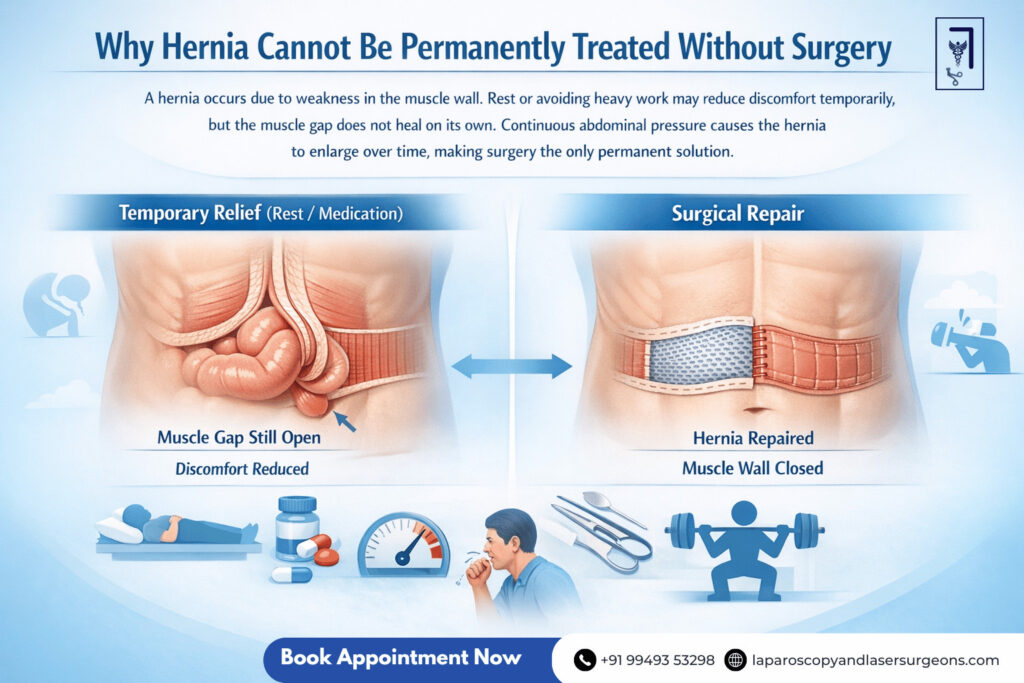
A hernia develops due to a weakness in the muscle wall. While rest or avoiding heavy work may temporarily reduce discomfort, these measures do not close the muscle gap.
Over time, pressure inside the abdomen continues to push tissues through the weak area, causing the hernia to grow larger. This is why doctors consider surgery as the only permanent solution for hernia.
Are There Non-Surgical Treatment Options for Hernia?
In certain situations, doctors may recommend temporary non-surgical measures. These are usually advised only when surgery must be postponed due to medical reasons.
Non-surgical approaches may include activity modification, weight management, treating chronic cough or constipation, and using supportive belts. These methods can reduce strain on the abdominal muscles but do not cure the hernia.
Such measures are typically used for symptom control or while preparing a patient for surgery.
When Is Hernia Surgery Strongly Recommended?
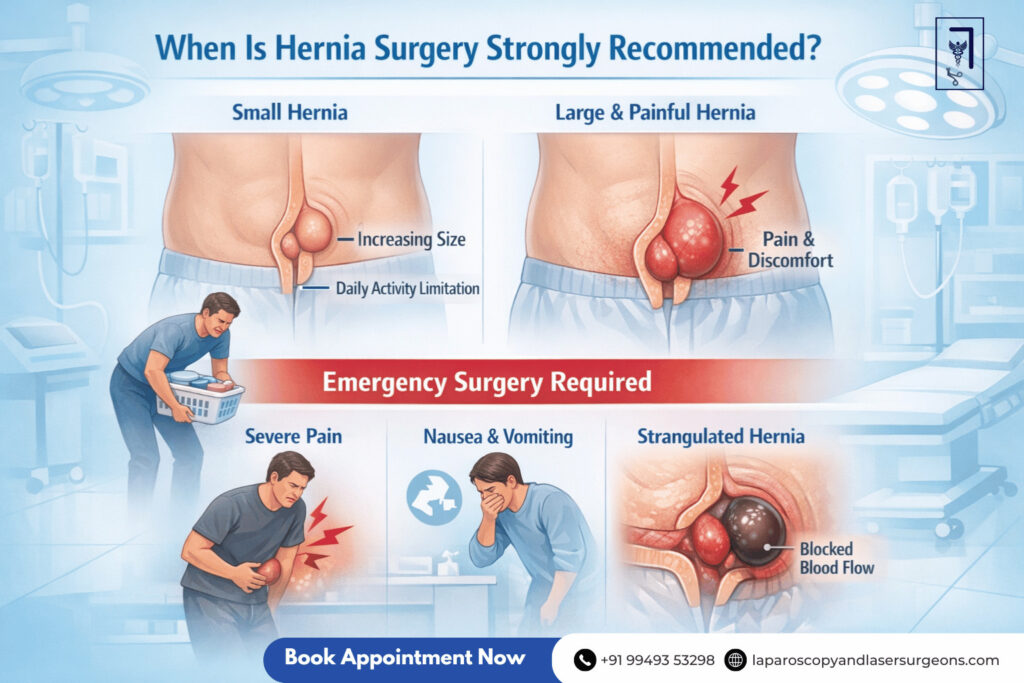
Hernia surgery is advised when the bulge increases in size, causes pain, or interferes with daily activities. Even painless hernias are often treated surgically to prevent future complications.
Surgery becomes urgent if the hernia becomes hard, painful, or cannot be pushed back. Sudden pain with vomiting may indicate strangulation, which requires emergency surgery.
For symptom awareness, you may read
👉 Hernia Symptoms You Should Not Ignore
Types of Hernia Surgery Available Today
Modern medical advancements have made hernia surgery safer, less painful, and faster to recover from. The choice of surgery depends on the type of hernia, its size, and the patient’s overall health.
Open Hernia Surgery – When Is It Used?
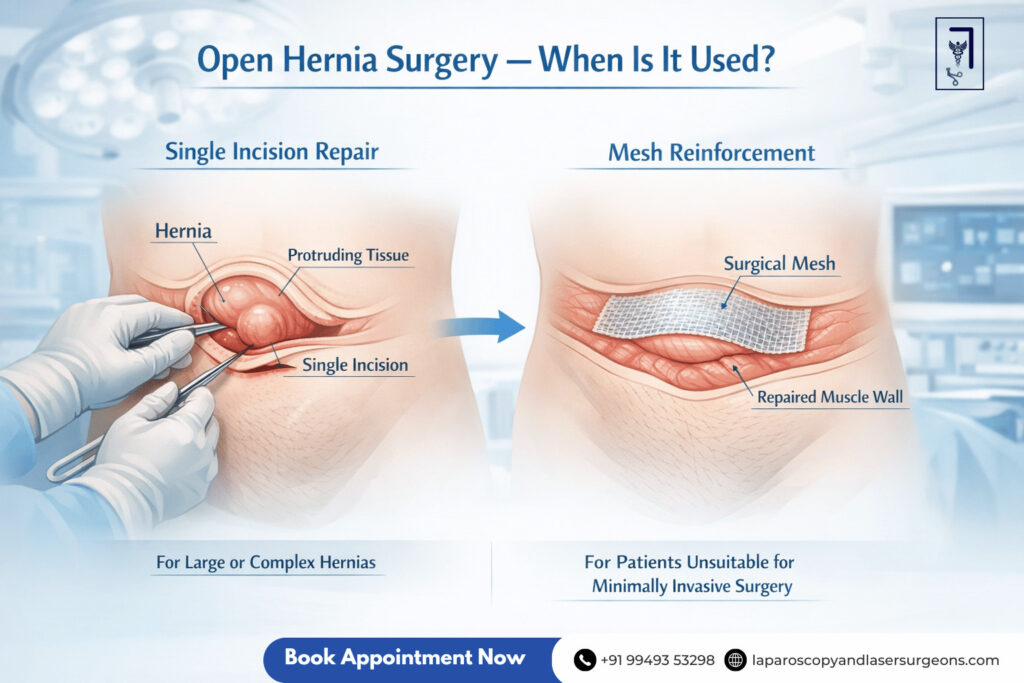
Open hernia surgery is a traditional and proven method where a single incision is made directly over the hernia site. The protruding tissue is placed back, and the muscle wall is strengthened, often using a surgical mesh.
This method is usually recommended for very large hernias, complicated cases, or patients who are not suitable candidates for minimally invasive surgery.
Laparoscopic Hernia Surgery – Modern & Minimally Invasive
Laparoscopic hernia surgery is a minimally invasive technique performed through small keyhole incisions using a camera and specialized instruments.
This approach causes less pain, minimal scarring, and allows faster return to daily activities. It is especially beneficial for working professionals and patients with bilateral or recurrent hernias.
👉 Learn more:
Laparoscopic Hernia Surgery in Hyderabad
Laser Hernia Surgery – Advanced Precision Technique
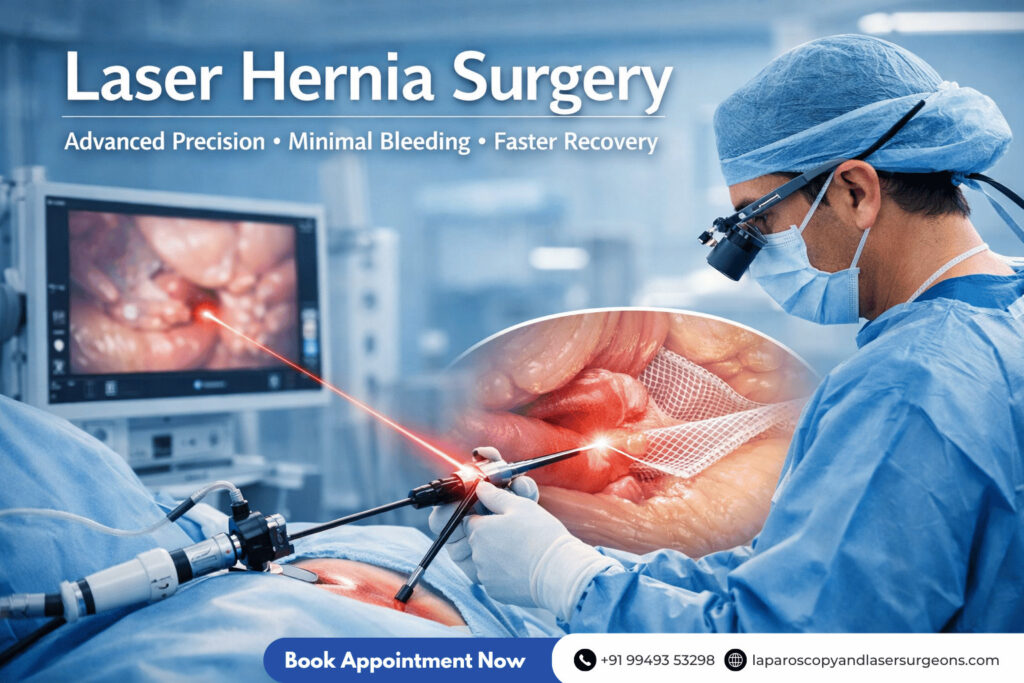
Laser hernia surgery uses focused laser energy for precise tissue handling during repair. This method reduces bleeding, lowers infection risk, and promotes faster healing in selected patients.
Not all hernias require laser surgery. Dr. D. Suresh Babu carefully evaluates each case to determine the most suitable technique.
👉 Learn more:
Laser Hernia Surgery in Hyderabad
How Does the Doctor Decide the Best Surgery Method?
The choice of surgery depends on multiple factors including the type of hernia, size of the defect, previous surgeries, and patient’s medical condition.
Dr. D. Suresh Babu believes in personalized treatment planning, choosing the safest and most effective approach rather than a one-size-fits-all method.
What Happens If Hernia Surgery Is Delayed Too Long?
Delaying hernia surgery can increase the risk of complications such as bowel obstruction or strangulation. Emergency surgeries are usually more complex and involve longer recovery.
Planned hernia surgery, on the other hand, is safer and allows better outcomes with minimal disruption to daily life.
Recovery After Hernia Surgery
Recovery depends on the type of surgery performed. Most patients are encouraged to walk within 24 hours after surgery. Light activities can usually be resumed within a few days, while heavy lifting should be avoided for a few weeks. Following post-operative instructions helps ensure proper healing and reduces recurrence risk.
Frequently Asked Questions (FAQs)
Yes, surgery is the only permanent treatment for hernia.
No, medicines and exercises may reduce discomfort but cannot fix the muscle defect.
Yes, delaying surgery can lead to complications like obstruction or strangulation.
The best surgery depends on the hernia type, size, and patient’s health condition.
Yes, hernia surgery is generally safe when performed by an experienced surgeon.
Get Relief from Hernia Today
Consult Dr. Suresh Babu for expert diagnosis and personalized treatment.
Book Consultation