

Understanding What a Hernia Is?
A hernia is a medical condition in which an internal organ or fatty tissue slowly pushes through a weak area in the surrounding muscle or connective tissue. This weakness most commonly develops in the abdominal wall or groin region. When the muscle layers lose strength, they are no longer able to hold the organs firmly in place.
In the early stages, a hernia may not cause noticeable pain. Many patients only observe a mild swelling or bulge that appears during standing, coughing, or lifting heavy objects. Because the bulge often disappears when lying down, people assume it is harmless and delay medical consultation. However, a hernia does not heal on its own and usually progresses over time.
For complete guidance on diagnosis and treatment, you may also read
👉 Hernia Treatment in Hyderabad – Complete Patient Guide
How the Abdominal Wall Normally Works
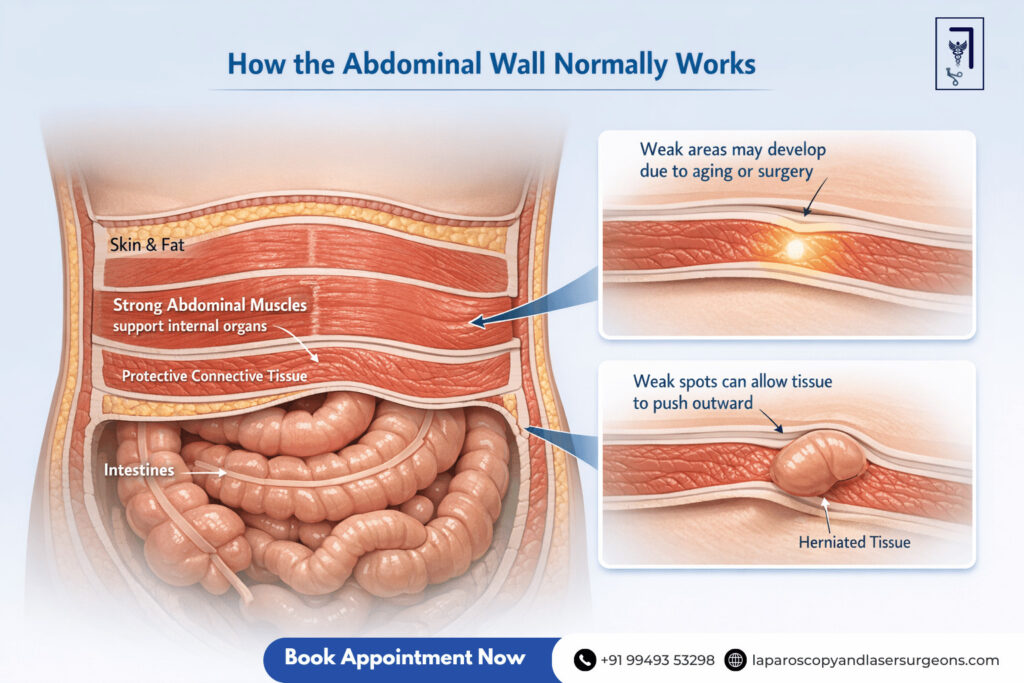
The abdominal wall is made up of multiple layers of muscle and connective tissue. These layers work together to support vital organs such as the intestines while allowing flexibility for breathing, bending, and movement.
When these muscle layers are strong, they act as a natural shield. Over time, due to aging, poor muscle tone, or previous surgeries, weak spots may develop. These weak areas allow internal tissues to gradually push outward, resulting in a hernia.
How a Hernia Develops Over Time
Hernia formation is usually a slow and gradual process rather than a sudden event. It develops in stages, often over months or even years.
Initially, the muscle wall becomes weak due to factors such as aging, lack of physical activity, or previous surgical scars. This weakness alone may not cause any visible symptoms.
As daily activities increase pressure inside the abdomen, such as coughing, straining during bowel movements, lifting heavy objects, or prolonged standing, the pressure continuously pushes against the weak muscle area. Over time, internal tissue begins to protrude, forming a small bulge.
If left untreated, the bulge gradually enlarges and symptoms become more noticeable. At this stage, medical evaluation becomes essential.
Why Hernia Often Goes Unnoticed in the Early Stages
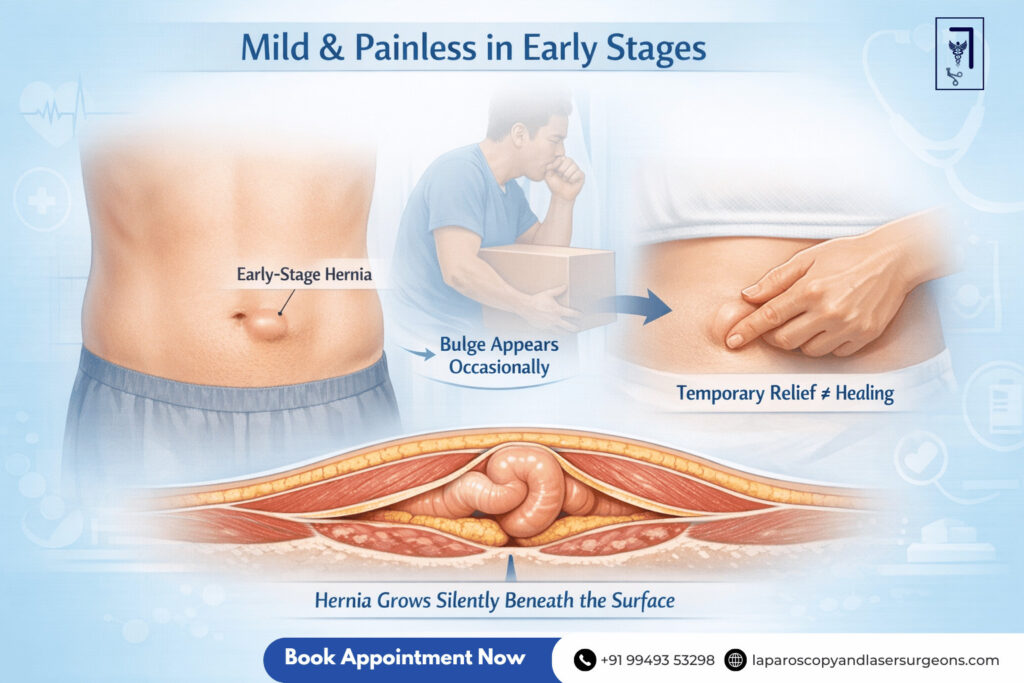
Many people ignore hernia in the beginning because the symptoms are mild and painless. The swelling may appear only occasionally and reduce on its own, creating a false sense of reassurance.
Some individuals manually push the bulge back and feel temporary relief. While this may reduce discomfort for a short time, it does not repair the muscle defect. The hernia continues to grow silently beneath the surface.
Early Warning Signs of Hernia
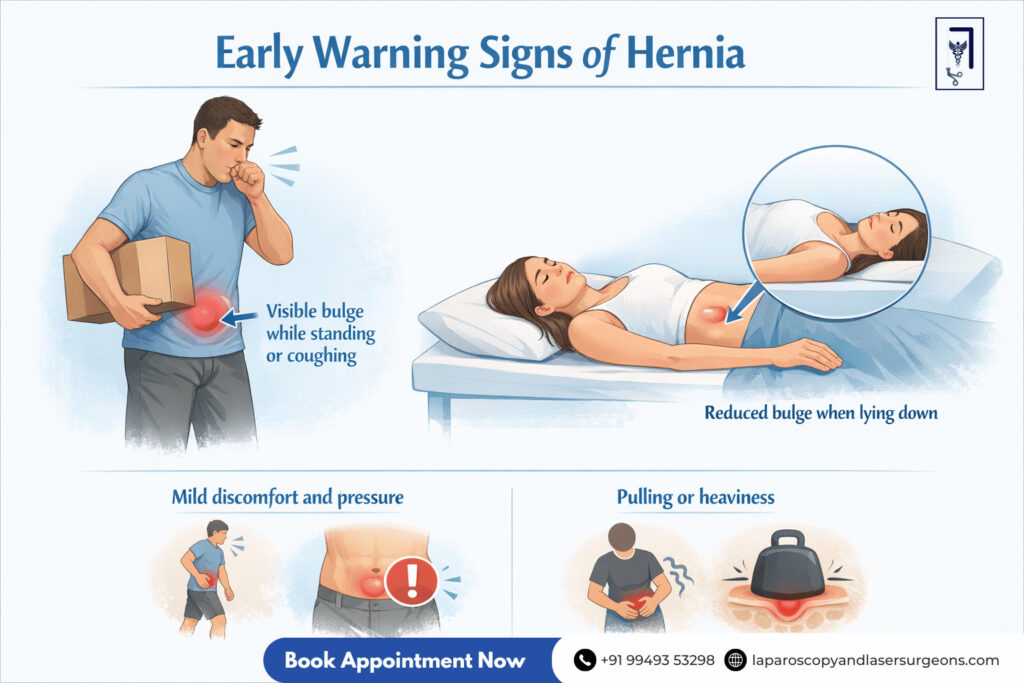
The most common early warning sign of hernia is a soft bulge that becomes visible while standing, coughing, or lifting. This bulge often reduces when lying down, especially in the early stages.
Other early signs include mild discomfort after physical activity, a feeling of pressure or heaviness in the abdomen or groin, and occasional pulling sensations. These symptoms indicate muscle weakness and should not be ignored.
Different Types of Hernia Explained Simply
Hernia can occur in different areas of the body depending on where the muscle weakness develops.
Inguinal hernia is the most common type and occurs in the groin region. It is more frequently seen in men and may cause discomfort while walking, bending, or lifting heavy objects.
Umbilical hernia appears near the belly button. It is commonly seen in women after pregnancy and in people who are overweight due to stretched abdominal muscles.
Incisional hernia develops at the site of a previous surgery where the muscle has not healed completely. Surgical scars often become weak points over time.
Hiatal hernia occurs when part of the stomach moves upward into the chest cavity. This type often causes symptoms such as acidity, heartburn, and chest discomfort rather than a visible bulge.
Who Is at Higher Risk of Developing a Hernia
Certain individuals have a higher chance of developing hernia due to lifestyle or health-related factors. People with physically demanding jobs, chronic cough, constipation, obesity, or smoking habits are at increased risk.
Elderly individuals and those with a family history of hernia are also more vulnerable due to naturally weaker muscle tissue. Previous abdominal surgery further increases the risk by creating potential weak spots.
Is Hernia the Same as Muscle Pain or Swelling?
Hernia is often confused with muscle strain, but the two conditions behave differently. Muscle pain usually improves with rest, medication, and time. Hernia-related swelling, on the other hand, increases with activity and reduces only when pressure decreases.
Unlike muscle pain, hernia does not heal on its own and requires medical assessment to prevent progression.
Can Lifestyle Changes Prevent Hernia from Worsening?
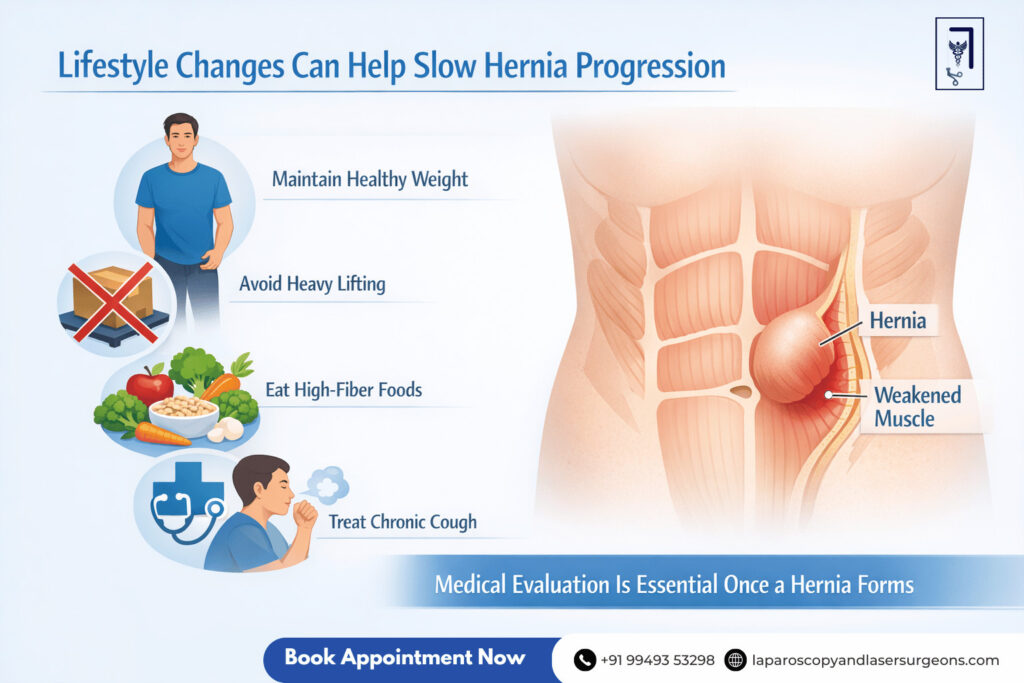
Healthy lifestyle practices such as maintaining proper body weight, avoiding heavy lifting, eating fiber-rich foods, and treating chronic cough can help reduce strain on abdominal muscles.
While these measures may slow the progression, they cannot reverse an existing hernia. Once a hernia forms, medical evaluation is essential.
When Should You Seek Medical Advice for Hernia?
You should consult a surgeon as soon as you notice a bulge or discomfort that changes with posture or physical activity. Early diagnosis allows proper guidance and prevents complications such as organ trapping or strangulation.
For symptom-related guidance, you may read
👉 Hernia Symptoms You Should Not Ignore – When to Consult a Surgeon
Frequently Asked Questions (FAQs)
A hernia occurs when an internal organ pushes through a weak area of muscle, usually in the abdomen or groin.
No, a hernia does not heal on its own and usually requires surgical treatment.
No, many hernias are painless in the early stages and cause discomfort only as they grow.
Increasing pain, a hard bulge, vomiting, or redness over the swelling are warning signs that need urgent medical care.
You should consult a doctor as soon as you notice a bulge, discomfort, or heaviness in the abdomen or groin.
Get Relief from Hernia Today
Consult Dr. Suresh Babu for expert diagnosis and personalized treatment.
Book Consultation