
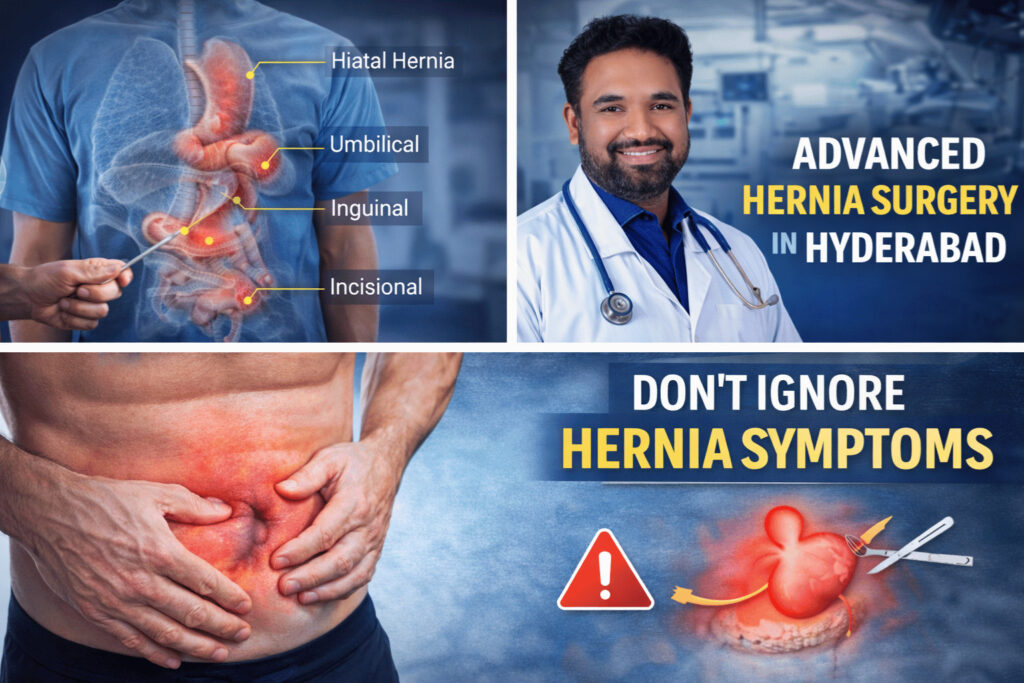
Hernia is a common medical condition that affects people of all age groups. Many patients ignore early symptoms because the condition may not cause pain initially. However, timely hernia treatment in Hyderabad can prevent serious complications and ensure a smooth recovery.
At Sunridge Multispecialty Hospital, Moti Nagar, Dr. D. Suresh Babu offers advanced and patient-focused hernia treatment using modern surgical techniques such as laparoscopy and laser surgery.
What Is a Hernia?
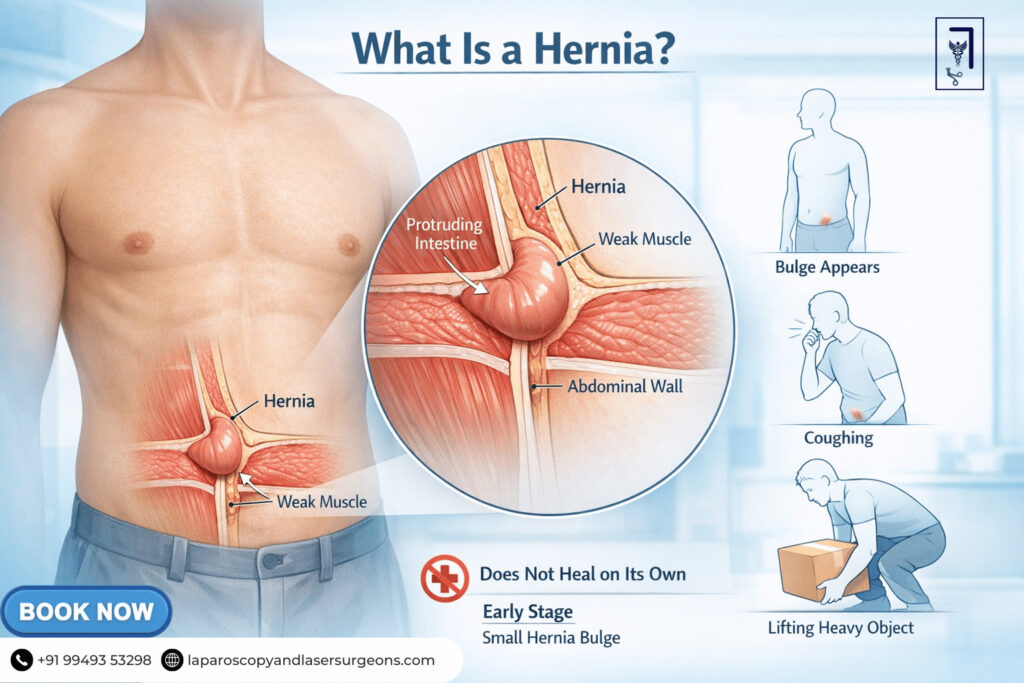
A hernia occurs when an internal organ or fatty tissue pushes through a weak area of the surrounding muscle wall. This weakness commonly develops in the abdomen or groin region.
In the early stages, a hernia usually appears as a small bulge that becomes visible during standing, coughing, or lifting heavy objects. Although it may not cause pain initially, a hernia does not heal naturally and tends to increase in size over time.
👉 Related reading:
What Is a Hernia? Causes, Types & Early Warning Signs
Why Does a Hernia Occur?
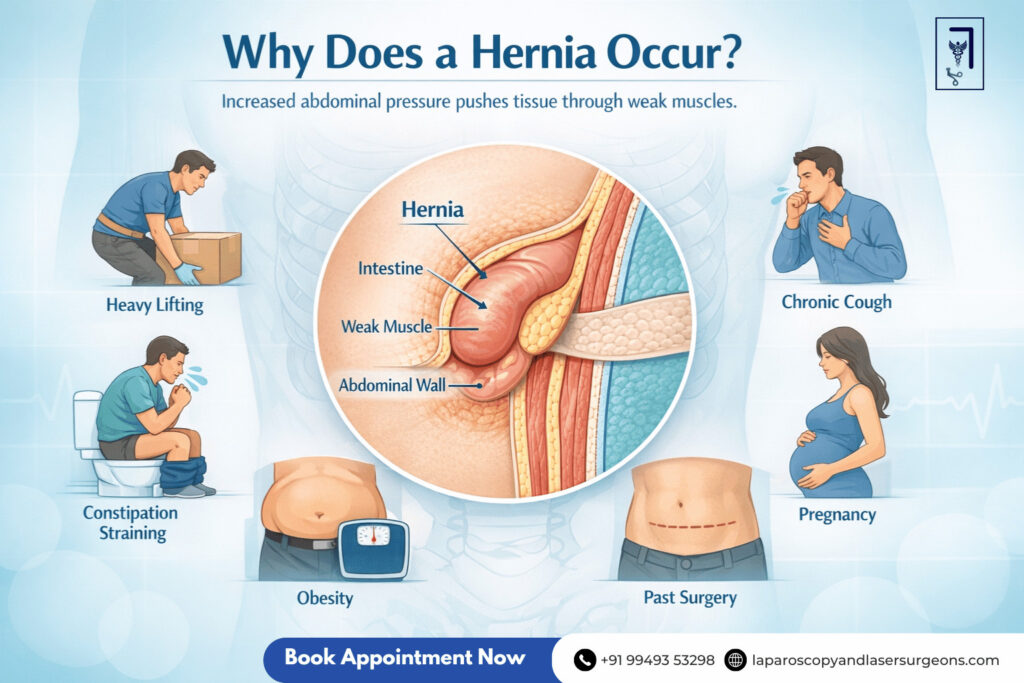
Hernia develops when pressure inside the abdomen increases and the muscles are unable to support it properly. This pressure gradually pushes tissues outward through the weak area.
Common contributing factors include repeated physical strain, weak abdominal muscles, and long-standing health conditions that increase abdominal pressure. In most cases, hernia occurs due to a combination of factors, not a single incident.
Common Causes of Hernia
- Heavy lifting without proper technique
Repeated lifting puts strain on abdominal muscles, increasing the risk of hernia formation. - Chronic cough or sneezing
Long-term coughing continuously raises abdominal pressure. - Constipation and straining
Regular straining during bowel movements weakens the abdominal wall. - Obesity or sudden weight gain
Extra body weight increases pressure on abdominal muscles. - Pregnancy and childbirth
Stretching of abdominal muscles during pregnancy can lead to weakness. - Previous abdominal surgery
Surgical scars can become weak points where hernia may develop.
Different Types of Hernia
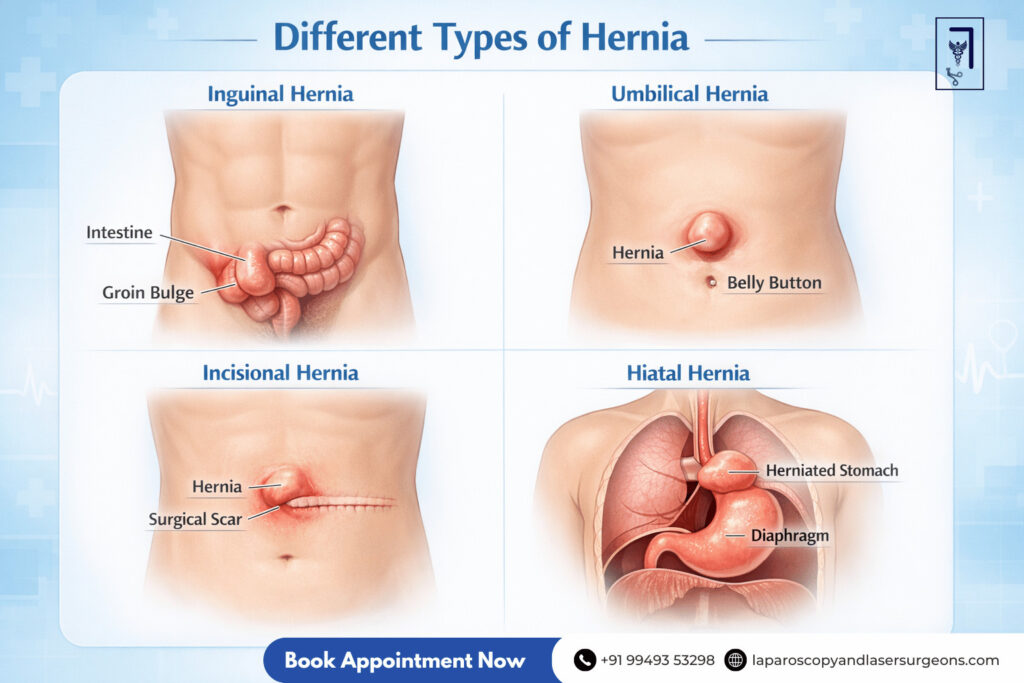
Understanding the type of hernia helps in selecting the most suitable treatment approach.
Inguinal Hernia
This is the most common type of hernia and usually occurs in the groin area. It is more frequently seen in men and may cause discomfort during walking, bending, or lifting.
Umbilical Hernia
Umbilical hernia develops near the belly button. It is commonly seen in women after pregnancy and in overweight individuals due to weakened abdominal muscles.
Incisional Hernia
This type occurs at the site of a previous surgery when the surgical wound does not heal completely, creating a weak spot in the muscle wall.
Hiatal Hernia
In hiatal hernia, part of the stomach moves upward into the chest cavity, often causing acidity, heartburn, and chest discomfort.
Hernia Symptoms You Should Not Ignore

Hernia symptoms can vary depending on the type and size of the hernia. Early symptoms are often mild and easily ignored.
Common symptoms include:
- A visible bulge that increases on standing
- Pain or discomfort during physical activity
- Burning or pulling sensation
- Feeling of heaviness in the abdomen or groin
- Nausea or vomiting in advanced cases
⚠️ Sudden severe pain with vomiting may indicate strangulated hernia, which requires immediate medical attention.
👉 Read more:
Hernia Symptoms & When to Consult a Surgeon
When Should You Consult a Hernia Specialist in Hyderabad?
You should consult a surgeon as soon as you notice a persistent bulge or discomfort. Early consultation allows for simpler treatment options and reduces the risk of emergency surgery.
Ignoring symptoms can lead to complications such as bowel obstruction or strangulation, which may require urgent intervention.
Do All Hernias Need Surgery?
Yes, surgery is the only permanent solution for hernia. Non-surgical methods such as medications, belts, or exercises may offer temporary relief but cannot repair the muscle defect.
Early planned surgery is usually safer and results in quicker recovery compared to delayed emergency procedures.
👉 Learn more:
Do Hernias Need Surgery? Treatment Options Explained
Modern Hernia Surgery Options in Hyderabad
Laparoscopic Hernia Surgery
Laparoscopic surgery is a minimally invasive technique performed using small incisions and a camera. It causes less pain, minimal scarring, and allows patients to return to daily activities faster.
👉 Read more:
Laparoscopic Hernia Surgery in Hyderabad
Laser Hernia Surgery
Laser hernia surgery uses advanced laser energy for precise tissue handling. It reduces bleeding, minimizes infection risk, and promotes faster healing in selected patients.
👉 Read more:
Laser Hernia Surgery in Hyderabad
Open Hernia Surgery
Open surgery may be recommended for large or complex hernias. It involves a single incision and remains a safe and effective option when minimally invasive methods are not suitable.
Why Choose Dr. D. Suresh Babu for Hernia Treatment in Hyderabad?
Dr. D. Suresh Babu has over 14 years of experience in general, laparoscopic, and laser surgery. He is known for accurate diagnosis, ethical treatment planning, and clear communication with patients.
His surgeries are performed at Sunridge Multispecialty Hospital, which is equipped with modern operation theatres and patient-friendly recovery facilities.
👉 Read more:
Best Hernia Surgeon in Hyderabad – Dr. D. Suresh Babu
Hernia Surgery Cost in Hyderabad
The cost of hernia treatment depends on the type of hernia, surgical technique, and hospital stay duration.
On average, hernia surgery in Hyderabad ranges between ₹35,000 and ₹85,000. Most insurance policies and government health schemes are accepted at Sunridge Hospital.
Recovery After Hernia Surgery
Recovery after hernia surgery is usually smooth when patients follow medical advice. Walking is encouraged within a day, while heavy lifting should be avoided for a few weeks.
Regular follow-up visits help ensure proper healing and reduce the risk of recurrence.
Frequently Asked Questions (FAQs)
Hernia can become serious if left untreated, especially if complications develop.
No, surgery is the only permanent treatment.
Modern surgical techniques cause minimal pain, which is well controlled with medication.
Most hernia surgeries take about 30–60 minutes.
Recurrence is rare when surgery is done properly and recovery instructions are followed.
Get Relief from Hernia Today
Consult Dr. Suresh Babu for expert diagnosis and personalized treatment.
Book Consultation